
The auspicious time can control the production schedule.
Hair, makeup, flowers, photography, priest arrival, mandap setup, breakfast, family transportation, and venue access may all need to work backward from the Muhurtham.
Tamil Hindu Wedding Planning Guide
A planning-first guide to Tamil Hindu weddings in America—from the first family decisions and vendor team to Muhurtham timing, attire, pre-wedding ceremonies, the wedding ritual sequence, food, music, guest etiquette, wedding-party roles, gifting, and the final wedding-week checklist.
What This Guide Helps You Do
A Tamil Hindu wedding can involve several ceremonies, an early Muhurtham, multiple outfits, extensive family participation, sacred-fire rituals, South Indian music, and a tightly coordinated wedding morning. This guide starts with the decisions couples and families need to make first and brings gifting in only after the wedding itself is planned.
A Tamil wedding often begins long before the bride walks toward the mandap.
It begins when two families sit down and decide which ceremonies matter to them.
Will the wedding follow an Iyer or Iyengar sequence? Which priest knows the family’s sampradaya and language? What is the Muhurtham? Can the venue open early enough? Will the hotel allow Agni? Where will the Oonjal go? Who is ordering jasmine? Who is bringing the Thaali? Does the caterer understand the family’s food requirements? How many relatives need rooms the night before because a pre-dawn drive is unrealistic?
Those decisions shape the wedding far more than the color of the napkins.
Tamil Hindu weddings are also diverse. The elaborate sequence many English-language guides describe—Vratham, Kashi Yatra, Maalai Maatral, Oonjal, Kanyadaanam, Mangalya Dharanam and Saptapadi—is especially associated with Tamil Brahmin communities, including Iyer and Iyengar families. Other Tamil Hindu communities may follow different rituals, names, marriage customs, food traditions, and family roles. Tamil Christian and Tamil Muslim weddings belong to different religious traditions and deserve their own guides.
This guide therefore focuses on Tamil Hindu weddings, with deeper detail where Tamil Brahmin practices are especially well documented. Wherever a custom is community-specific, we say so. Your family and officiating priest remain the final authority.
Understand Before You Plan
A Tamil Hindu wedding is often structured around sacred timing, Vedic ritual, family participation, hospitality, silk, flowers, music, and a sequence that can feel very different from the familiar American pattern of afternoon ceremony followed immediately by cocktail hour and reception.
In many Tamil Brahmin weddings, the central Muhurtham may occur in the morning. Several meaningful events can happen before the Thaali is tied: the groom may enact Kashi Yatra, the couple may exchange garlands, and families may gather around the Oonjal. Sacred-fire rites continue around the central marriage rituals. The wedding therefore cannot be planned backward from reception dinner alone.
Hair, makeup, flowers, photography, priest arrival, mandap setup, breakfast, family transportation, and venue access may all need to work backward from the Muhurtham.
Parents, siblings, married women, grandparents, maternal relatives, and other family members may have specific responsibilities depending on the household’s tradition.
Kanjeevaram silk, veshti, madisar where worn, jewelry, jasmine, and outfit changes require dressing time, storage, experienced help, and careful handling.
Kashi Yatra and Maalai Maatral can be lively; Mangalya Dharanam and Saptapadi are sacred. Help guests understand the change in tone.
Tradition Meets U.S. Logistics
A Tamil-American wedding may preserve the spiritual core while changing the logistics. A ritual that once unfolded across a family home and kalyana mandapam may now take place in a hotel ballroom. Relatives may be flying from several countries and states. The priest may travel. Fresh jasmine may need preordering. A venue may require specific approval for ceremonial fire.
Real U.S. Tamil weddings show how diaspora couples reshape schedules. A 2026 Florida Tamil wedding, for example, listed a Saturday evening reception followed by an 8:30–11:00 a.m. Sunday Muhurtham. Reception-before-Muhurtham can make sense when venue availability, guest travel and family preference demand it.
Confirm pre-dawn access before signing the venue contract.
Get written fire approval and understand the venue’s safety requirements.
Provide a ceremony card or explanation for guests attending their first Tamil Hindu wedding.
Saree drapers, nadaswaram artists, Tamil-speaking priests, specialist caterers and jasmine suppliers may need travel.
Specificity Creates a Better Plan
Tamil identity includes multiple religions and communities. This guide focuses on Tamil Hindu weddings. Within Tamil Hindu weddings, Iyer and Iyengar traditions are among the most widely documented. They share many visible customs but can differ in theology, mantras, food practice, Thaali design, priestly tradition and household details.
| Planning Question | Why It Matters | Who Should Answer |
|---|---|---|
| Which tradition does the family follow? | Determines ceremony, food and roles. | Families + priest |
| Which language should explanations use? | Not all guests understand Sanskrit or Tamil. | Couple + priest/emcee |
| Which ceremonies are essential? | Prevents a generic “South Indian” package. | Families + priest |
| What are the food restrictions? | Requirements vary substantially. | Families + caterer |
| Who performs each ritual? | Roles vary by household. | Priest + elders |
Start Here
Build the Right Team
A vendor does not need to be Tamil to serve the wedding well. But the people responsible for the ceremony, food, photography and timeline need to understand what cannot simply be moved because it is inconvenient.
Choose this person early. Confirm family tradition, language, ceremony length, ritual list, required materials, fire setup, arrival time, and whether the priest can explain key moments in English for guests.
Ask about pre-dawn access, Agni, mandap dimensions, Oonjal installation, changing rooms, outside catering, loading hours, parking, and hotel-room proximity.
Do not stop at “South Indian food.” Confirm the exact family menu, vegetarian requirements, onion/garlic rules where applicable, breakfast, filter coffee, banana-leaf service, children’s needs, and vendor meals.
The team should know the exact Mangalya Dharanam cue, Oonjal positioning, sacred-fire limitations, family groups, and which rituals cannot be interrupted for portraits.
Build the call time around the Muhurtham. If the bride wears more than one saree or a madisar, use experienced draping support.
If nadaswaram and thavil are important to the family, book early and coordinate the musicians with the priest’s ceremony cues.
The Venue Must Serve the Ritual
For an early Tamil Hindu wedding, venue access may be more important than ballroom glamour. If the décor team cannot enter until 7:00 a.m. and the central ceremony is at 8:00, the venue is probably wrong for the plan.
| Ask Before Booking | Why It Matters |
|---|---|
| What is the earliest vendor access? | Mandap, florals, lighting and ceremony materials may need to be ready before sunrise. |
| Is ceremonial fire permitted? | Agni may require venue approval, a fire-safe vessel, extinguishers, ventilation, permits or staff supervision. |
| Can an Oonjal be installed? | Never assume the ceiling can support a suspended swing. A freestanding engineered structure may be safer. |
| Can outside catering be used? | Specialist Tamil catering may be essential to the family. |
| Are there two good changing rooms? | The couple may need outfit changes and private storage for silk and jewelry. |
| Can breakfast be served early? | A pre-dawn bridal party and family cannot wait until hotel breakfast opens. |
| Where do guests remove shoes, if required? | Temple/home customs and some mandap setups may require a shoe plan. |
Color With Context
There is no single mandatory Tamil wedding palette. Build the visual direction from the bride’s sarees, family textiles, flowers, venue, time of day, and ceremony rather than starting with a Pinterest label called “South Indian theme.”
A strong Tamil-inspired visual language can draw from deep maroon, emerald, crimson, mustard, ivory and antique gold; Kanjeevaram borders; jasmine; roses; mango leaves; banana leaves; brass; kolam-inspired geometry; and the warmth of early-morning light. MarryCrate’s regional color research describes a useful modern direction: deep maroon, emerald and burnished antique gold balanced by stone-gray or sand-beige so the ceremonial colors remain dominant rather than visually crowded.
| Moment | Possible Direction | Planning Thought |
|---|---|---|
| Nichayathartham | Rose, emerald, teal, maroon, gold | Polished but not necessarily as ceremonial as the Muhurtham. |
| Wedding Morning | Ivory, maroon, green, mustard, antique gold | Work with daylight and silk rather than excessive colored lighting. |
| Reception | Wine, navy, jewel tones, metallics, black accents | Coordinate with stage lighting and the couple’s second look. |
| Nalangu | Yellow, coral, green, pink, cream | Lighter and more playful where the family observes it. |
Plan the Clothing Like a Timeline
Kanchipuram silk is deeply associated with Tamil ceremonial dress. The Government of India’s handloom resources describe Kanchipuram silk as known for substantial silk, contrasting borders, zari, temple- and nature-derived motifs, durability, and heirloom quality; Kanchipuram silk also has Geographical Indication recognition.
But not every silk saree is Kanjeevaram, and not every Tamil bride wears the same drape. Some Tamil Brahmin brides wear a nine-yard madisar for parts of the wedding. Other brides wear six-yard Kanjeevaram sarees, community-specific drapes, lehengas, gowns, or several looks.
Formal Without Defaulting to North Indian Styling
For many traditional Tamil Hindu ceremonies, the groom wears veshti or dhoti with an angavastram or other family-prescribed upper garment. Exact dress can change during the rituals and varies by community. A reception suit, tuxedo, sherwani or contemporary formal look may appear later, but a sherwani should not be presented as the universal Tamil groom outfit.
Confirm with the priest whether the groom needs specific clothing for sacred-fire rites, sacred-thread rituals or other ceremonies. If the groom has never worn a veshti for several hours, practice tying, sitting, walking and climbing onto the mandap before the wedding.
Meaning Lives in the Details
Government handloom documentation describes genuine Kanchipuram weaving through techniques such as interlocked contrast borders and contrasting pallu construction. Traditional motifs can reference temple architecture, peacocks, yali, rudraksha forms, coins, checks, stripes and florals. If you purchase or gift “Kanjeevaram,” verify what the product actually is rather than using the name for any shiny silk.
Tamil bridal jewelry may include necklaces, earrings, bangles, waist belts, hair ornaments, temple-style designs and family heirlooms. Some motifs are devotional. Photograph and inventory valuable pieces before the wedding, insure where appropriate, and assign one custodian during outfit changes.
Fresh malligai is strongly associated with Tamil adornment and bridal styling. In the U.S., confirm florist availability, delivery time, refrigeration guidance, allergies, and attachment method. Do not assume a standard florist can source wedding-quality jasmine at the last minute.
Kolam traditions are part of Tamil visual culture and can inspire entrances or stationery when used knowledgeably. Brass lamps and vessels can create warmth, but ritual lamps should not be reduced to generic props when the family uses them devotionally.
See the Whole Wedding Before the Details
This is an illustrative Tamil Brahmin-oriented sequence, not a universal Tamil Hindu checklist. Your priest may reorder, combine or omit events.
Formal engagement or confirmation of the marriage alliance, often with family blessings, gifts and announcements.
A family ceremony marking the auspicious beginning of wedding preparations.
Priest-led rites preparing the families and couple for marriage; details vary between traditions.
The groom’s ceremonial arrival and welcome, traditionally announcing his arrival to the community.
In Tamil Brahmin weddings, the groom playfully prepares to renounce household life before the bride’s father invites him to choose marriage.
The couple exchanges garlands, often with playful family participation.
The couple sits on a decorated swing while women of the family sing and perform blessings where the custom is observed.
The priest guides the families and couple through sacred marriage rituals according to their tradition.
The groom ties the Thaali or Mangalyam at the auspicious time; this is a central emotional and sacred moment in many Tamil Hindu weddings.
The couple completes priest-led fire rituals and seven steps/vows according to the family’s tradition.
The morning often flows into family blessings and a celebratory meal.
Post-wedding events vary widely and may occur later the same day or on another day.
Before the Muhurtham
Nichayathartham is the formal engagement or betrothal. Families may exchange gifts, blessings and ceremonial items, announce the agreement, and gather relatives for a meal. Modern Tamil-American couples may also exchange rings or incorporate a Western engagement format.
Planning: decide whether this is a separate event or part of the wedding weekend; confirm clothing, gift trays, family speakers, photographer coverage and meal service.
This ceremony marks the formal auspicious beginning of wedding preparations. Details vary. In diaspora settings it may be simplified or held at home rather than recreated at the ballroom.
Planning: ask the family exactly what materials are required and who participates before asking the decorator to build anything symbolic.
In some Tamil Brahmin families, a gathering of married women remembers and honors women of earlier generations and seeks blessings for the coming wedding. It is intimate, family-led and not universal.
Planning: let the household define guest list, food, clothing and ritual rather than turning it into a general bridal-party event.
These preparatory rites are priest-led and connect the wedding with family, ancestors, blessings and the transition into marriage. Terminology and sequence differ between Iyer and Iyengar households and between priests.
Planning: obtain the materials list directly from the priest. Assign one family member—not the bride—to confirm every item has arrived.
Janavasam is the ceremonial arrival or procession of the groom. Historical explanations connect it with publicly welcoming the groom into the wedding community. Modern families may use a decorated car, music and a short procession.
Planning: map the route, weather backup, music, venue restrictions, photographer position and the exact handoff into the next event.
The Morning Determines the Experience
If the central ceremony is early, the wedding day may begin at 2:30 or 3:00 a.m. for the bride, hair and makeup team. That makes food, sleep and logistics planning part of hospitality—not an afterthought.
Arrange coffee/tea, water and simple labeled breakfast items before hotel breakfast opens. Confirm allergies and dietary requirements.
Build backward from the bride’s required mandap arrival, not from the public invitation time.
Photograph, label and inventory each set. One person signs valuables in and out during changes.
Give photography a hard stop. Sacred timing outranks “one more shot.”
| If Mangalya Dharanam Is Around 8:00 AM | Illustrative Planning Window |
|---|---|
| Hair / makeup / first dressing | Approximately 3:00–5:30 AM, depending on styling |
| Detail photography / immediate family | 5:30–6:15 AM |
| Breakfast / hydration / final prep | Build into the morning, not as an optional break |
| Kashi Yatra / garlands / Oonjal | Priest and family determine actual sequence |
| Mandap rites | Must leave sufficient time before the exact Muhurtham |
This is only an operational example. Never derive your sacred ceremony schedule from this table; use the priest’s exact timeline.
The Heart of the Guide
The following sequence reflects widely documented Iyer/Iyengar practice. Names, order, mantras and participants can differ. Your priest’s sequence controls your wedding.
Playful ritual with a serious idea beneath it
The groom symbolically prepares to leave for Kashi and a life of spiritual study or renunciation. The bride’s father intercepts him and invites him to accept marriage and the responsibilities of grihastha, household life. The moment is often humorous, but its underlying idea is the transition into family responsibility.
Plan: confirm props with the family; define the walking route; keep guests from blocking it; tell photography where the father will intercept the groom.
Mutual acceptance becomes visible
The couple exchanges flower garlands, often more than once, while relatives may playfully lift the bride or groom out of reach. It can be one of the loudest, most joyful moments of the morning.
Plan: use secure, appropriately weighted garlands; identify who is lifting whom, if anyone; consider mobility and safety; give photographers space.
The celebration slows into family blessing
In many Tamil Brahmin weddings, the couple sits on a decorated swing while women of the family sing and perform blessings. Interpretations often connect the swing with balance and mutual support through life’s movement.
Plan: use an engineered freestanding swing if the venue cannot approve suspension; identify participating women; allow room for songs, lamps or colored rice according to family practice; keep the swing stable and accessible.
The wedding moves into priest-led Vedic rites
The couple and families move into the central marriage rites under the priest’s direction. Kanyadaanam is a major family ritual in the documented Tamil Brahmin sequence, but its exact performance and interpretation should come from the family’s tradition and priest.
Plan: give parents and ritual participants assigned seats; keep ceremony materials within reach; provide water discreetly; stop unnecessary movement around the mandap.
The exact auspicious moment matters
The groom ties the Thaali or Mangalyam around the bride’s neck at the selected auspicious time. In many Tamil weddings, nadaswaram and the emphatic getti melam heighten this central moment while relatives shower the couple with akshatai or rice according to custom.
Plan: confirm who physically holds the Thaali beforehand; photographer and video must be in position; musicians need the cue; no coordinator should schedule a room flip or vendor break around this moment.
Marriage continues beyond the Thaali
Sacred fire is central to Hindu marriage rites. In Saptapadi, the couple takes seven steps as part of the marriage ritual, with vows and meanings interpreted within the priestly tradition. Do not tell guests the wedding is “over” immediately after the Thaali if important rites remain.
Plan: fire approval, ventilation, safe fabric clearance, priest materials, seating and photographer movement all need advance coordination.
Small rites can carry deep symbolism
Some Tamil Hindu sequences include the bride stepping on a grinding stone, star-viewing traditions, toe rings and other rites connected with steadiness, married life and family blessing. The details vary enough that they should be explained by the priest rather than copied from a generic checklist.
The Wedding Is a Family Collaboration
Tamil Hindu weddings can give family members specific ritual responsibilities, but those responsibilities vary. Do not assign them from an online template. Ask the priest to create a participant list for every ceremony.
Central participants in many rites, blessings, welcomes and gift exchanges.
May have roles around the Thaali, toe rings, gifts or other family-specific rites. Confirm rather than assume.
May lead songs, blessings and Oonjal-related traditions in families that observe them.
Some communities assign important ceremonial responsibilities to uncles, aunts or other relatives.
Build seating, transportation and photo timing around their comfort rather than treating them as an afterthought.
Appoint someone other than the couple to answer questions about ritual materials, relatives and last-minute family decisions.
Modern Friendship Roles
A Western-style bridal party is not required for a Tamil Hindu wedding. Sisters, cousins and friends have always supported couples without needing those titles. Tamil-American couples may nevertheless choose bridesmaids and groomsmen, and the roles can be very useful when clearly separated from priest-assigned family ritual.
Help Guests Feel Welcome
Festive Indian clothing or formal Western clothing may both be appropriate depending on the invitation. If the couple provides a dress code, follow it rather than guessing.
Temple, home and some ceremony spaces may require it. Hotel ballroom practice varies. Look for signage or ask.
Follow the couple and venue. Do not step into the mandap aisle or block hired photographers.
The family may be following an auspicious Muhurtham selected according to religious and astrological practice.
Important Vedic rites may continue afterward. Check the program before assuming the ceremony has ended.
Agni is part of Hindu marriage ritual. Give the mandap space and keep loose belongings and children away from the fire area.
Many Tamil Hindu weddings—especially Tamil Brahmin weddings—serve vegetarian food, but Tamil cuisine as a whole includes both vegetarian and non-vegetarian traditions.
No. A well-planned wedding should give guests enough context to understand the major moments.
Hospitality Is Part of the Wedding
Tamil cuisine is diverse, and Tamil Nadu’s food traditions include both vegetarian and non-vegetarian cooking. Government tourism material describes rice, lentils, grains and vegetables as foundational while also recognizing regional non-vegetarian dishes. A banana-leaf meal remains an important traditional form of hospitality.
For Tamil Brahmin weddings, the wedding meal is typically vegetarian and can follow specific household rules. Specialist caterers describe Iyer and Iyengar menus as sharing a vegetarian foundation while differing in ingredient and temple-food traditions; some families require no onion or garlic. These are family requirements, not rules for every Tamil Hindu wedding.
| Time | What to Think About |
|---|---|
| Pre-dawn | Water, coffee/tea, fruit, simple breakfast for couple, family and vendors. |
| Morning tiffin | Pongal, idli, vada, dosa or family-preferred breakfast; keep service fast around ceremony timing. |
| Wedding lunch | Banana-leaf service or buffet according to family and venue; confirm serving order and dietary rules. |
| Afternoon | Filter coffee, tea, snacks, especially if reception follows later. |
| Reception | Can be traditional, contemporary, regional or fusion; do not assume it must duplicate the wedding lunch. |
If you use banana leaves, confirm leaf sourcing, washing, table dimensions, waste handling and service staff. A beautiful menu becomes frustrating if 300 guests wait while an inexperienced team learns leaf placement in real time.
Sound Changes With the Ceremony
Nadaswaram and thavil have a strong association with Tamil temples, auspicious occasions and weddings. In traditional wedding settings, the musicians do more than provide background atmosphere: their cues can intensify important ceremonial moments, especially around the tying of the Thaali.
If live traditional music matters to the family, connect the musicians with the priest or ceremony coordinator before the wedding. Do not make them guess when the central moment is happening.
The reception can be entirely different. Tamil-American couples may use Carnatic selections, Tamil film music, Bollywood, Western pop, DJs, live bands, family performances and choreographed dances. There is no requirement that the reception become a cultural demonstration. Choose music that reflects the couple and the guests.
Understand the Tradition Before Shopping
Gift exchange can occur at several levels: between the two families, as clothing or jewelry connected with ceremonies, as blessings from elders, as hospitality for guests, and as modern appreciation gifts for the wedding party. These should not be collapsed into one generic “Indian wedding gift” category.
Family gifts and seer-related practices vary substantially by community and household. Rather than publishing a mandatory shopping list, document what each family expects, who is responsible, when the item is presented, and whether it is ceremonial or simply a modern gift.
Something that genuinely helps during the wedding, travel, getting ready, or the days afterward.
Something connected to the recipient, family, craft, wedding palette or cultural context without turning sacred tradition into merchandise.
Something worth using or remembering after the flowers and wedding weekend are gone.
After You Plan the Bridesmaid Experience
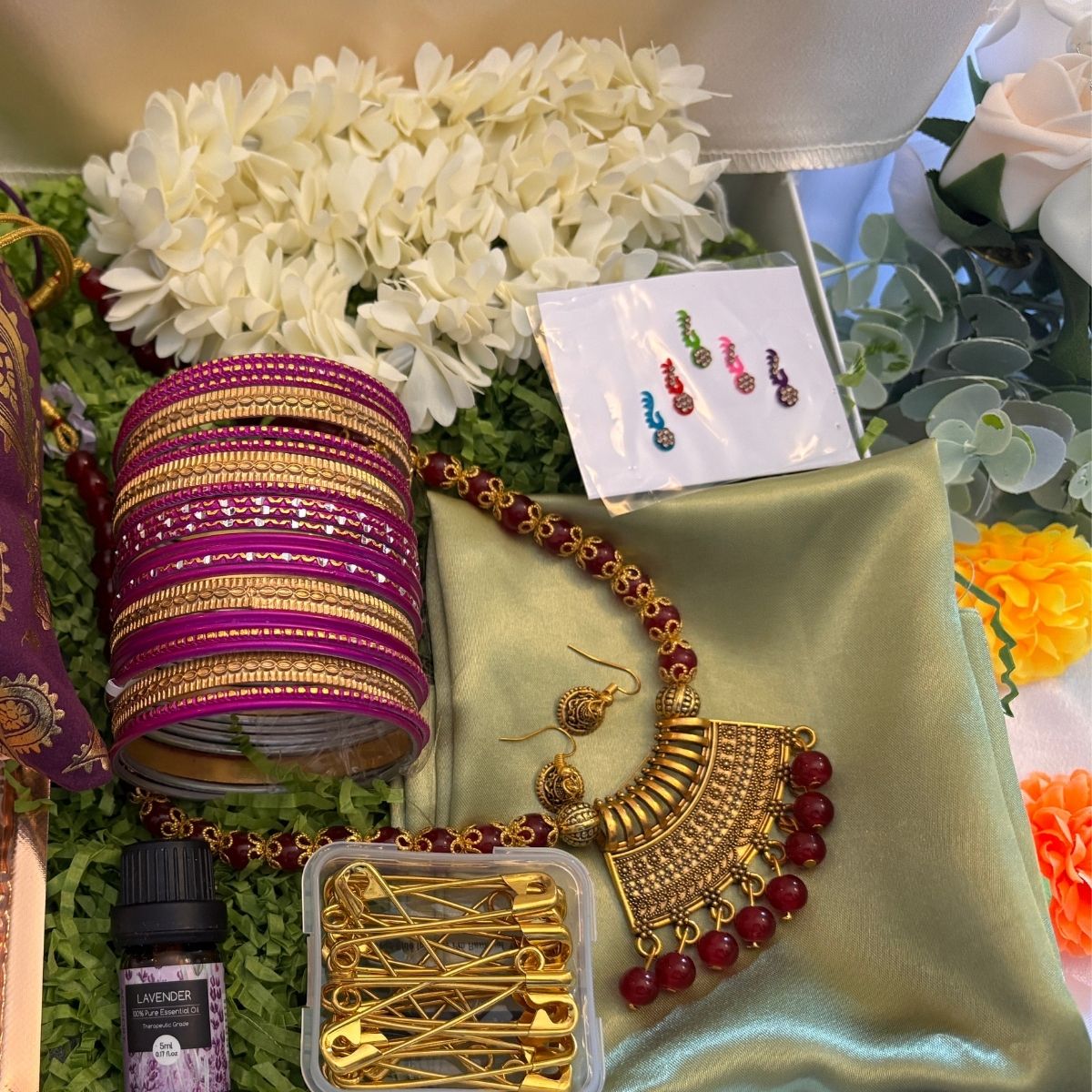
For an early Muhurtham, the best Tamil Bridesmaid Gift may solve a real wedding-day problem. Consider a travel jewelry organizer, foldable flats, cosmetic pouch, compact mirror, lightweight earrings, a morning comfort set, or a personalized keepsake. If using silk or temple-inspired design, describe the material accurately and avoid devotional motifs as casual decoration.
Useful Beyond the Reception
For South Indian Groomsmen Gifts, think about what works with both ceremony and reception: a slim wallet, valet tray, travel grooming pouch, quality cufflinks for a reception suit, personalized accessory case, or another useful item connected to the friend rather than a generic “Indian groom squad” slogan.
If groomsmen are wearing veshti for the first time, practical preparation—fit, tying help, footwear, spare pins or a changing-room plan—may be more valuable than novelty merchandise.
Thank the People Carrying the Wedding
Parents and close relatives often do enormous invisible work before a Tamil wedding: coordinating priests, relatives, ceremony items, food, clothing, airport pickups, family expectations and the emotional weight of the day. A family gift should acknowledge the person rather than compete with ceremonial gifting already taking place.
A personal letter, framed family photograph after the wedding, jewelry/accessory chosen around the individual, or meaningful practical keepsake.
Personalized travel or accessory pieces, jewelry, wallet, or another gift reflecting their actual role.
Prioritize accessibility and sentiment over personalization gimmicks.
The aunt, uncle or cousin who effectively became the coordinator may deserve recognition even without a formal wedding-party title.
Hospitality for a Multiday Wedding
Welcome gifting makes particular sense when guests are traveling for several events or waking early for the Muhurtham. The goal should be usefulness, not filling a bag.
Water, a concise event card, transportation information and emergency contact.
Coffee/tea information, breakfast timing and a reminder about early ceremony start.
A short cultural guide explaining major rituals, footwear rules and photography etiquette.
Where practical, include a well-sourced snack, textile or small item connected with the couple or destination—not a generic India souvenir.
For 50–200+ guest gifts, design the experience around packing, hotel delivery, dietary labeling, room-list deadlines and transportation. A welcome gift is operational hospitality as much as it is gifting.
Bring the Whole Plan Together
Discuss family tradition and ceremony priorities. Identify priest. Understand date/Muhurtham process. Estimate guests. Research venues that can support fire and early access. Begin major budget decisions.
Book venue, priest, caterer, photo/video and planner/coordinator. Reserve hotel block. Begin bridal and groom attire. Determine reception timing and major pre-wedding events.
Book hair/makeup, draping, music, décor/florals, transportation and entertainment. Finalize wedding party. Start invitation design. Confirm Oonjal and mandap requirements.
Complete major attire, blouse tailoring and jewelry. Build ceremony participant list. Confirm food restrictions and menus. Plan guest explanations, welcome gifts and room logistics.
Finalize priest’s ceremony sequence, décor layout, fire plan, photography shot list, family roles, transportation, seating, music cues, attire changes and wedding-party responsibilities.
Final fittings. Confirm jasmine and garlands. Reconfirm venue access. Finalize vendor meals, breakfast, family photo groups, ceremony cards, emergency kit and valuables plan.
Label ceremony materials, outfits and jewelry. Print schedules. Confirm every family participant. Check weather. Reconfirm fire approval. Place welcome gifts. Protect sleep before the early morning.
The Final Operational Check
What Causes Stress
A beautiful ballroom is useless if it cannot open early enough for the ceremony.
Identify the family’s actual tradition before building the ceremony.
Ask specific questions about the ceremony, food, timing and attire.
Agni approval belongs in venue due diligence.
Sleep, breakfast, makeup, flowers and transportation all need a different plan.
Give the photographer the Muhurtham and hard-stop times in writing.
The saree is not ready until the blouse, drape and accessories are ready.
Use textile names accurately, especially when selling or gifting them.
Fresh flowers are logistics, not just aesthetics.
A short explanation can make non-Tamil guests feel included without interrupting sacred ritual.
Family and priestly roles come from the tradition, not the photo layout.
Plan the wedding experience first. Gifts should respond to the people and needs that emerge from it.
Frequently Asked Questions
No. Tamil families differ by religion, community, region, family tradition and officiant. This guide focuses on Tamil Hindu weddings and identifies Tamil Brahmin customs where relevant.
No. Iyer and Iyengar weddings are highly documented Tamil Brahmin traditions, but Tamil Hindu communities are much broader.
The Muhurtham is the auspicious time selected for an important wedding ritual. In many Tamil weddings, Mangalya Dharanam is timed precisely around it.
The family may be following an auspicious time selected through its religious and astrological practice. The exact time varies.
Work backward from the priest’s ceremony schedule. An early Muhurtham may require décor, catering, photo/video and family access several hours before guests arrive.
In Tamil Brahmin weddings, it is a symbolic and often playful ritual in which the groom prepares to leave for spiritual life before the bride’s father invites him to embrace marriage and household responsibility.
Oonjal is the swing ceremony common in many Tamil Brahmin weddings. The couple sits on a decorated swing while family women may sing and perform blessings.
It is the sacred tying of the Thaali or Mangalyam around the bride’s neck and is a central moment in many Tamil Hindu weddings.
Saptapadi is the seven-step portion of the Hindu marriage ritual. The priest guides the couple and explains the vows according to the family’s tradition.
Discuss the religious requirement with your priest and the safety requirements with the venue. Never assume an open flame is permitted; get written approval for the agreed setup.
No universal rule requires it. Kanchipuram silk has deep Tamil ceremonial significance and is widely used for weddings, but families and brides choose attire differently.
The terms are commonly used for the silk-weaving tradition associated with Kanchipuram in Tamil Nadu. When purchasing, verify fiber, weaving, zari and provenance rather than relying only on a product title.
No. Veshti/dhoti with family-prescribed South Indian formalwear is common in many Tamil Hindu ceremonies. A sherwani may be chosen for another event but is not universal Tamil attire.
Many are, especially Tamil Brahmin weddings. Tamil cuisine overall includes both vegetarian and non-vegetarian traditions, so follow the family’s actual practice.
Follow the invitation. Festive Indian clothing or formal Western clothing may both be appropriate. Give guests specific guidance for each event rather than assuming they know.
A formal Western wedding party is not required. Tamil-American couples may include bridesmaids and groomsmen while keeping family and priest-assigned ritual roles separate.
Either can work. Tamil-American couples often adapt the order around Muhurtham timing, venue availability, travel and family preference.
Use a concise printed or digital ceremony guide, an emcee before major transitions, or brief explanations in the program. Explain emotional landmarks rather than translating every mantra.
Prioritize useful hospitality: water, event schedule, transport information, an early-morning reminder, a concise ceremony guide, and one thoughtful local or cultural item where appropriate.
For a large wedding with specialist vendors and significant guest travel, 12–18 months gives more flexibility. Smaller weddings may need less time. The priest, Muhurtham and venue are among the earliest decisions.
Plan the Wedding First
A Tamil wedding does not need more products. It needs good planning: the right priest, a venue that respects the Muhurtham, food that feels familiar to the family, silk handled carefully, elders looked after, guests welcomed, and enough quiet organization that the couple can actually experience the rituals they spent months preparing.
Once that foundation is in place, gifting becomes easier. You know who carried the wedding with you. You know which friends woke before sunrise. You know which relatives coordinated every airport pickup. You know which guests traveled across the country. The gift can then respond to a real relationship or a real need.
Tamil Hindu wedding customs differ between Iyer, Iyengar, other Tamil Hindu communities, regions, families, temples and officiating priests. This planning guide uses widely documented Tamil Brahmin ceremonies for detailed examples because those sequences are especially well recorded; it does not claim they represent every Tamil Hindu wedding. Tamil Christian and Tamil Muslim weddings follow different religious traditions. Confirm your final ceremony sequence, terminology, ritual participants, food requirements, attire and sacred materials with your families and officiant.