
The Western-style groomsman role is common in Indian-American weddings but does not replace traditional family or religious roles.
Groomsmen Guide for Indian Weddings in the U.S
Indian-American Groomsmen Guide
Groomsmen Guide for Indian Weddings in the U.S.: Roles, Attire, Etiquette & Gift Ideas
A detailed guide to what groomsmen actually do at Indian-American weddings, how roles change across Punjabi Sikh, Punjabi Hindu, Gujarati, Tamil, Telugu, Malayali Hindu, and Kerala Christian celebrations, what to wear, how to support the groom, and how to choose meaningful gifts using MarryCrate’s Wear + Carry + Keep framework.

The First Rule
There is no single “Indian groomsman” role.
India contains many religions, languages, regions, and wedding traditions. A Punjabi Sikh Anand Karaj, Gujarati Hindu wedding, Tamil Hindu ceremony, Telugu wedding, Kerala Hindu wedding, and Kerala Christian church wedding may all ask something different of the groom’s friends. This guide gives you the shared planning framework while showing where regional differences matter.
UnderstandThe groom’s journey before assigning jobs
DressFor the actual ceremony, not a generic “Indian look”
SupportWithout replacing family or sacred roles
GiftUsing Wear + Carry + Keep
The groom is dressed, but the room is nowhere near ready.
One friend is trying to pin a stole so it stays flat. Another is holding the groom’s phone because the family group chat will not stop. Someone is looking for the correct pair of juttis. An uncle has come in to ask when the procession leaves. The photographer wants everyone downstairs. The groom’s mother wants one more family photograph before anyone goes anywhere.
Then one of the groomsmen asks the question that should have been answered a month earlier: “What exactly am I supposed to do when we get there?”
At an Indian-American wedding, the answer can change completely depending on the family. At a Punjabi Sikh wedding, he may be joining the groom’s side for the arrival, Milni, and Anand Karaj while learning how to cover his head, remove his shoes, and sit comfortably on the floor inside the Gurdwara. At a Gujarati Hindu wedding, he may be dancing in the procession and then stepping back while parents, priests, and designated relatives handle the Mandap rituals. At a Tamil or Telugu wedding, the groom’s traditional attire may be completely different from the sherwani he wore to the Sangeet. At a Kerala Christian wedding, the most important rule may simply be knowing when to stop joking, silence the phone, and follow church etiquette.
That is the mistake we want this guide to prevent.
Indian weddings in the United States often blend family customs with American wedding-party structure. The groom may have a “Best Man” and six groomsmen even though those roles were not historically central to the family’s ceremony. Friends may wear coordinated kurtas for the Sangeet, sherwanis for the wedding, suits for the reception, or regional clothing chosen by the family. They may participate heavily in the Baraat or groom’s arrival, but have almost no formal role once the sacred ceremony begins.
A good Indian groomsman understands that distinction. He knows when to bring energy and when to become quiet. He knows when the groom needs a friend and when the groom needs space for his parents, priest, granthi, siblings, or elders. He does not assume that being “Best Man” gives him authority over rings, ceremonial objects, or religious rituals unless the family has explicitly assigned that responsibility.
The same principle should guide the gift. MarryCrate does not need to turn Indian culture into a box full of miniature elephants, random paisley, “Maharaja” jokes, or alcohol accessories. The strongest gifts help with what the groomsman will wear, carry, and keep—and acknowledge the friendship behind the wedding.
India Is Not One Wedding Culture
“Indian Wedding” Is the Search Term. Specificity Is the Answer.
The phrase “Indian wedding” is useful because that is how many readers begin searching. It is not enough to describe the ceremony accurately. The MarryCrate Handbook specifically requires us to recognize regional diversity and avoid statements that make Punjabi, Gujarati, Tamil, Telugu, Kerala, Sikh, Hindu, Christian, or Muslim customs sound interchangeable.
This master guide therefore focuses on the shared problem: how a modern groomsman supports the groom at an Indian-American wedding. Whenever the ceremony itself changes, we name the community rather than pretending one tradition represents India.
At a Glance
What Indian Groomsmen Should Know Before the Wedding Week
A high-energy groom’s procession is common in many North and West Indian weddings, but it is not universal across India.
A groomsman may need different outfits for Sangeet, ceremony, and reception—and South Indian ceremony wear can differ completely from North Indian sherwani styling.
Parents, siblings, priests, granthis, elders, and designated relatives often have ceremonial responsibilities that outrank wedding-party titles.
Gurdwaras, temples, and churches all have different rules for shoes, head covering, photography, seating, food, and behavior.
Use Wear + Carry + Keep rather than assuming alcohol, cigars, or novelty “guy gifts.”
Regional Planning Map
How the Groomsman Experience Changes Across Indian Weddings
| Wedding Background | What May Stand Out | What Groomsmen Need to Know |
|---|---|---|
| Punjabi Sikh | Groom arrival, Milni, Anand Karaj, Langar, turbans or head coverings | Remove shoes, cover head, dress modestly, sit respectfully on the floor, understand that the Guru Granth Sahib—not the wedding party—is the center of the ceremony. |
| Punjabi Hindu | Baraat, Milni in some families, Jaimala, Mandap ceremony, Sangeet | Bring energy to the procession, then understand when family and priest-led rituals begin. |
| Gujarati Hindu | Garba or Sangeet, groom arrival, Mandap rituals, strong family participation | Prepare for dancing and multiple events, but do not treat every Gujarati ritual as a North Indian Bollywood template. |
| Tamil Hindu | Temple or hall ceremony, veshti/dhoti-style attire, morning rituals, family-led ceremony | Practice draping or wear a pre-stitched option when appropriate; understand temple or venue rules. |
| Telugu Hindu | Traditional ceremony sequence, pancha/dhoti-style clothing in some families, family and priest roles | Expect a ceremony that may not resemble a North Indian Mandap timeline; ask the family what the groom changes into and when. |
| Malayali Hindu | Temple or hall wedding, mundu/veshti, Kasavu palette, shorter ceremony in some communities | Know temple rules, footwear restrictions, traditional drape, and the limited formal role of modern groomsmen. |
| Kerala Christian | Church ceremony, suit or traditional Kerala attire, family reception | Follow denomination and parish etiquette; sacred church roles should not be confused with Best Man traditions from American weddings. |
| Mixed Indian-American | Several regions, faiths, civil ceremony, fusion reception | Use the couple’s actual schedule rather than trying to decide which tradition is “more authentic.” |
Follow the Groom, Not the Checklist
The Indian-American Groom’s Wedding Journey
1
Pre-Wedding Events
The groom may attend Haldi, Mehndi, Sangeet, Garba, family prayer, rehearsal, welcome party, or region-specific gatherings. Groomsmen are usually most useful when they understand which events are family-centered and which are social.
2
Wedding-Morning Dressing
The groom may wear sherwani, kurta, Achkan, Jodhpuri, suit, veshti, mundu, pancha, dhoti, or community-specific attire. Groomsmen can help with ordinary logistics, but traditional garments should be handled by someone who actually knows how they are worn.
3
Groom’s Arrival
In many North and West Indian weddings, the groom arrives with a celebratory procession. Sikh weddings may include a Bharat/Baraat-style arrival before Milni at the Gurdwara. Other communities may use a quieter family arrival with no equivalent procession.
4
Family Greeting
Depending on community, families may greet one another through Milni, welcoming rituals, garlands, Aarti, introductions, or other practices. Groomsmen should know whether they are participants or simply nearby.
5
Sacred Ceremony
This is where groomsmen need to become disciplined. The groom’s friends may have no formal ritual role once the Anand Karaj, Hindu ceremony, temple wedding, or church marriage begins.
6
Family Photographs
Parents, grandparents, siblings, cousins, and elders may take priority over the wedding party. Groomsmen can help gather people and keep the groom from disappearing into ten unrelated conversations.
7
Outfit Change
Many Indian-American grooms change before the reception. A friend who knows exactly where the next shoes, belt, watch, cufflinks, wallet, phone, and garment bag are can be more useful than six people giving opinions.
8
Reception
The wedding party may be introduced, give speeches, dance, perform, or simply celebrate. This is usually where the Western-style groomsman role becomes most visible again.
Bring the Energy—But Know When It Ends
Baraat, Processions, and Groom Arrivals
In many North and West Indian weddings, the groom’s arrival is intentionally loud, joyful, and public. Family and friends may dance around him while a dhol player, DJ, band, horse, car, or another mode of arrival moves toward the venue. In Punjabi and some Gujarati or North Indian weddings, this is one of the moments when groomsmen are expected to bring visible energy.
But the term Baraat should not be applied to every Indian groom’s arrival. Tamil, Telugu, Malayali Hindu, and Kerala Christian weddings may use very different arrival traditions or no comparable procession at all.
What Groomsmen Can Do
- Know the exact assembly and departure time.
- Keep the groom hydrated before the procession begins.
- Protect phones, wallets, keys, and sunglasses while dancing.
- Help older relatives move safely through the crowd.
- Know when the music, drinking, horse, car, or dancing must stop before entering a sacred venue.
Best Man Does Not Mean Ritual Authority
Family Roles vs. Groomsmen Roles
Indian-American couples often use Western wedding-party titles, but many Indian ceremonies are organized around family relationships rather than bridesmaid and groomsman positions. The groom’s parents, siblings, maternal uncle, cousins, priest, granthi, witnesses, or other relatives may have specific ceremonial responsibilities.
A Best Man may be emotionally central to the groom without having any formal religious role. Likewise, a cousin who is not listed as a groomsman may be essential to Milni, family introductions, attire, ceremonial objects, or another custom.
The Problem
The Best Man assumes he should hold the rings because that is what he did at an American wedding.
The Better Plan
Ask the officiant and family who handles rings, garlands, ceremonial cloths, or other objects in this specific ceremony.
The Problem
Friends take over the groom’s room while family members are trying to complete traditional dressing or blessings.
The Better Plan
Give family and cultural specialists first access, then bring the groomsmen back for photographs and ordinary support.
Dress for the Wedding You Are Attending
Indian Groomsmen Attire: Sherwani Is Only One Option
Men’s Indian wedding clothing varies significantly by region and event. Current Indian menswear guides themselves distinguish North Indian sherwanis and Indo-Western formalwear from South Indian veshti, mundu, pancha, or dhoti-based ceremony clothing. The right choice depends on the couple, community, venue, and whether the groom wants his friends matching or simply coordinated.
| Attire | Where It May Fit | Groomsman Planning Note |
|---|---|---|
| Kurta Pajama | Haldi, Sangeet, Mehndi, welcome party, casual ceremony | Comfortable and versatile; choose fabric weight for season. |
| Kurta + Nehru Jacket | Sangeet, Garba, semi-formal ceremony, family dinner | Easy for mixed-culture wedding parties unfamiliar with draped garments. |
| Sherwani | Formal North Indian, Punjabi, or fusion wedding | Check length, sleeve mobility, bottom style, footwear, and whether the groom wants the party less ornate than himself. |
| Achkan / Jodhpuri / Bandhgala | Formal wedding or reception | Good structured alternative when the couple wants a tailored look. |
| Safa / Pagri / Turban | Punjabi, Rajasthani, Gujarati, or family-specific styling | Terminology and tying style matter. Do not treat every headwrap as interchangeable. |
| Veshti / Mundu / Dhoti / Pancha | Tamil, Telugu, Malayali, and other South Indian ceremonies | Learn the correct regional term and drape; use experienced help or a pre-stitched option when appropriate. |
| Western Suit / Tuxedo | Reception, church wedding, fusion ceremony | Often the simplest option for mixed wedding parties and formal evening receptions. |
Do the Groomsmen Need to Match?
No. A groom can coordinate color, stole, pocket square, turban, jacket, or boutonniere without putting every friend in identical clothing. This is especially useful when the party includes different body types, comfort levels, or cultural backgrounds.
Do Not Count Required Attire as the Entire Thank-You Gift
If the groom requires a specific $120 kurta or matching sherwani, that is primarily a wedding-party expense or uniform. It can be subsidized or gifted, but it should not automatically replace a personal thank-you.
Punjabi Sikh
What Groomsmen Should Know About an Anand Karaj
The Anand Karaj is the Sikh marriage ceremony held in the presence of the Guru Granth Sahib. Gurdwara guidance commonly requires everyone to remove shoes, cover the head, dress respectfully, and behave with reverence inside the Darbar Sahib. Some Gurdwaras also explicitly remind the groom’s party that alcohol or other intoxicants are not appropriate on the premises.
For a non-Sikh groomsman, the most important preparation is not learning how to perform the religious ceremony. It is understanding how to enter the space respectfully.
Head covering
Men and women generally cover their heads inside the Gurdwara. Follow the specific Gurdwara’s instructions; a proper cloth covering may be supplied.
Shoes
Remove shoes before entering the worship area and use the designated storage area.
Floor seating
Be prepared to sit on the floor. Choose clothing that allows you to do so comfortably and modestly.
Milni
Some Punjabi Sikh weddings include Milni, a formal greeting between corresponding relatives from the two families. Groomsmen should not insert themselves unless assigned.
Langar
The communal meal is part of Gurdwara life. Follow the venue’s food and conduct rules rather than treating it as an ordinary cocktail-hour buffet.
Laavan
The marriage ceremony centers on the couple and Guru Granth Sahib. Friends should observe quietly rather than trying to create photo moments.
Punjabi Hindu & Gujarati
When the Groomsmen Bring the Energy—and Then Step Back
Punjabi Hindu and Gujarati weddings can give groomsmen plenty to do before the ceremony: Sangeet performances, Garba, wedding-party photographs, groom dressing, procession logistics, and keeping the groom’s side organized. The sacred Hindu ceremony itself is generally priest-led and family-centered.
Punjabi Hindu Weddings
Many Punjabi Hindu families include a Baraat, family greetings, Jaimala or garland exchange, and a Hindu wedding ceremony around the sacred fire. Some families also include Milni or other Punjabi customs. The exact sequence varies.
Gujarati Weddings
Gujarati celebrations may include Garba or Sangeet, a lively groom arrival, and a Mandap ceremony rich in family participation. A groomsman who learned three Garba steps before the weekend may be more useful at the social events than one who memorized a generic list of Sanskrit ritual names.
Mandap Etiquette
Unless assigned a specific task, groomsmen should not hover inside the Mandap, move ritual objects, or direct the priest. Designate one wedding-party liaison who can communicate with the planner without crowding the ceremony.
Tamil & Telugu
South Indian Groomsmen Need a Different Playbook
One of the biggest mistakes in Indian-American wedding content is treating the North Indian sherwani-and-Baraat visual as the default. Tamil and Telugu Hindu weddings can differ significantly in attire, timing, ceremony structure, music, venue, and the groom’s movement through the day.
Tamil Weddings
The groom may wear veshti or dhoti-style attire with an angavastram or traditional shirt depending on family custom. Ceremonies are often held in the morning and may include several rituals involving parents and priests. Friends should learn the family’s actual schedule rather than expecting a late-evening North Indian ceremony.
Telugu Weddings
Telugu grooms may wear pancha or dhoti-style traditional attire during the ceremony, with kurta, sherwani, or Western clothing used at other events. The wedding can include detailed priest-led rituals and family participation that do not map neatly onto Western Best Man roles.
The Problem
A non-Indian groomsman tries to drape a veshti or pancha for the first time five minutes before photographs.
The Better Plan
Practice beforehand, use a knowledgeable family member or dresser, or select a stitched/pre-stitched solution if the family approves.
The Problem
The groom’s friends schedule a late night because they assume the ceremony starts in the afternoon.
The Better Plan
Respect the actual Muhurtham or family schedule. Some South Indian weddings require very early call times.
Kerala
Malayali Hindu and Kerala Christian Groomsmen
Malayali Hindu Weddings
Depending on community and venue, the groom may wear a mundu or veshti with a shirt, kurta, angavastram, or other traditional combination. Temple weddings may have specific footwear, photography, clothing, flower, and entry rules. Modern groomsmen may be present for photographs and logistics without having a formal ceremonial role.
Kerala Christian Weddings
Kerala Christian traditions differ among Syro-Malabar Catholic, Syro-Malankara Catholic, Orthodox, Jacobite, Mar Thoma, Latin Catholic, Protestant, Pentecostal, and other churches. Kerala Tourism’s overview of Christian marriage emphasizes church blessing, consent, priestly participation, witnesses, and the sanctity of marriage, but the exact liturgy and customs differ by denomination.
For groomsmen, this means one simple rule: the church’s instructions outrank generic Indian wedding advice. A Best Man may have a witness or support role in one denomination or parish and not in another.
Welcoming Friends Into the Wedding
What Should a Non-Indian Groomsman Know?
Do I need Indian clothing?
Only if the groom asks. A suit may be completely appropriate for one event while kurta, sherwani, or regional attire may be requested for another.
Do I wear a turban?
Only when the groom and family have intentionally planned it. Sikh turbans and regional wedding turbans should not be treated as interchangeable costume pieces.
Do I remove my shoes?
At Gurdwaras and many temples, yes. Churches and banquet halls differ. Follow venue instructions.
Can I drink before the ceremony?
Do not assume. Some sacred venues prohibit alcohol or intoxication, and some families or religions avoid alcohol entirely. Save the party for the appropriate event.
Am I expected to participate in the ritual?
Usually only when explicitly assigned. Being a groomsman does not automatically create a religious role.
What is a Baraat?
In many North and West Indian weddings, it is the groom’s celebratory procession. It is not universal across India.
What is Milni?
In many Punjabi families, Milni is a formal greeting between corresponding relatives of the two families. It is not a general “groomsmen greeting ceremony.”
Can I wear black or white?
There is no single Indian rule. Ask the couple about the event palette, family preferences, and religious venue.
Why are there so many events?
Many Indian-American weddings separate music, family rituals, religious ceremony, and reception across several events. Others are much simpler. Use the couple’s schedule.
The Work Behind the Celebration
What Indian Groomsmen Actually Do
Before the wedding
- Order and alter every required outfit early.
- Learn the pronunciation of key ceremony names.
- Read the venue etiquette card.
- Know which events require family-only attendance.
- Understand transportation across multiple venues.
During groom preparation
- Keep the groom on the actual timeline.
- Organize phone, wallet, watch, shoes, and reception outfit.
- Do not interfere with turban tying or traditional draping.
- Make sure the groom eats and hydrates.
During the arrival
- Bring energy when a procession is part of the wedding.
- Help manage the groom’s personal belongings while dancing.
- Keep walkways safe for older relatives.
- Know where the celebration must become quiet.
During the sacred ceremony
- Follow shoe, head-covering, seating, and photography rules.
- Stay out of priest-, granthi-, and family-led rituals unless assigned.
- Keep phones silent.
- Help non-Indian friends understand what happens next.
During photographs and transition
- Gather groomsmen only when the photographer is ready.
- Give parents and elders priority.
- Prepare the reception outfit.
- Move ceremonial clothing into labeled garment bags.
During the reception
- Be ready for introductions, speeches, or performances.
- Keep the groom’s personal items secure.
- Help coordinate departure or hotel logistics when asked.
- Celebrate without turning the groomsmen into the center of the wedding.
The MarryCrate Groomsmen Framework
Wear + Carry + Keep for Indian Weddings
Wear
- Quality cufflinks for suit or reception wear
- Pocket square or tie bar
- Dress socks
- Minimal bracelet
- Family-approved turban or safa accessory when genuinely relevant
Carry
- Personalized card wallet
- Travel grooming pouch
- Compact wedding emergency kit
- Key organizer
- Travel case for cufflinks, watch, or small accessories
Keep
- Fold-flat valet tray
- Quality pen
- Premium wallet
- Authentic regional craft detail
- Handwritten letter
Fewer, Better Gifts
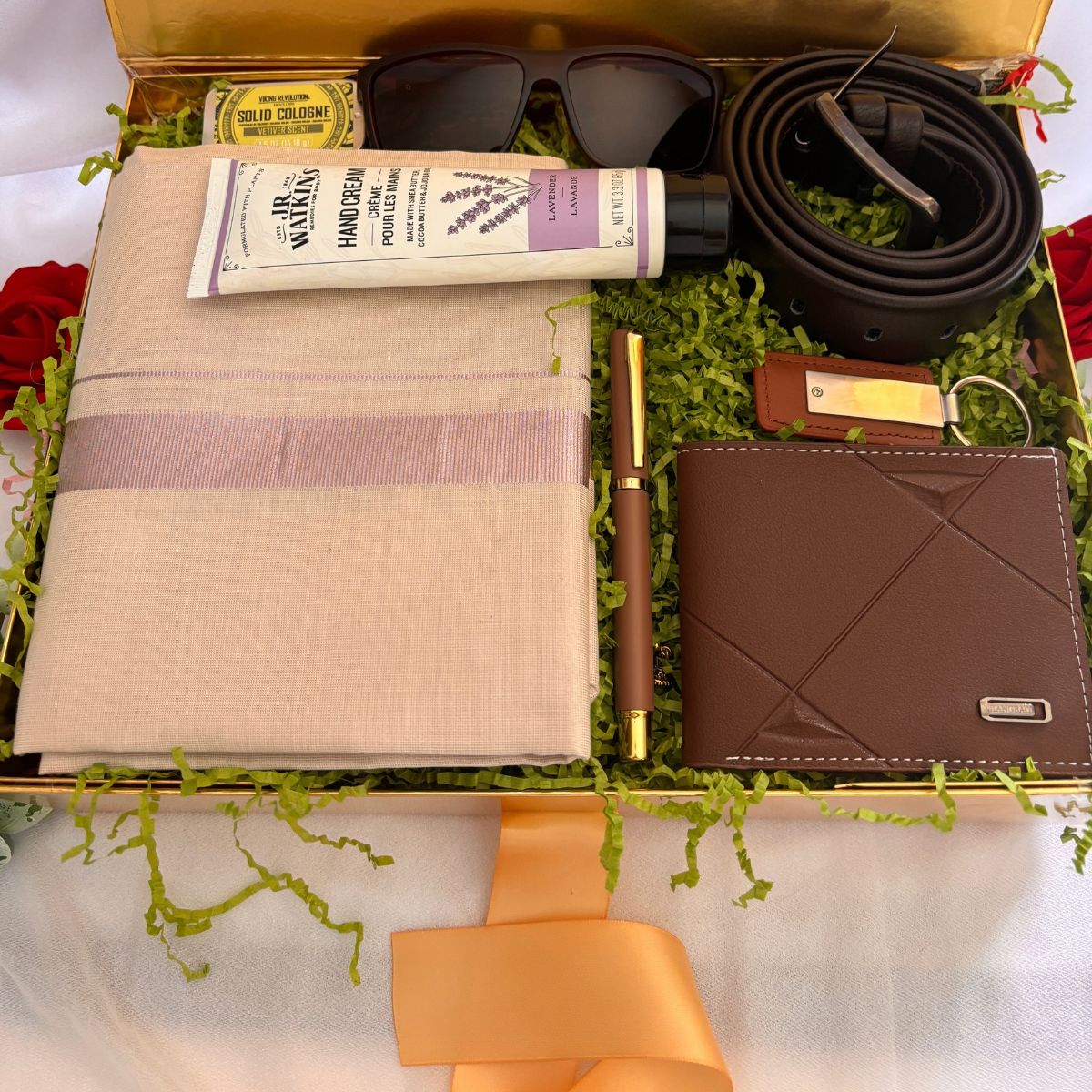
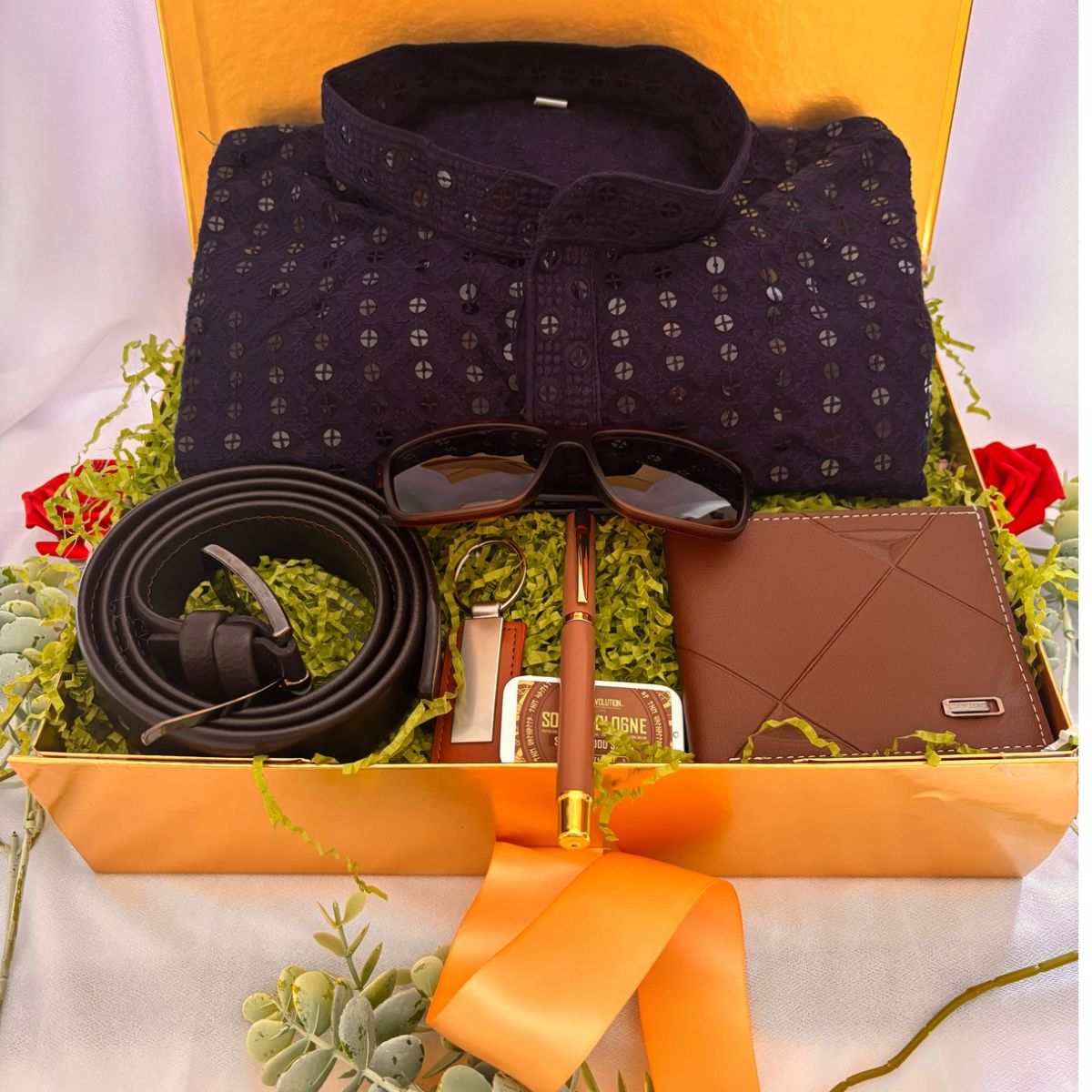
Meaningful Indian Groomsmen Gift Ideas
01
Phones, cards, hotel keys, and IDs become awkward in sherwani or kurta pockets.
Personalized Slim Card Wallet
A compact wallet works across Indian formalwear and Western reception attire. Choose discreet initials or an inside message rather than large wedding-party branding.
02
Groomsmen may change from traditional clothing into suits or tuxedos later in the day.
Quality Cufflinks
They are especially useful when the reception uses Western formalwear. Avoid generic elephant, Om, Khanda, or religious-symbol cufflinks unless the recipient actually wants that symbolism.
03
Multi-day Indian weddings produce hotel-room clutter quickly.
Fold-Flat Travel Valet Tray
Use it for a watch, kara or bracelet, keys, wallet, cufflinks, ring, and room key. It earns its place during the wedding weekend and at home afterward.
04
Sherwani buttons, stains, shoe scuffs, loose hems, and missing pins happen at the worst time.
Indian Wedding Grooming & Emergency Pouch
Include lint remover, stain wipe, bandages, mints, safety pins, small sewing tools, shoe wipe, tissues, and a comb. Keep it practical rather than turning it into a novelty “survival kit.”
05
A turban, safa, stole, pocket square, or reception tie needs safe storage between events.
Structured Accessory Case
A small travel case can hold formal accessories without flattening, tangling, or losing them across several hotel rooms.
06
The wedding party may be traveling with several outfits and chargers.
Personalized Travel or Tech Pouch
Choose a structured pouch large enough for cables, power bank, grooming items, or small accessories. This is especially useful for destination Indian weddings.
07
Culture-inspired gifts can become generic “India” merchandise.
Authentic Regional Craft Detail
When possible, connect the item to the actual wedding: documented Gujarati textile, Punjabi phulkari-inspired detail, Kerala handloom element, South Indian woven textile, or another accurately sourced craft. Do not label a mass-produced paisley print as cultural authenticity.
08
Matching boxes can make every friendship feel identical.
Handwritten Letter
Write one for each friend. Mention the memory, quality, or season of life that explains why you wanted him beside you. This is where the gift stops being inventory and becomes gratitude.
Signature Box Concepts
Three Indian Groomsmen Boxes MarryCrate Could Build
For processions, formalwear, and everyday use
The Baraat Ready Box
- Personalized card walletEasy to carry with kurta or sherwani
- Wedding-day grooming pouchFor stains, lint, shoe care, and small fixes
- Quality formal accessoryCufflinks, tie bar, or family-approved Wear item
Why this works: It supports the actual movement of a North Indian or fusion wedding without filling the box with decorative cultural clichés.
For multi-day Indian-American celebrations
The Wedding Weekend Box
- Structured travel pouchFor chargers, grooming, or accessories
- Fold-flat valet trayFor hotel-room organization
- Personalized key organizer or card caseA useful everyday carry item
Why this works: Indian weddings often involve several events, several outfits, and travel between venues. These products make the weekend easier.
For the closest friend or Best Man
The Heritage & Leather Box
- Premium leather walletDiscreetly personalized
- Authentic regional textile or craft detailChosen from the actual wedding heritage
- Handwritten letterThe part no one else can reproduce
Why this works: The cultural element is specific rather than generic, while the anchor product remains something he can use for years.
Plan Before the Wedding Week
Indian Groomsmen Planning Timeline
9M
Nine Months Before
Decide the groomsmen structure, Best Man or Best Person role, which events they attend, and whether cultural attire will be required.
6M
Six Months Before
Order sherwani, kurta, veshti, suit, or other coordinated clothing early enough for international shipping and alterations. Confirm turban or head-covering plans.
3M
Three Months Before
Share venue etiquette, procession plan, family roles, accommodation, transportation, and the first version of the Groom’s Side Map.
1M
One Month Before
Confirm final sizes, draping help, ceremony call times, Sangeet or reception performance, speeches, and each groomsman’s actual job.
1W
One Week Before
Give gifts that include wedding-use items. Label outfits by event and ensure everyone has footwear, head coverings, accessories, and travel information.
1D
The Day Before
Confirm the procession assembly point, sacred-venue rules, groom dressing lead, emergency pouch, reception outfit, transportation, and who carries the groom’s personal belongings.
What to Avoid
Common Mistakes Indian Groomsmen Make
Assuming every Indian wedding has a Baraat
It is common in many North and West Indian weddings, but not universal across India.
Treating the Best Man as the most important ceremonial man
Family, priest, granthi, witnesses, and designated relatives may hold roles the Best Man does not.
Calling every headwrap a turban and every turban the same
Sikh turbans, safas, pagris, and regional wedding headwear are not interchangeable.
Assuming sherwani is universal Indian groom attire
South Indian and Kerala weddings may center veshti, mundu, pancha, dhoti, shirts, angavastram, suits, or other regional clothing.
Drinking before a sacred ceremony without checking
Some venues and traditions explicitly prohibit alcohol or intoxication. Know the wedding you are attending.
Turning religious symbols into groomsmen merchandise
Khanda, Om, crosses, sacred texts, and ritual objects should not be added simply to make a gift look cultural.
Counting required wedding clothing as the whole gift
A required tie, kurta, or pocket square may be part of the wedding uniform rather than a personal thank-you.
Ignoring the groom’s regional background
“Indian” is a starting point. Punjabi, Gujarati, Tamil, Telugu, Malayali, Sikh, Hindu, and Christian traditions need specific guidance.
Buying generic “Indian” décor as a keepsake
Random paisley, elephants, royal titles, and novelty motifs rarely create meaningful cultural connection.
Forgetting that the groom needs a friend, not a production manager
Support the wedding, but do not turn every groomsman into unpaid event staff.
Save and Share
Indian Groomsmen Wedding-Week Checklist
Attire
- Event outfits labeled
- Alterations complete
- Traditional drape practiced
- Footwear packed
- Head covering or turban plan confirmed
- Reception accessories packed
Sacred Venue
- Shoe rule known
- Head-covering rule known
- Photography rule known
- Floor seating understood
- Food restrictions understood
- Alcohol expectations understood
Groom Support
- Phone holder assigned
- Wallet / key plan
- Water and food ready
- Emergency pouch ready
- Reception outfit staged
- Garment bags labeled
Procession
- Assembly time
- Music / dhol cue
- Transportation route
- Older-relative support
- Venue transition point
- Personal belongings secured
Wedding Party
- Best Man role clear
- Family roles respected
- Speech confirmed
- Dance performance confirmed
- Photo time known
- Departure plan known
Gift Box
- Wear item useful
- Carry item useful
- Keep item meaningful
- No alcohol assumption
- No generic cultural filler
- Letter personalized
Frequently Asked Questions
Indian Wedding Groomsmen Roles, Attire & Gifts
Do Indian weddings traditionally have groomsmen?
Western-style groomsmen are common in modern Indian-American weddings, but many traditional ceremonies organize important roles around family relationships, religious participants, and elders rather than a formal groomsmen structure.
What does a groomsman do at an Indian wedding?
Common responsibilities include attire, timing, groom support, procession participation where relevant, photographs, reception duties, and helping non-Indian friends understand venue etiquette. Formal religious roles should be assigned by the family or officiant.
What should Indian groomsmen wear?
It depends on the wedding. Options include kurta pajama, Nehru jacket, sherwani, bandhgala, suit, tuxedo, veshti, mundu, pancha, dhoti, and other regional clothing. Follow the couple’s actual community and event dress code.
Do all Indian grooms wear sherwanis?
No. Sherwani is especially visible in North Indian and modern fusion weddings, while South Indian and Kerala grooms may wear veshti, dhoti, pancha, mundu, shirts, angavastram, or other regional attire. Christian grooms may wear suits or community-specific clothing.
What is a Baraat?
A Baraat is the celebratory groom’s procession common in many North and West Indian weddings. It often includes dancing and music. It is not universal across India.
Do groomsmen participate in the Baraat?
Usually yes when the couple includes one. Friends and relatives often dance around the groom and help create the energy of the arrival.
What is Milni?
Milni is a Punjabi family greeting in which corresponding relatives from the two sides formally meet. Groomsmen should not assume they participate unless the family has assigned them a role.
What should a non-Sikh groomsman know about an Anand Karaj?
Follow the Gurdwara’s rules: remove shoes, cover the head, wear respectful clothing, be prepared for floor seating, and remain reverent around the Guru Granth Sahib. The exact venue guidelines should be shared before the wedding.
Can non-Sikh groomsmen wear turbans?
Some Sikh couples invite non-Sikh friends to wear coordinated turbans or head coverings. Follow the groom and family’s guidance, use proper terminology, and treat the turban respectfully rather than as costume.
What should groomsmen wear to a Tamil wedding?
The couple may request veshti or dhoti-style attire, kurta, shirt, or Western formalwear depending on the ceremony. Ask the family and practice any traditional drape before the wedding day.
What should groomsmen wear to a Telugu wedding?
Traditional options may include pancha or dhoti-style attire with a shirt or kurta, while sherwani or suit may appear at other events. Follow the family’s plan rather than assuming a North Indian dress code.
What should groomsmen know about Kerala weddings?
Malayali Hindu weddings may involve temple or hall etiquette and mundu or veshti attire. Kerala Christian weddings differ by denomination and parish. Ask the couple which community and venue rules apply.
Should groomsmen gifts be culturally Indian?
They can include a culturally connected detail, but they do not need to look obviously Indian. Useful products with one accurately sourced regional element often feel more thoughtful than a box of generic Indian motifs.
Are flasks good Indian groomsmen gifts?
Only when the recipient drinks and the wedding context supports it. Alcohol preferences vary by religion, family, observance, and individual, so it should never be the default.
What are good Indian groomsmen gifts instead of alcohol?
Consider a personalized card wallet, travel valet tray, cufflinks, grooming pouch, accessory case, quality pen, travel organizer, or a genuine regional craft detail.
Should the Best Man receive a different gift?
He can receive an upgraded version when his relationship or responsibility is different. Better material, deeper personalization, or a personal letter is usually more meaningful than simply adding more items.
When should Indian groomsmen gifts be given?
Give wedding-use items before the wedding day—often at the rehearsal, welcome event, private gathering, or before travel. This allows the recipient to pack or test the product.
What is the most meaningful Indian groomsmen gift?
Often it is a useful personalized item paired with an individual handwritten letter. The cultural detail may make the box beautiful, but the relationship makes it memorable.
The Gift Is the Gratitude
Choose the Box Around the Friend Standing Beside You
An Indian-American wedding can ask a groomsman to move from a loud Sangeet to a six-o’clock call time, from dancing in a groom’s procession to sitting quietly inside a Gurdwara, temple, or church, and from traditional clothing to a tuxedo before the reception doors open.
The friend beside the groom may be carrying his phone, finding his second pair of shoes, learning how to sit comfortably on the floor, helping an uncle reach the family photo, holding a garment bag, checking the reception speech, and making sure the groom eats something before another three hours of photographs.
Your gift does not need to summarize India. It does not need elephants, royal titles, or a religious symbol. It only needs to show that you noticed who he is and what he is doing for you.
A card wallet can say, “I wanted you to have something you will actually carry.” A valet tray can say, “I thought about the weekend you are traveling for me.” A regional craft detail can say, “I wanted to share something from the wedding with care.” And a handwritten letter can say what the entire box is meant to express: “You have shown up for me long before this wedding. I wanted you beside me because of who you are.”

Editorial and Cultural Accuracy Note
India is home to many religions, languages, regional communities, and wedding traditions. This guide is designed as a U.S.-focused master groomsmen resource and does not claim that Baraat, Milni, sherwani, Mandap ceremonies, veshti, Anand Karaj, temple weddings, or church customs apply to every Indian family. Confirm the final attire, religious etiquette, ceremony sequence, and wedding-party roles with the couple, family, officiant, and venue.