
Bridesmaid Gift Ideas for Telugu Weddings in the U.S
Bridesmaid Gift Ideas for Telugu Weddings in the U.S.: A Complete Guide for the Modern Bride
By Happy Geevar, Founder of MarryCrate
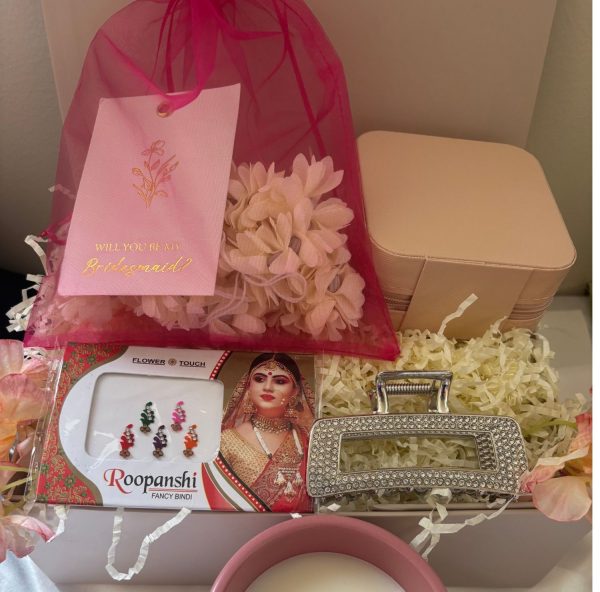
Every time a Telugu bride walks into my studio — or more often these days, hops on a Zoom call from her apartment in Dallas or her parents’ home in Edison — there is a particular look in her eyes. It is not just the excitement of impending marriage. It is the quiet overwhelm of trying to hold two worlds together in her hands. She wants the wedding her ammamma dreams of, with all the Jeelakarra Bellam and Kanyadaanam and the sacred fire burning just right. But she also lives in America. Her bridesmaids might include a cousin from Vijayawada, a roommate from her grad school days in Boston who has never been to an Indian wedding, and a childhood friend from the Telugu association who knows exactly when to hand her the tissue during Kanyadaanam.
I have been there with you all. Before MarryCrate, I ran Vastra Boutique, where I spent years helping Telugu families across the United States find sarees that would make their daughters glow on the most important day of their lives. I have dressed brides for weddings in temple halls in New Jersey, hotel ballrooms in the Bay Area, and convention centers in Texas where the mandapam was built from scratch by a team of artisans who flew in from Hyderabad. I have seen what works. I have seen what makes your bridesmaids feel truly appreciated — not just given a generic box with their name on it, but truly seen for the labor of love they are about to perform.
Because let us be honest: being a bridesmaid at a Telugu wedding in America is not the same as being a bridesmaid at a Western wedding. There is no single ceremony at 4 PM followed by a reception. There is a five-day marathon of rituals, outfit changes, 4 AM hair appointments, and the delicate navigation of family expectations. Your bridesmaids are not just holding bouquets. They are grinding cumin and jaggery at midnight. They are helping you into a nine-yard Kanjeevaram while your mother hovers with the talambralu. They are managing your Jada hairpiece while you try not to cry during Kanyadaanam, and then they are dancing until 2 AM at the reception in heels that are slowly destroying their feet.
This guide is everything I have learned from two decades of working with Telugu brides in the diaspora. It is practical, it is personal, and it is written with the understanding that you already know your culture. You do not need me to explain what a Pellikuthuru ceremony is. You need someone to help you figure out what to put in the box, what colors your bridesmaids should wear so they do not clash with the mandapam, and how to make your non-Telugu friends feel included without embarrassing them. Let us begin.
Understanding the Telugu-American Wedding: A Five-Day Reality Check
If you are planning a Telugu wedding in the United States, you are not organizing one event. You are orchestrating a five-day cultural marathon that blends ancient Vedic rituals with modern American logistics, and your bridesmaids are your lifeline through every single moment.
Day 1: Pellikoduku and Pellikuthuru — The Pre-Wedding Purification
The festivities begin with separate ceremonies for the bride and groom. At the bride’s home, the Pellikuthuru ceremony involves applying turmeric paste — nalugu — to the bride’s skin. This is not a quick facial. It is a ritual cleansing that involves family women singing traditional songs, the bride sitting for hours as the paste is applied and then washed off in the Mangala Snanam, and the first of many outfit changes.
Your bridesmaids’ role here is intimate and hands-on. They help arrange your hair in the traditional Jada, decorated with fresh jasmine flowers and gold accessories. They manage the endless stream of relatives arriving from India and across the country. They make sure you eat something between the paste application and the bath, because once the rituals start, nobody thinks about food.
By the end of Day 1, your bridesmaids have already worked harder than most Western bridesmaids do on the actual wedding day.
Day 2: Snathakam — The Thread Ceremony and the Bonding Ritual
This is the groom’s sacred thread ceremony, but the bride’s side is far from idle. One of the most beautiful — and exhausting — traditions is the preparation of Jeelakarra Bellam, the cumin-jaggery paste that will be used in the wedding ceremony. In many families, this paste is ground by hand, and your bridesmaids often stay up late doing it together. It becomes an unexpected bonding ritual, six women sitting on the floor of a hotel room or your parents’ basement, grinding and talking and laughing.
The paste symbolizes the “bitter and sweet” nature of married life. When your bridesmaids grind it, they are not just preparing an ingredient. They are participating in a metaphor.
Day 3: Kashi Yatra and Mangala Snanam — The Drama and the Bath
The Kashi Yatra is, without question, one of the most theatrical and joyful moments of any Telugu wedding. The groom dresses as a sadhu — an ascetic — with a walking stick, umbrella, and Bhagavad Gita, and pretends to leave for Kashi to renounce worldly life. The bride’s father begs him to stay. And your bridesmaids? They block his path. They create a human chain. They playfully refuse to let him leave until he promises to marry their girl.
This happens at dawn. Your bridesmaids are in full Kanjeevaram sarees, probably wearing heels, definitely sleep-deprived, and they are physically blocking a grown man from walking out a door while photographers capture every second. It is hilarious and chaotic and genuinely physical.
Later comes the Mangala Snanam, the auspicious bath. Your bridesmaids help you into your turmeric bath and then into your first wedding outfit. They are managing wet hair, heavy silk, and the pressure of getting you ready for the main event.
Day 4: The Wedding Day — Jeelakarra Bellam, Kanyadaanam, Saptapadi
This is the main event, and it is long. The ceremony can stretch for three hours or more, and your bridesmaids are standing for most of it.
They carry the Jeelakarra Bellam bowl during the procession. During Kanyadaanam — when your father places your hand in the groom’s — they hold your veil, they hand you tissues, and they stand witness to one of the most emotionally charged moments of your life. During Saptapadi, the seven sacred steps around the fire, they must know when to hand you items, adjust your saree pallu, or simply hold your hand.
Then comes Talambralu, where guests shower you with rice mixed with turmeric. Your bridesmaids help collect the rice — some families save it as a keepsake. Then they help you change from your Kanjeevaram into your reception outfit, managing the transfer of heavy gold jewelry while you try to eat a quick lunch.
By 7 PM, the reception starts. Five or more hours of dancing, photos, and celebrating. Your bridesmaids are dancing Kuchipudi or Bollywood numbers, managing their own outfit changes, and making sure you are having the time of your life.
Day 5: Gruhapravesham and Reception — The Final Push
The bride enters her new home for the first time. Your bridesmaids help you carry the Talambralu and ensure you do not trip over the threshold — a moment loaded with symbolism about your new life. If there is a post-wedding brunch for out-of-town guests, they are often the ones hosting it.
Why This Matters for Gift-Giving
When you understand what your bridesmaids are actually doing, the inadequacy of generic gifts becomes glaringly obvious. A candle that says “Best Bridesmaid” on it is not going to help them at 4 AM when they are trying to keep your Jada from falling apart. A matching set of robes is lovely for photos, but it does nothing for their blisters after Kashi Yatra.
Your bridesmaids need gifts that survive the marathon. They need gifts that acknowledge the specific, physical, emotional labor they are performing — labor that is unique to Telugu weddings and uniquely demanding when performed in the American context, where you might be renting a hotel ballroom one day and hosting a home ceremony the next.
Color Palette: What Your Bridesmaids Should Wear
Telugu weddings are a riot of color, but there is a method to the madness. Understanding the color symbolism helps you choose bridesmaid gifts that complement the visual story of your wedding, and it helps your bridesmaids choose outfits that look intentional rather than accidental.
Ceremony-by-Ceremony Color Guide
| Ceremony | Dominant Colors | Bridesmaid Outfit |
|---|---|---|
| Snathakam / Pellikuthuru | Yellow, turmeric, gold | Yellow or cream salwar kameez |
| Kashi Yatra | White, cream, gold | White or cream saree with gold border |
| Mangala Snanam | Yellow, orange | Yellow saree or lehenga |
| Wedding Day | Red, maroon, gold | Kanjeevaram silk saree (complementary color) |
| Reception | Pink, purple, blue, green | Designer lehenga or Indo-Western gown |
The Kanjeevaram Saree Rule
For the main wedding ceremony, Telugu bridesmaids traditionally wear Kanjeevaram silk sarees in colors that complement but do not compete with the bride’s red or maroon. This is not a hard rule in the diaspora — many bridesmaids wear lehengas or Indo-Western outfits — but if you are going the traditional route, these are the colors that work beautifully:
- Royal purple — Auspicious and regal. Photographs beautifully against gold jewelry and the red of the bride’s saree.
- Peacock blue — Matches temple jewelry perfectly. In South Indian tradition, this color is associated with Krishna and divine joy.
- Emerald green — Symbolizes fertility and new beginnings. Looks stunning under mandapam lighting.
- Mustard yellow — Warm and celebratory. A safe choice that works with almost every skin tone.
- Rani pink — Royal and feminine. A bold choice that stands out in group photos without overshadowing the bride.
The Gold Imperative
Gold is non-negotiable in Telugu weddings. It is not just jewelry — it is Lakshmi incarnate, prosperity made visible. Your bridesmaids will be wearing gold necklaces, earrings, bangles, and possibly waist belts (Vaddanam). Any gift that includes gold-toned items will feel culturally appropriate and photograph beautifully.
This is why, when I design bridesmaid boxes for Telugu weddings, I always include at least one gold-toned item. It is not about the monetary value. It is about the symbolism.
Ceremony by Ceremony: What Bridesmaids Actually Need
Let us get granular. Here is an hour-by-hour breakdown of what your bridesmaids are doing, and what they actually need in their hands.
Day 3: Kashi Yatra (4:00 AM – 8:00 AM)
What happens: The groom walks toward the door in sadhu attire. Your father begs him to stay. Your bridesmaids block his path, create a human chain, and playfully refuse to let him leave.
What they need: Comfortable shoes. They are on their feet at 4 AM, possibly in a hotel corridor or outside your parents’ home, and they are physically blocking a path. Hair accessories that will not fall out during the playful tussle. Bobby pins. So many bobby pins. And a small gift for the groom’s sisters — in many Telugu families, the bridesmaids exchange small gifts with the groom’s sisters as a gesture of welcome and sisterhood.
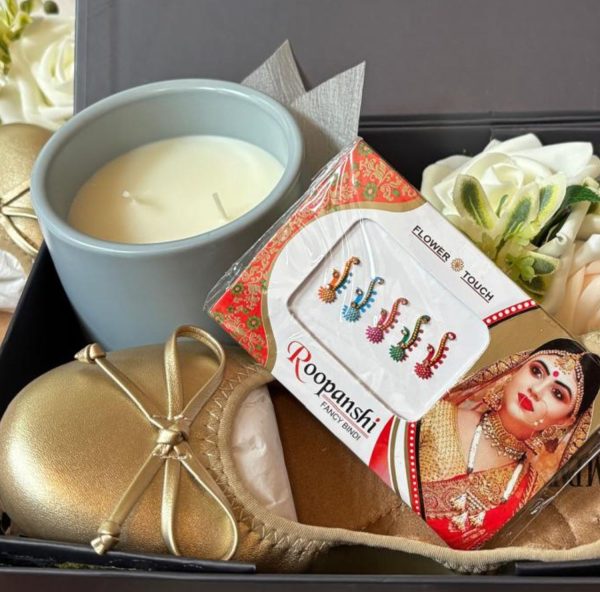
Gift angle: Gold foldable flats in their box mean they can slip these on after the Kashi Yatra drama and before the Mangala Snanam. Their feet will thank you.
Day 4: Wedding Day Timeline
6:00 AM – Hair and Makeup. Your bridesmaids arrive to help you into your Jada. They apply their own makeup while managing your anxiety. They are functioning as stylists, therapists, and timekeepers simultaneously.
Need: Eye masks for de-puffing. They were up at 4 AM. Their eyes are puffy. A gel eye mask, stored in the fridge overnight, is a small luxury that makes a big difference.
8:00 AM – Jeelakarra Bellam Ceremony. Your bridesmaids carry the bowl of cumin-jaggery paste. The couple applies it to each other’s heads. The paste is sticky. It gets everywhere.
Need: Hair accessories that will not get sticky. Clips and pins that can be wiped clean. Also, tissues. Always tissues.
9:00 AM – Kanyadaanam. The most emotional moment of the wedding. Your father places your hand in the groom’s. Your bridesmaids hold your veil and hand you tissues. They are standing two feet from raw emotion.
Need: Emotional support, waterproof mascara, and a steady hand.
10:00 AM – Saptapadi (Seven Steps). The couple takes seven steps around the sacred fire, each with a vow. Your bridesmaids stand by with rice, flowers, and your pallu. They are near the fire for two to three hours.
Need: Comfortable shoes. The heat from the fire, the standing, the weight of the saree — this is when blisters form and backs ache.
12:00 PM – Talambralu. Guests shower the couple with rice mixed with turmeric. Your bridesmaids help collect the rice.
Need: Small bags or containers for collecting rice. A few zip-top bags in their purse can be surprisingly useful.
2:00 PM – Lunch and Outfit Change. Your bridesmaids help you change from Kanjeevaram to reception outfit. They eat quickly while managing jewelry transfers. Heavy gold sets do not go in a Ziploc bag.
Need: Jewelry cases to safely store the heavy ceremony jewelry. A small, padded jewelry roll in their gift box is incredibly thoughtful.
7:00 PM – Reception. Five or more hours of dancing, photos, and celebrating. Your bridesmaids dance Kuchipudi or Bollywood numbers. They are exhausted but radiant.
Need: Comfortable dancing shoes, bindis for forehead decoration, and energy. The bindis are especially important for photos — a mismatched bindi stands out in close-up shots.
The Perfect Telugu Bridesmaid Box: The “Wear + Ready + Keep” Formula
After years of working with Telugu brides across the U.S., I developed a formula that works for the specific demands of our weddings. Every item must earn its place in the box.
WEAR — Something she will use during the wedding.
READY — Something for the 4 AM call times and long days.
KEEP — A sentimental reminder of your bond.
Item 1: Gold Foldable Ballet Flats — The Saptapadi Survival Shoe
The problem: Your bridesmaids start the day in heels or traditional Kolhapuris for the Kashi Yatra and Kanyadaanam photos. By the time Saptapadi starts — two to three hours of standing near a fire — their feet are screaming. By the reception, they are barefoot on the dance floor or limping.
The solution: Gold foldable flats that slip into a pouch smaller than a sunglasses case. Your bridesmaids can wear heels for the 8 AM ceremony photos, slip into flats at 10 AM for Saptapadi, and dance until 2 AM without a single blister.
Why gold? In Telugu culture, gold equals Lakshmi equals prosperity. Gold accessories are worn by every woman at the wedding, from the eighty-year-old grandmother to the five-year-old flower girl. These flats look intentional, not like an afterthought.
Item 2: Roopanshi Fancy Bindis — The Forehead Jewelry Your Photographer Will Thank You For
The problem: Telugu bridesmaids often forget bindis or bring ones that do not match their saree color. In photos, a mismatched bindi stands out like a sore thumb — especially in the close-up shots during Kanyadaanam.
The solution: A multi-color pack of fancy bindis in jewel tones — red, green, blue, purple, gold, and maroon. Each bridesmaid can choose the bindi that matches her Kanjeevaram saree or lehenga.
Cultural note: In Telugu weddings, married women traditionally wear red bindis, while unmarried women — including bridesmaids — can wear any celebratory color. The fancy bindis in a multi-color pack are celebratory and appropriate.
Photography tip: Ask your photographer to take a “bindi detail shot” — all bridesmaids showing their matching-but-different bindis. It has become a beloved trend at Telugu weddings.
Item 3: Fern + Bloom Scented Candle — The 4 AM Calm
The problem: Telugu wedding prep starts at 4 AM. Your bridesmaids are sleep-deprived, anxious, and managing a bride who is simultaneously excited and terrified. The energy in the getting-ready room is chaotic — hairspray, jasmine flowers, mothers giving instructions, photographers arriving early.
The solution: A scented candle with a fresh, green-floral scent that cuts through the chaos. I specifically choose scents that evoke South Indian temple gardens — jasmine, tuberose, fern. It is not overpowering, but it creates a “spa moment” in the middle of the storm.
How to use it: Light the candle at 4 AM when the bridesmaids arrive. By 6 AM, the room smells like a temple garden instead of a salon. After the wedding, the bridesmaid takes the candle home as a memory trigger.
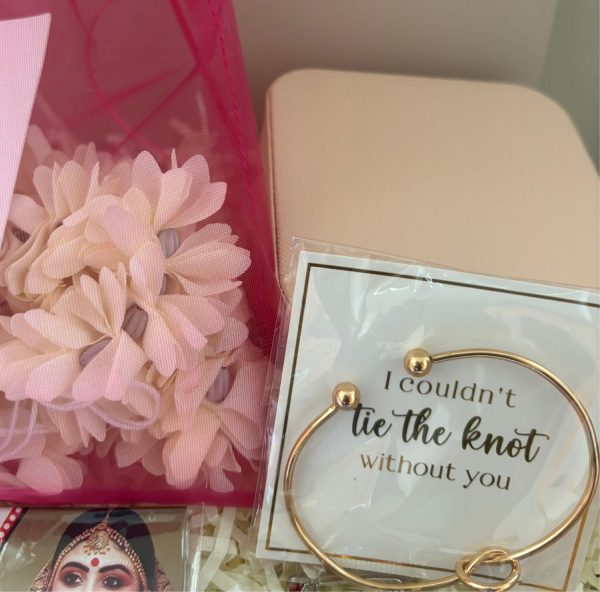
Item 4 (Optional but Beloved): Color-Coordinated Glass Bangles
If you want to add a traditional touch that costs very little but means a great deal, include two to three glass bangles in colors that match each bridesmaid’s saree. Bangles are deeply symbolic in Telugu culture — they represent the sound of joy, the presence of Lakshmi, and the continuity of tradition.
“I added glass bangles to the box at the last minute — just three bangles per bridesmaid in colors matching their sarees. They wore them for the entire five days. One of my bridesmaids told me she still has them in her jewelry box and wears them to every Telugu event. It is the most-used bridesmaid gift I have ever given.” — Lakshmi, Houston
How to Personalize Your Bridesmaid Boxes
The core three products create a beautiful foundation, but personalization is what transforms a nice gift into an unforgettable one. Here are the options I offer at MarryCrate, ranked from simple to elaborate.
Option 1: Name in Telugu Script
Add each bridesmaid’s name in Telugu script to the box lid or a card inside. This costs very little — usually three to five dollars per box — but creates an immediate “wow” moment. There is something deeply touching about seeing your name written in the script of your heritage, especially if you grew up in America and rarely see it used for you personally.
Option 2: Custom Message Cards
Include a card with a personal message in Telugu. Even a simple line like “Nee sneham naaku amulyam” — your friendship is precious to me — written in your own handwriting, means more than any expensive item in the box.
Option 3: Color-Coordinated Bangles
As mentioned above, adding two to three glass bangles in colors that match each bridesmaid’s saree is the traditional “add-on” that makes the box feel complete. It shows you thought about her specific outfit, not just the group as a whole.
Option 4: The Complete Package
| Tier | Price | Includes |
|---|---|---|
| Essential | $ | Flats + Bindis + Candle + standard thank-you card |
| Premium | $$ | Everything in Essential, plus personalized Telugu name card + cultural guide booklet |
| Luxury | $$$ | Everything in Premium, plus engraved jewelry case + couple’s names on candle + 3 matching bangles |
FAQ: Telugu Bridesmaid Gift Etiquette in the U.S.
How many bridesmaids should I have for a Telugu wedding?
Traditionally, Telugu weddings in India might have four to eight women in the bride’s inner circle. In the U.S., four to six is typical. Some families consider an odd number auspicious — five or seven. But there is no hard rule. Choose the people who will actually show up at 4 AM and hold your saree without complaining.
When should I give the bridesmaid boxes?
The night before the Pellikuthuru or Snathakam ceremonies is ideal. This gives your bridesmaids time to pack the items into their wedding-day bags. If you are having a Mehndi or Sangeet night, that is also a beautiful moment for gift-giving.
Should the boxes be identical or personalized?
The box design and core three products should be identical for visual cohesion. But personalization — a name in Telugu script, bindi color matching their saree, bangle colors — makes each bridesmaid feel individually valued.
Do I need to give gifts to the groom’s sisters too?
Yes. In many Telugu families, there is a tradition of the bride’s side giving small gifts to the groom’s sisters, and vice versa. Consider adding a small extra item — an extra bindi pack, a candle, or a set of bangles — for this exchange.
What is the budget range for Telugu bridesmaid gifts in the U.S.?
In the Telugu diaspora, fifty to one hundred fifty dollars per bridesmaid is standard. The Premium box at seventy-eight dollars hits the sweet spot — substantial without being extravagant.
Can non-Telugu friends be bridesmaids?
Absolutely. And they are often the ones who appreciate the cultural guide booklet most. The box helps them understand their role and feel included rather than confused. I always encourage brides to include one non-Telugu friend if they want to — it enriches the experience for everyone.
What if my bridesmaids don’t wear sarees?
Many Telugu-American bridesmaids wear lehengas or Indo-Western outfits instead of Kanjeevaram sarees. The gold flats and bindis work with all outfit types. The candle is universal. Do not stress about the saree question — focus on colors that complement your wedding palette.
Should I include a note explaining the cultural significance?
Yes, especially for non-Telugu bridesmaids. A small card explaining “Why Gold Matters in Telugu Weddings” or “The Story of Jeelakarra Bellam” adds meaning and education without being preachy. For Telugu bridesmaids, the note can simply be personal — a memory you share, a thank-you for their specific role.
Final Thoughts: The Gift Is the Gratitude
I started MarryCrate because a bride asked me for something I had never made before: a personalized gift box that felt as special as the people receiving it. She was Telugu, like me. She was getting married in New Jersey, like so many of the families I grew up with. And she wanted her bridesmaids — her cousin from Hyderabad, her roommate from Rutgers, her childhood friend from the Telugu association — to feel seen.
That is what this is about. The gold flats will eventually wear out. The candle will burn down. The bangles might break. But the feeling of being truly appreciated — of having your labor recognized, your culture honored, your friendship celebrated — that lasts.
If you are a Telugu bride in the United States, planning a wedding that spans five days and two continents, you have enough to worry about. Let the gifts be one thing you feel confident about. Choose items that solve real problems. Choose personalization that speaks to real bonds. And choose with your heart, because that is where every beautiful gift begins.
With love,
Last Updated: July 2026