
The auspicious time shapes the day.
The Muhurtham may occur early, requiring hair, makeup, clothing, transportation, and family photographs to begin hours beforehand.
A detailed guide to Tamil wedding traditions, early-morning Muhurtham preparation, ceremony etiquette, thoughtful gifting, and the practical details your bridesmaids will genuinely appreciate.
What This Guide Helps You Do
Tamil weddings are shaped by sacred timing, family blessings, silk, jasmine, music, ritual, and careful preparation. This guide explains those moments before recommending gifts.
The bridesmaids may have slept only a few hours. One is helping secure the bride’s braid. Another is arranging bangles in the order they will be worn. A friend attending her first Tamil wedding is reading the schedule and trying to understand when Kashi Yatra ends, when Oonjal begins, and whether she should already be near the Mandap.
That is the rhythm of many Tamil wedding mornings: peaceful and hurried at the same time. The ceremony may begin early because the family has chosen an auspicious Muhurtham. Before the central wedding rituals begin, the couple and their families may already have moved through several meaningful ceremonies. By the reception, the bridal party may have changed outfits, jewelry, hairstyles, and venues more than once.
A thoughtful bridesmaid gift should recognize that experience. It should not be a random assortment of products selected because they photograph well together. The strongest gifts make the morning easier, protect something valuable, offer a moment of care, or become a keepsake connected to the relationship.
Tamil weddings differ between Iyer, Iyengar, other Tamil Hindu communities, regions, families, and officiating priests. Some ceremonies below are especially associated with Tamil Brahmin weddings and should not be presented as universal. Your family’s practice and priest’s ceremony remain the final authority.
Start With the Wedding
A Tamil wedding creates a different set of needs from a late-afternoon ceremony followed by one reception. The bridal party may begin before sunrise. Heavy silk, temple-style jewelry, flowers, long braids, garment changes, sacred-fire rituals, and a detailed family schedule all require planning.
A personalized robe may still be useful, but it should not replace products that keep jewelry organized, help a bridesmaid manage an early call time, or allow her to move comfortably through a long ceremonial morning.
The Muhurtham may occur early, requiring hair, makeup, clothing, transportation, and family photographs to begin hours beforehand.
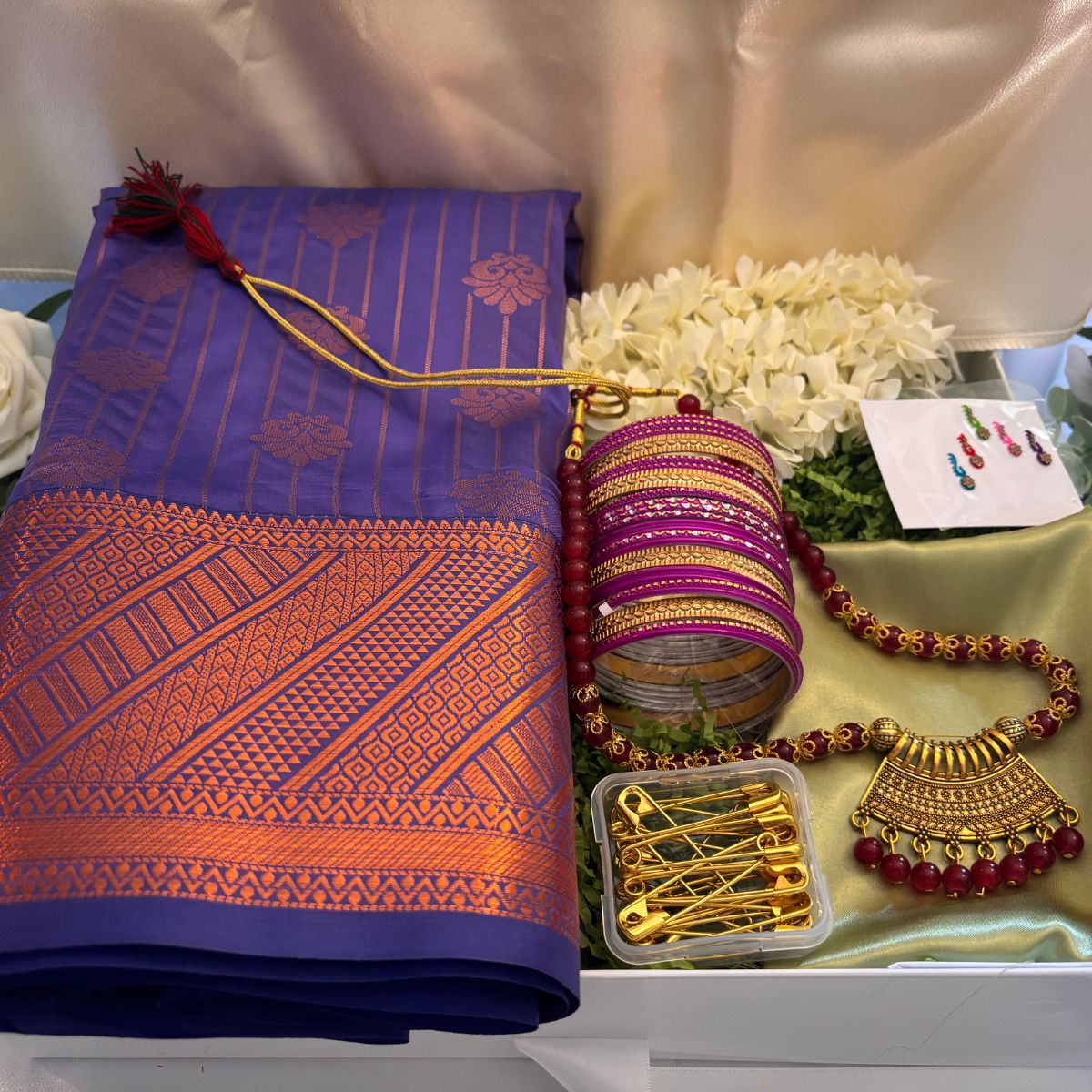
Kanjeevaram sarees, temple-style jewelry, bangles, hair ornaments, and flowers require careful packing and handling.
Non-Tamil bridesmaids may need guidance about Kashi Yatra, Oonjal, Mangalya Dharanam, Saptapadi, and where they should stand.
A labeled jewelry case, ceremony card, timeline, or compact emergency pouch may be more valuable than another decorative filler.
Quick Facts
The Wedding Journey
The sequence below combines ceremonies found across many Tamil Hindu weddings with rituals especially common in Tamil Brahmin traditions. Your wedding may include only some of them.
Nichayathartham is the formal engagement or betrothal. Families exchange blessings and gifts, and the wedding agreement may be announced before relatives. Modern celebrations may include rings, photographs, and a meal.
Bridesmaids may help the bride prepare, organize jewelry and gifts, guide guests, or gather with her before the larger wedding week begins.
This ceremony marks the formal beginning of wedding preparations. Families seek divine blessings and may install or bless a symbolic wedding post connected with the celebration.
It is family-led. Bridesmaids who attend should dress respectfully, keep phones quiet, and help only where assigned.
In some Tamil Brahmin families, this gathering honors married women of the family and remembers women from earlier generations. It may include prayer, a meal, clothing, and blessings.
This is not universal, and its meaning and roles should be explained by the household.
Vratham includes prayers and preparations marking the transition into the wedding rites. The bride and groom may participate separately with their families.
Bridesmaids can protect the schedule, organize clothing and jewelry, and keep the bridal room calm.
Janavasam is associated with welcoming or publicly receiving the groom. Modern Tamil-American weddings may combine it with a welcome dinner or evening reception.
Bridesmaids may help with entrances, guest guidance, and the bride’s preparation for photographs.
Mehndi is not historically central to every Tamil Hindu wedding, but many Tamil-American couples now include it as part of a broader Indian or multicultural wedding weekend.
If included, bridesmaids may manage the bride’s phone, food, and personal items while her henna dries.
Mangala Snanam is an auspicious ceremonial bath or wedding-morning purification observed in some families. Turmeric, oil, or other preparations may be used according to custom.
Bridesmaids should know whether clothing may be stained and how quickly the bride must move into hair, makeup, and silk.
In many Tamil Brahmin weddings, the groom symbolically prepares to leave worldly life for spiritual study. The bride’s father or family persuades him to choose married life instead.
The ritual is playful in presentation but reflects the transition from student life to household life. Bridesmaids usually observe rather than lead it.
The couple exchanges flower garlands. Relatives may lift them playfully as each tries to place the garland first.
Bridesmaids may carry garlands, secure the bride’s saree and flowers, or help manage the transition to Oonjal.
Oonjal means swing. In many Tamil Brahmin weddings, the couple sits on a decorated swing while women sing traditional songs. The couple may be offered milk and banana, and colored rice balls may be used in protective blessings.
The gently moving swing is often explained as a reminder that married life changes and the couple must support one another.
Kanyadaanam is observed in many Hindu weddings, though modern families may adapt, reinterpret, rename, or omit it. The bride’s parents or guardians participate in formally joining the couple.
Bridesmaids should remain quietly supportive and avoid unnecessary movement near the ceremonial space.
The groom ties the Thaali or Mangalyam around the bride’s neck at the chosen Muhurtham. Nadaswaram and thavil music may intensify while relatives shower the couple with flowers or rice.
Because the moment happens quickly, every bridesmaid should already know where she belongs.
The couple takes seven sacred steps with prayers and commitments for married life. Exact wording, movement, and interpretation vary by tradition.
The officiating priest and family program should be treated as the authority for that wedding.
The bride steps on a grinding stone while the groom supports or guides her. The stone is commonly associated with steadiness, resilience, and strength.
Keep the pathway clear and adjust the saree only if specifically asked.
In some weddings, the couple is shown the star Arundhati, associated with marital fidelity and partnership. Indoor or daytime venues may adapt this symbolically.
The couple makes offerings into Agni while the priest recites Vedic mantras. Bags, flowers, and loose fabric should remain away from the sacred fire.
Nalangu is a playful post-wedding or later ceremonial gathering in many Tamil families. The couple may participate in games and symbolic domestic activities after the formal rites.
The details vary widely, so the family should define what is included.
The reception may occur before the Muhurtham evening, after the wedding, or on another day. Tamil-American couples often adapt the schedule around venues and guest travel.
Bridesmaids may change outfits, help with entrances and speeches, organize jewelry, and remain on the dance floor after a very early start.
The Work Behind the Silk
The Early-Morning Reality
The Problem
Hair, makeup, saree draping, jewelry, flowers, and photographs may begin before hotel breakfast opens.
The Better Plan
Arrange breakfast, coffee or tea, water, and labeled snacks in advance. Confirm dietary needs.
The Problem
Temple-style necklaces, earrings, bangles, waist belts, hair ornaments, pins, and reception pieces may share one room.
The Better Plan
Use labeled trays or a compartmentalized organizer for each look. Photograph every completed set before packing.
The Problem
Flowers can wilt or become crushed while hair is being prepared.
The Better Plan
Confirm delivery time, storage instructions, quantity, and who will hand the flowers to the hairstylist.
The Problem
The Better Plan
Keep sarees covered and away from the beauty station until needed. Use a clean dressing surface and one garment manager.
The Problem
The Better Plan
Build photographs around the ceremony. Share a hard departure time with every vendor and bridesmaid.
Sacred Space, Clear Guidance
Temple and home prayer settings may require footwear removal. Hotel venues may differ.
The ceremony can be long, and bridesmaids may sit, stand, or remain near the front.
Keep bags, loose flowers, fabric, and personal items away from the sacred fire.
Oonjal, offerings, Kanyadaanam, and Mangalya Dharanam have designated participants.
Designate one person to keep an emergency phone accessible.
Photography, clothing, food, and access may be governed by the temple or venue.
Color With Context
Kanjeevaram or Kanchipuram silk is associated with Tamil Nadu and is known for substantial silk, contrasting borders, zari work, and motifs drawn from temples, nature, checks, coins, peacocks, and traditional geometry. High-quality pieces can become heirlooms.
Bridesmaids do not need matching heavy Kanjeevaram sarees. Coordinated borders, silk pouches, blouse details, or a shared palette can create harmony without requiring identical weight or expense.
Jasmine, often called malligai, is connected with Tamil adornment, fragrance, devotion, and bridal beauty. Fresh jasmine requires planning around delivery, storage, allergies, and hairstyle. Reusable floral accessories may be more practical for traveling bridesmaids.
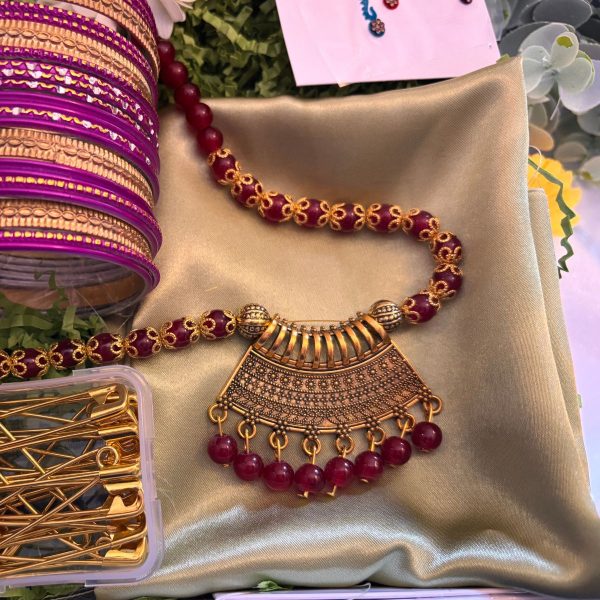
Temple-style jewelry may use gold-tone forms inspired by deities, flowers, coins, and classical South Indian design. Some motifs are devotional, not merely ornamental. Bridesmaid pieces should be accurately described and kept lighter than the bride’s ceremonial jewelry.
| Wedding Moment | Palette Direction | Textile or Detail | Practical Consideration |
|---|---|---|---|
| Nichayathartham | Rose, emerald, teal, maroon, gold | Silk, zari borders, refined jewelry | Choose polished clothing suitable for greetings and photographs. |
| Reception | Jewel tones, black, navy, wine, metallics | Contemporary silk or embroidery | Coordinate with stage lighting and the bride’s outfit. |
| Muhurtham | Maroon, red, green, mustard, ivory, antique gold | Kanjeevaram silk, jasmine, temple-inspired jewelry | Prioritize secure draping and comfort. |
| Nalangu | Yellow, coral, green, pink, cream | Lighter silk or cotton-silk | Allow easy movement. |
From Ceremony to Solution
| Event | What Bridesmaids May Do | Common Problem | Useful Gift or Preparation |
|---|---|---|---|
| Nichayathartham | Greeting, gifts, photographs | Small items are misplaced | Personalized pouch or jewelry organizer |
| Vratham | Attend quietly, help family | Unclear expectations | Ceremony card and outfit guidance |
| Reception or Janavasam | Entrances and photographs | Late night before early call | Hard departure time and morning kit |
| Mangala Snanam | Help transition into preparation | Turmeric or oil near clothing | Washable robe and protected dressing area |
| Oonjal | Remain nearby | Crowding ceremonial participants | Clear participation guidance |
| Muhurtham | Quiet support and organization | Early call and complex accessories | Breakfast, organizer, emergency pouch |
| Reception | Outfit change, speeches, dancing | Fatigue, foot pain, dead phones | Flats, charger, hydration, simple jewelry |
The MarryCrate Framework
Fewer, Better Gifts
Several looks create several sets of necklaces, earrings, bangles, and hair pieces.
Choose a structured case with necklace hooks, ring rolls, earring panels, and compartments large enough for Indian jewelry.
An early Muhurtham leaves little time to search for pins or a missing earring back.
Include safety pins, fashion tape, hair pins, tissues, mints, blister pads, earring backs, and a stain wipe inside a reusable pouch.
Beautiful silk and jewelry deserve a pouch that protects them.
Use authentic textile remnants only when sourced and described responsibly. A silk-lined pouch can hold bangles, cosmetics, flowers, or chargers.
Every large mirror is occupied when she needs to check a bindi, flower, or saree pleat.
A brass-tone finish can reference Tamil ceremonial warmth without copying a sacred object.
Fresh jasmine is beautiful but difficult for traveling bridesmaids to preserve.
A reusable floral accessory may be practical for travel. Fresh jasmine should be sourced locally and handled according to florist guidance.
Temple-style earrings can become heavy during a long ceremony.
Select pieces that complement the outfit without competing with the bride’s ceremonial jewelry.
The morning can begin before food or coffee is available.
A coffee blend, insulated cup, tea alternative, or breakfast card can acknowledge the early call time. Confirm caffeine and dietary preferences.
Formal footwear becomes painful after hours of standing and photographs.
Choose a second pair that fits properly and offers enough support. Test it before the wedding.
Non-Tamil friends may feel uncertain even when they want to participate respectfully.
Explain the names, order, tone, and expected bridesmaid position for major moments. Confirm the sequence with the family and priest.
A beautifully designed box still feels generic when every message is identical.
Tell her why you chose her, name a shared memory, and recognize something specific she has done.
Signature Box Concepts
For textile heritage and lasting use
For the earliest and most detailed morning
For understated ceremony elegance
What to Avoid
Identify which ceremonies belong to the family rather than blending Iyer, Iyengar, and other Tamil Hindu customs.
A beautiful box is less useful than breakfast, water, a schedule, and organized jewelry at 3:00 a.m.
Deity imagery, mantras, Thaali forms, temple lamps, and ritual symbols should not become casual packaging decoration.
Describe handwoven, blended, printed, and Kanjeevaram-inspired products accurately.
Weight, allergy, fastening, and comfort matter throughout a long ceremony.
Confirm delivery, quantity, storage, attachment, and allergies.
Timeline cards, organizers, and emergency kits should arrive before the wedding morning.
Publish only genuine customer stories with permission.
Save and Share
Frequently Asked Questions
A formal Western bridal party is not required. Many Tamil-American couples include bridesmaids, while sisters, cousins, and close friends often provide similar support without the title.
No. Tamil Hindu communities follow diverse traditions. Kashi Yatra, Oonjal, and several detailed Vedic rites are especially common in Tamil Brahmin weddings but are not universal.
The Muhurtham is the auspicious time selected for a central wedding ritual, especially Mangalya Dharanam.
The ceremony is scheduled around an auspicious time selected according to family religious and astrological practice.
Oonjal is a swing ceremony common in many Tamil Brahmin weddings. The couple sits on a decorated swing while women sing and perform blessings.
It is a playful ritual in which the groom symbolically prepares for spiritual life before being persuaded to choose marriage and household life.
It is the ritual in which the groom ties the Thaali or Mangalyam around the bride’s neck at the auspicious time.
No. Coordinated silk, borders, colors, or accessories can create a cohesive look without requiring every bridesmaid to wear a heavy Kanjeevaram saree.
Yes, when coordinated respectfully with the bride and family. Confirm allergies, hairstyle, and flower availability.
They can be, but devotional motifs should be treated carefully. Choose lighter, accurately described pieces.
Temple and home settings may require shoe removal, while hotel ceremonies may differ. Confirm beforehand.
Practical Muhurtham products should be delivered before the wedding weekend so bridesmaids can pack and test them.
There is no fixed amount. A meaningful box can often be built between $40 and $85, while artisan textiles or premium jewelry may cost more.
A travel jewelry organizer, Muhurtham emergency kit, clear timeline, or compact mirror is likely to be used repeatedly.
Often it is the handwritten letter because it explains why the person was chosen and what her friendship means.
The Gift Is the Gratitude
A Tamil wedding morning can begin before sunrise and still feel full before breakfast. The women standing beside the bride may be carrying jewelry, protecting silk, securing flowers, tracking the auspicious time, helping family members, and quietly making sure the bride has a moment to breathe.
Your gift does not need to compete with the richness of the ceremony. It only needs to show that you noticed.
A jewelry organizer can say, “I thought about everything you are carrying.” A morning comfort set can say, “I know how early you are waking up for me.” A ceremony card can say, “I want you to feel welcomed into my family’s traditions.” A handwritten letter can say what every thoughtful gift is meant to express: “Your friendship has been part of my life long before this wedding, and I am grateful you are here for this moment.”

Tamil wedding customs differ between Iyer, Iyengar, other Tamil Hindu communities, regions, families, temples, and officiating priests. This guide reflects commonly documented practices and Tamil-American adaptations, but it does not claim that every family observes every ritual in the same way. Confirm the final sequence, terminology, dress expectations, food practices, and participant roles with your family and officiant.