A meaningful Punjabi Hindu bridesmaid gift should support the celebration, reflect the friendship, and remain useful long after the wedding.A Punjabi Hindu wedding rarely asks a bridesmaid to show up for only one ceremony. She may be learning a Sangeet performance weeks in advance, sitting beside the bride while her Mehndi dries, helping organize Chooda and Kaleere accessories, moving between family homes and hotel venues, and still finding the energy to dance after the final reception speech.Some bridesmaids will understand every ritual because they grew up attending Punjabi weddings. Others may be meeting the bride’s extended family for the first time or entering a Hindu ceremony without knowing when to stand, where to sit, or what the sacred fire represents. A thoughtful bridesmaid gift can do more than thank them. It can help each woman feel prepared, welcomed, and genuinely cared for throughout a wedding that may unfold across several joyful days.That is why the strongest Punjabi Hindu bridesmaid gifts are not simply decorative. They solve a real wedding-week problem, support a meaningful ceremony, or become a personal keepsake connected to the relationship behind the gift.This guide brings those needs together. You will find a practical overview of Punjabi Hindu wedding events, bridesmaid responsibilities, outfit guidance, ceremony etiquette, useful gift ideas, curated box concepts, budget advice, common mistakes, and a complete packing checklist. Traditions differ between families, regions, communities, and priests, so use this as a planning framework rather than a universal rulebook.
Why Punjabi Hindu Bridesmaid Gifts Should Feel Different
A generic bridesmaid box can be beautiful, but it may not reflect what a Punjabi Hindu wedding actually requires. A robe may look lovely in getting-ready photographs, yet it does little for a bridesmaid changing outfits between ceremonies, keeping jewelry organized across several venues, protecting her feet during hours of dancing, or managing a lehenga while assisting the bride.
The wedding may move between high-energy Punjabi celebrations and deeply sacred Hindu rituals. One evening may be filled with dhol, Giddha, Bhangra, and family performances. The wedding ceremony may center on a Mandap, sacred fire, Sanskrit prayers, family blessings, and the couple’s vows. A thoughtful gift should move between those worlds with the same ease the bridal party does.
The best gift choices usually support at least one of these needs:
Comfort: helping her manage long days, dance performances, travel, outfit changes, or extended ceremonies.
Preparation: giving her the products and information she needs before each event begins.
Inclusion: helping bridesmaids from different cultures or faiths participate without feeling confused.
Memory: creating a keepsake that feels connected to your friendship rather than merely labeled for a wedding role.
The Punjabi Hindu Wedding Journey Your Bridesmaids Are Joining
Punjabi Hindu weddings in the United States often blend family traditions from Punjab with the practical realities of diaspora life. Events may be held at homes, temples, hotels, banquet halls, or outdoor venues, sometimes across several cities. The order below is common, but it is not universal.
Roka
The Roka marks the formal acceptance of the relationship by both families. It may be a small home gathering or a larger celebration with blessings, sweets, gifts, and sometimes a ring exchange. Bridesmaids may attend as close friends, but their active wedding responsibilities usually begin later.
Chunni Ceremony or Engagement
Some Punjabi Hindu families hold a Chunni ceremony in which the groom’s family welcomes the bride with a dupatta, jewelry, sweets, and blessings. Other families combine this with the engagement or skip it entirely. A bridesmaid may help organize gifts, jewelry, photographs, or the bride’s outfit.
Mehndi
The bride may spend several hours having henna applied to her hands and feet. Bridesmaids often keep her company, manage her phone, help her eat and drink, and receive simpler designs themselves. Hands-free pouches, straws, phone stands, and easy-to-open snacks become surprisingly useful.
Sangeet
The Sangeet brings the two families together through music, storytelling, and dance. In many Punjabi-American weddings, bridesmaids rehearse choreographed performances for weeks. Comfortable footwear, hydration, hair pins, and a reliable touch-up kit often matter more than another purely decorative item.
Maiyan, Vatna, or Haldi
During this pre-wedding ceremony, relatives and friends apply a turmeric-based paste to the bride and groom in their respective homes. The event is affectionate, playful, and often messy. Bridesmaids should know whether they are participating directly and whether their clothing may be stained.
Chooda and Kaleere
In many Punjabi families, the bride’s maternal relatives play a central role in presenting the Chooda, while friends and cousins may help attach the Kaleere. The ceremony can be emotional, especially as the wedding morning becomes real. Bridesmaids may assist with tissues, jewelry organization, photography, and the getting-ready timeline.
Jaggo
Jaggo is a lively Punjabi celebration traditionally connected with awakening the community for the wedding. Modern versions may include decorated vessels, folk songs, dhol, dancing, and a late-night procession or party. It is cultural rather than uniquely Hindu, and not every Punjabi Hindu family includes it.
Ghara Gharoli
Some Punjabi Hindu families include Ghara Gharoli, in which water is brought in a decorated vessel for a ceremonial bath before the bride or groom dresses for the wedding. The details vary by household. Bridesmaids may be present, but close family members usually lead the ritual.
Baraat and Milni
The groom arrives with the Baraat, often accompanied by music and dancing. The Milni is a formal greeting between members of the two families. Bridesmaids may help welcome guests, keep the bride informed, organize entrances, or join the celebration before the ceremony begins.
Jai Mala or Varmala
The couple exchanges floral garlands, symbolizing their acceptance of one another. Depending on the wedding, this may happen before the Mandap ceremony or as part of it. Bridesmaids may help carry the garlands, manage the bride’s dupatta, or stand nearby for photographs.
The Mandap Ceremony
The Hindu wedding ceremony takes place beneath the Mandap and is led by a priest. It may include Ganesh Puja, family blessings, Kanyadaan in families that observe it, tying the couple’s garments together, offerings into the sacred fire, Pheras or Saptapadi, and the application of Sindoor. The exact sequence and interpretation vary.
Vidaai and Reception
The Vidaai marks the bride’s departure and is often one of the most emotional moments of the wedding. The reception may follow later that day or on another evening, with formal entrances, speeches, dinner, and several hours of dancing. Bridesmaids often move quickly from emotional support to celebration.
What Bridesmaids Actually Do at a Punjabi Hindu Wedding
Bridesmaids are not a required part of a traditional Hindu wedding ceremony, but they have become a meaningful part of many Punjabi-American celebrations. Their role often combines the American bridal-party tradition with the responsibilities close friends and cousins have long taken on within Punjabi families.
Depending on your wedding, bridesmaids may:
Attend dance practices and perform during the Sangeet.
Help communicate schedules, venue details, transportation, and outfit changes.
Stay beside the bride while her Mehndi dries.
Organize bangles, earrings, Kaleere, hair accessories, safety pins, and personal belongings.
Assist with lehenga movement, dupatta draping, and last-minute clothing adjustments.
Help non-Indian friends understand the ceremonies without interrupting the family.
Carry an emergency kit during the Mandap ceremony and reception.
Make sure the bride eats, drinks water, and has a quiet moment when needed.
Support the bride during emotional family moments, especially the Chooda ceremony and Vidaai.
Bring energy to the Sangeet and reception without losing sight of the sacred nature of the wedding ceremony.
Hindu Wedding Ceremony Etiquette for Bridesmaids
A bridesmaid does not need to understand every Sanskrit prayer to participate respectfully. She does need to know that the Mandap ceremony is sacred, family-centered, and often longer than a typical American ceremony.
Dress for Comfort and Respect
Bridesmaids should wear clothing that is festive but allows comfortable sitting, standing, and movement. A lehenga, salwar kameez, sharara, or sari can all work when properly fitted and secured. Western outfits should be modest enough for a religious family ceremony and practical around the Mandap.
Understand the Sacred Fire
Agni, the sacred fire, serves as a witness to the couple’s vows in many Hindu wedding traditions. Bridesmaids should avoid crossing directly through the ceremonial space, placing personal items near the fire, or treating the Mandap as a casual photo backdrop while rituals are underway.
Follow the Family’s Lead
Some ceremonies invite the bridal party close to the Mandap; others reserve the area for immediate family. Bridesmaids should know where they are expected to sit and when they may approach the bride. A designated family contact can answer questions quietly.
Keep Movement and Phones to a Minimum
The ceremony may include several stages and can last longer than guests expect. Phones should remain silent, and bridesmaids should avoid unnecessary movement during prayers, offerings, and the Pheras or Saptapadi.
Do Not Assume Every Ritual Is Performed the Same Way
Terms such as Pheras and Saptapadi are sometimes used interchangeably in casual conversation, but ritual forms and explanations differ by community. Some families describe seven rounds around the fire; others emphasize seven steps or a different sequence. The officiating priest’s ceremony should be treated as the authority for that wedding.
Choosing Bridesmaid Colors for a Punjabi Hindu Wedding
Punjabi Hindu weddings are known for vibrant color, embroidery, metallic detail, and joyful contrast. Yet there is no universal color rule that applies to every bride. Some women reserve red or deep maroon for themselves. Others intentionally dress their bridesmaids in related shades. Modern brides may wear ivory, blush, orange, pink, green, or an entirely unexpected reception color.
The right approach is to coordinate the bridal party around the bride’s actual wardrobe and the visual mood of each event rather than relying on broad assumptions.
Wedding Moment
Palette Direction
Practical Consideration
Mehndi
Fuchsia, orange, green, turquoise, yellow
Choose colors and fabrics that will not create panic around wet henna.
Sangeet
Jewel tones, metallics, strong contrasts
Prioritize movement, secure draping, and performance-friendly footwear.
Haldi or Maiyan
Yellow, marigold, coral, white accents, green
Confirm whether bridesmaids will come into direct contact with turmeric.
Wedding Ceremony
Pastels, jewel tones, warm neutrals, gold accents
Choose clothing that remains comfortable during a long ceremony.
Fashion tape, mini deodorant, mints, flats, phone charger
The Wear + Ready + Keep Formula
A strong bridesmaid box should offer more than a collection of attractive products. It should contain three kinds of value:
Wear
Something she can use during the wedding, such as foldable flats, coordinated earrings, bangles, a potli pouch, or a hair accessory.
Ready
Something that makes the wedding weekend easier, such as a jewelry organizer, tumbler, emergency kit, compact mirror, or hand-care item.
Keep
Something personal enough to remain meaningful afterward, such as a handwritten letter, engraved jewelry case, photograph, or custom name detail.
This formula prevents the box from becoming too practical, too decorative, or too crowded. Every item has a reason to be there.
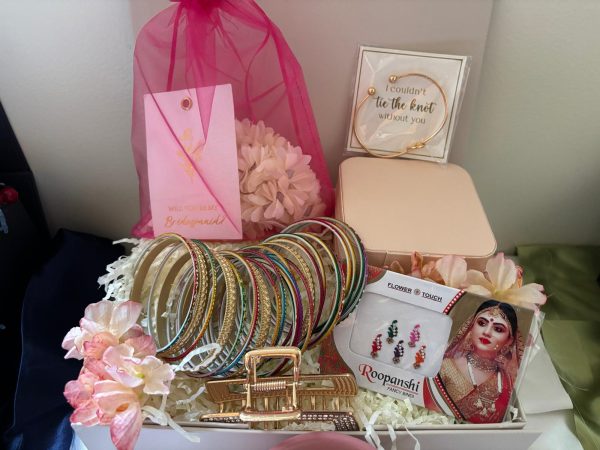
A balanced box includes something for the wedding, something that makes the weekend easier, and something personal to keep.
Meaningful Punjabi Hindu Bridesmaid Gift Ideas
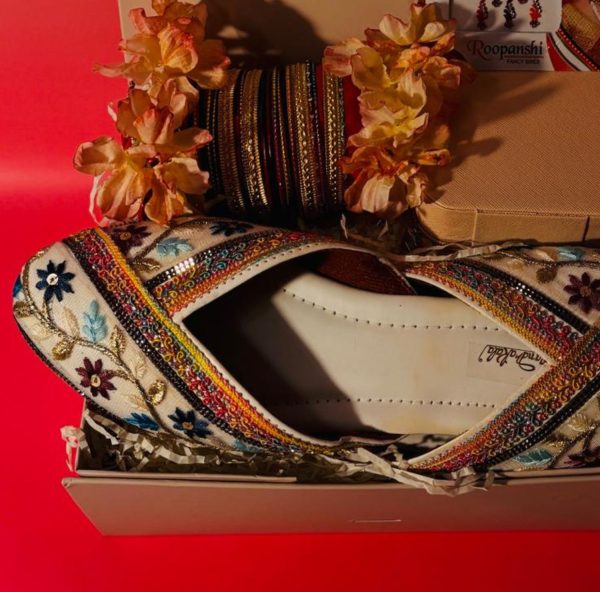
1. Foldable Gold or Jewel-Tone Flats
Why they belong: Punjabi wedding celebrations often include rehearsals, performances, and long hours on the dance floor. Foldable flats offer a more comfortable option without requiring bridesmaids to carry another full pair of shoes.
Best moment: Sangeet and reception.
Personalization idea: Add a name tag to the pouch or coordinate the pouch with her outfit.
2. A Personalized Travel Jewelry Organizer
Why it belongs: Bridesmaids may carry earrings, bangles, tikka pieces, hair accessories, and outfit pins across several events. A structured case keeps everything organized and prevents delicate pieces from tangling.
Best moment: The entire wedding weekend.
Personalization idea: Use her name or initials rather than a large “Bridesmaid” label so the case remains useful afterward.
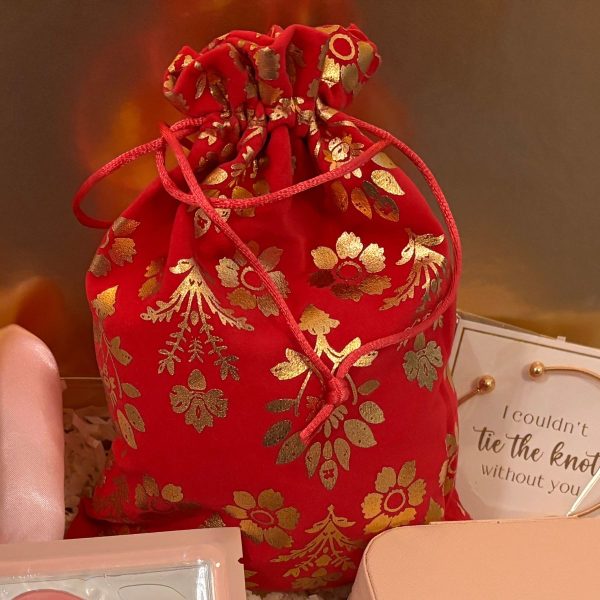
3. An Embroidered Potli or Wristlet
Why it belongs: A small potli holds a phone, lipstick, tissues, room key, and mints while complementing Indian attire. It is particularly useful during the Mehndi, Sangeet, and reception, when a large handbag becomes inconvenient.
Best moment: Mehndi, Sangeet, and reception.
Cultural connection: Choose quality embroidery and thoughtful color coordination rather than an item that looks generically “Indian.”
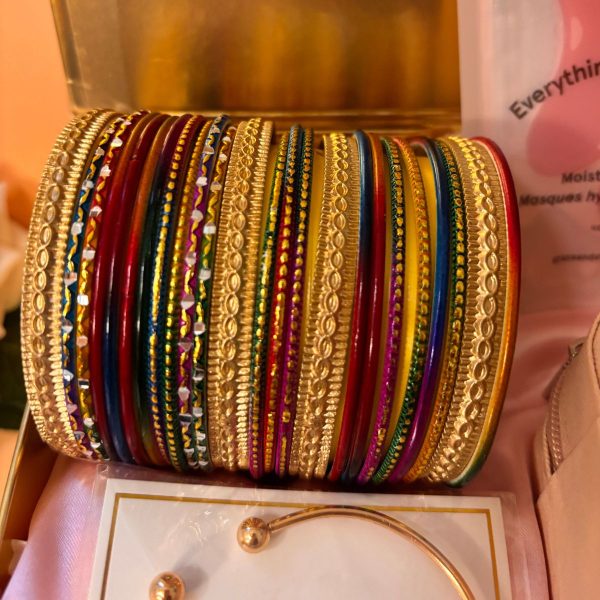
4. Coordinated Earrings or Bangles
Why they belong: Jewelry can bring the bridal-party look together while becoming a keepsake. The strongest choice is made after reviewing the neckline, embroidery, metal tone, and color of each outfit.
Best moment: Sangeet, wedding ceremony, or reception.
Avoid: Ordering identical oversized sets without checking comfort, pierced-ear status, or whether the pieces compete with the outfit.
5. A Compact Wedding-Day Emergency Kit
Why it belongs: Safety pins, fashion tape, blister pads, a stain-remover wipe, hair pins, mints, and tissues can rescue a wedding moment. Pack them inside a personalized pouch so the practical kit still feels like a gift.
Best moment: Getting ready, Mandap ceremony, and reception.
6. A Personalized Insulated Tumbler
Why it belongs: Dance practices, early call times, venue travel, and long receptions make hydration easy to forget. A quality tumbler supports the wedding weekend and remains useful afterward.
Best moment: Rehearsals, getting ready, and travel between venues.
Personalization idea: Use her first name, initials, or a subtle floral motif rather than temporary wedding-role wording.
7. Hand Cream or a Small Hand-Care Set
Why it belongs: Mehndi, repeated hand washing, travel, and makeup preparation can leave hands feeling dry. A small nourishing product offers a quiet moment of care during a very busy week.
Best moment: After Mehndi has fully dried and during travel.
Shopping note: Choose gentle formulas and avoid strong fragrance when preferences or sensitivities are unknown.
8. A Compact Mirror
Why it belongs: Bridesmaids often need quick makeup, bindi, or jewelry checks while moving between rooms and venues. A personalized mirror is small, practical, and easy to keep after the wedding.
Best moment: Every event.
9. A Warm Tea Blend or Morning Treat
Why it belongs: A small tea tin, individually packed snack, or breakfast item acknowledges the early starts and long days without pretending to replace a proper meal.
Best moment: The night before the wedding or inside a next-morning recovery bag.
Dietary note: Label ingredients and confirm allergies, caffeine preferences, and vegetarian requirements.
10. A Handwritten Letter
Why it belongs: A personal letter explains why she was chosen and what her friendship means beyond the wedding. Mention a shared memory, a quality you admire, and one specific way she has supported you.
Best moment: Bridesmaid proposal, rehearsal dinner, or a quiet gathering before the wedding week.
MarryCrate principle: Personalization should express a relationship, not merely decorate a product.
Three Curated Punjabi Hindu Bridesmaid Box Ideas
Instead of filling the box with unrelated products, choose a wedding moment and curate around it.
For the complete wedding weekend
The Sunehri Saheli Box
Foldable gold flats in a travel pouch
Personalized jewelry organizer
Embroidered potli
Compact emergency kit
Handwritten thank-you letter
Why it works: This box supports travel, jewelry changes, dancing, outfit emergencies, and the emotional meaning of the friendship. It is especially useful for bridesmaids attending a multi-day Punjabi wedding from another city.
For music, dance, and late-night celebration
The Sangeet Ready Box
Foldable jewel-tone flats
Personalized insulated tumbler
Embroidered potli pouch
Blister pads and hair pins
Coordinated earrings or bangles
Why it works: Every item supports rehearsal, performance, hydration, dancing, or the practical reality of carrying small essentials in festive attire.
For a calm and organized wedding morning
The Phere Morning Box
Personalized travel jewelry case
Compact mirror
Hand cream or lip balm
Small emergency pouch
Wedding timeline and ceremony guide card
Why it works: This box helps bridesmaids arrive organized for the Mandap ceremony and gives them useful items they can continue using after the wedding.
How to Personalize the Box Meaningfully
Personalization should reflect the person receiving the gift, not simply confirm that she is a bridesmaid.
Use Her Name or Initials Thoughtfully
Names or initials can be added to a jewelry case, pouch, tumbler, card, or box lid. Keep the design elegant enough that she will continue using the item after the wedding.
Write a Different Note for Every Bridesmaid
The boxes may match visually, but the message should never feel mass-produced. Mention how you met, one memory you cherish, or why you trust her to stand beside you.
Coordinate With Her Outfit
Choose earrings, bangles, potlis, or flats only after you know what she is wearing. The gift becomes more useful when it fits her actual wedding wardrobe.
Consider Her Preferences
Not every bridesmaid wears earrings, drinks caffeine, enjoys fragrance, uses skincare, or wants her name printed on a product. A short preference form can prevent thoughtful-looking gifts from going unused.
How Much Should You Spend?
There is no standard Punjabi Hindu bridesmaid-gift budget. The right amount depends on the size of the bridal party, whether you are paying for outfits or beauty services, and whether the gift is a proposal box, wedding-day thank-you, or both.
Approximate Budget
Thoughtful Approach
Under $
Choose one strong personalized item, one practical wedding-week item, and a handwritten letter.
$$
Build a balanced three- or four-item box using the Wear + Ready + Keep formula.
$$$
Add a higher-quality wearable or keepsake, such as coordinated jewelry, premium footwear, or a personalized travel case.
Do not spend more simply because Punjabi weddings are often elaborate. A carefully chosen $45 box can feel more personal than a $150 box filled with products the recipient will never use.
Bridesmaid Proposal Box or Wedding-Day Thank-You Gift?
The Proposal Box
Give this when asking her to join the bridal party. Keep it personal and celebratory. A letter, small keepsake, compact jewelry item, or personalized pouch works well because sizes, outfits, and wedding details may not yet be finalized.
The Wedding-Week Box
Give this after schedules, outfits, and event needs are confirmed. This is the better time for footwear, jewelry, potlis, tumblers, emergency kits, or anything intended for a specific ceremony.
If you prefer to give only one gift, the wedding-week box often provides more practical value because it can be tailored to the actual celebration.
Common Mistakes to Avoid
Choosing Aesthetics Before Usefulness
A box can photograph beautifully and still provide little value. Start with the wedding moment, then choose the product.
Presenting Family Customs as Universal Rules
Punjabi Hindu weddings vary. Explain what your families are doing rather than suggesting that every wedding follows the same ceremonies or sequence.
Waiting Too Long to Order Personalized Items
Custom names, embroidery, specialty colors, and size-specific footwear require time. Confirm spellings and sizes before ordering.
Forgetting Non-Indian Bridesmaids Need Context
A gift alone will not explain the Mandap ceremony, clothing expectations, or event schedule. Include a concise and welcoming guide.
Giving Strongly Scented or Skin-Specific Products Without Checking
Fragrance and skincare are personal. Choose gentle options, offer alternatives, or avoid them when preferences are unknown.
Using Sacred Symbols as Decoration
Do not place deities, mantras, Om symbols, or ceremonial imagery on casual products simply because they look attractive. Sacred elements deserve context and respectful placement.
Making Every Item Say “Bridesmaid”
Role-specific wording can limit future use. Names, initials, colors, and personal messages usually create a more lasting keepsake.
Packing Checklist for a Punjabi Hindu Wedding Weekend
You can send this checklist to the bridal party or turn it into a downloadable MarryCrate resource.
Clothing and Accessories
All outfits labeled by event
Dance-friendly flats
Jewelry organized by outfit
Extra safety pins and fashion tape
Secure dupatta pins
Comfortable underlayers
Simple backup earrings
Personal Care
Hair pins and hair ties
Compact mirror
Lip balm and touch-up products
Blister pads
Mini deodorant
Tissues
Any personal medication
Logistics
Full wedding schedule
Venue addresses
Transportation plan
Hotel and room details
Emergency contact
Portable phone charger
Water and simple snacks
For the Mandap Ceremony
Comfortable ceremony outfit
Jewelry and dupatta secured
Phone silenced
Assigned seating understood
Awareness of photography rules
Quiet family contact for questions
Frequently Asked Questions
Do Punjabi Hindu weddings traditionally have bridesmaids?
Bridesmaids are not required for the Hindu ceremony itself. However, many Punjabi-American couples include a formal bridal party, while close cousins and friends often take on similar supportive roles even without the title.
Can a non-Hindu or non-Indian friend be a bridesmaid?
Yes. Give her welcoming guidance about the schedule, clothing, ceremony etiquette, and any family traditions in which she will participate. Inclusion works best when expectations are explained rather than assumed.
Do bridesmaids have to wear Indian clothing?
Not necessarily. The bride may choose Indian attire for a coordinated bridal party, but modest Western clothing can also be appropriate depending on the ceremony and family. Comfort, respect, and clear coordination matter most.
Should bridesmaids avoid red?
There is no universal rule. Some brides reserve red or maroon for themselves, while others intentionally choose those colors for the bridal party. Follow the bride’s palette rather than treating one preference as a cultural requirement.
What shoes are best for a Punjabi Hindu wedding?
Bridesmaids usually benefit from dress shoes or juttis for photographs and a comfortable dance-friendly option for the Sangeet and reception. Fit matters more than appearance alone, especially across a multi-day wedding.
How long is the Hindu wedding ceremony?
The length varies considerably depending on the priest, family customs, and which rituals are included. Bridesmaids should receive the planned ceremony duration and know whether they will remain seated nearby or participate in specific moments.
What are the seven Pheras?
In many Hindu wedding traditions, the couple takes sacred rounds or steps in the presence of Agni, the ceremonial fire, while making commitments for married life. The form and explanation vary by community, so the priest’s description for the specific wedding should guide the bridal party.
When should I give the bridesmaid gifts?
Proposal gifts can be given when you ask the bridal party. Practical wedding-week gifts should be given before the first major event so bridesmaids have time to organize and use them.
Should every bridesmaid box be identical?
The packaging and core products can match, but sizes, colors, jewelry preferences, dietary needs, and personal notes may differ. A coordinated foundation with individual adjustments usually works best.
How far in advance should I order personalized gifts?
Order embroidery, specialty colors, custom names, and size-specific products first. Add time for proofs, corrections, shipping, and replacements rather than relying only on the maker’s production estimate.
What is the most meaningful item to include?
For many bridesmaids, the handwritten letter becomes the most meaningful piece because it explains the relationship behind the gift. Pair it with one or two products the recipient will genuinely use.
Choose the Gift Around the Friendship
A Punjabi Hindu wedding can be lively, sacred, emotional, exhausting, and wonderfully full—all within the same weekend. The women standing beside you are not simply appearing in coordinated outfits. They are giving their time, energy, patience, and affection to help you move through one of the most meaningful celebrations of your life.
Your bridesmaid gift does not need to be extravagant. It needs to show that you noticed what she is doing and that you understand who she is. A comfortable pair of flats can say, “I want you to enjoy every dance.” A jewelry organizer can say, “I thought about the details you will be carrying all weekend.” A handwritten letter can say what no product ever could: “Your friendship mattered to me long before this wedding, and it will matter long after it.”
That is the heart of a MarryCrate gift: something useful for the moment, personal to the relationship, and meaningful enough to be remembered.
Happy Geevar is the founder of MarryCrate and Vastra Boutique, an Etsy shop focused on Indian clothing and celebration wear. Through MarryCrate, she brings together cultural research, practical product curation, personalization, and a belief that wedding gifts should help people feel seen and appreciated.