
Faith and culture are not interchangeable.
Nikah, consent, Mahr, offer and acceptance, and witnesses belong to the Islamic marriage framework. Mehndi, Dholki, Mayun, and many Baraat customs are cultural.
Pakistani Muslim Wedding Guide
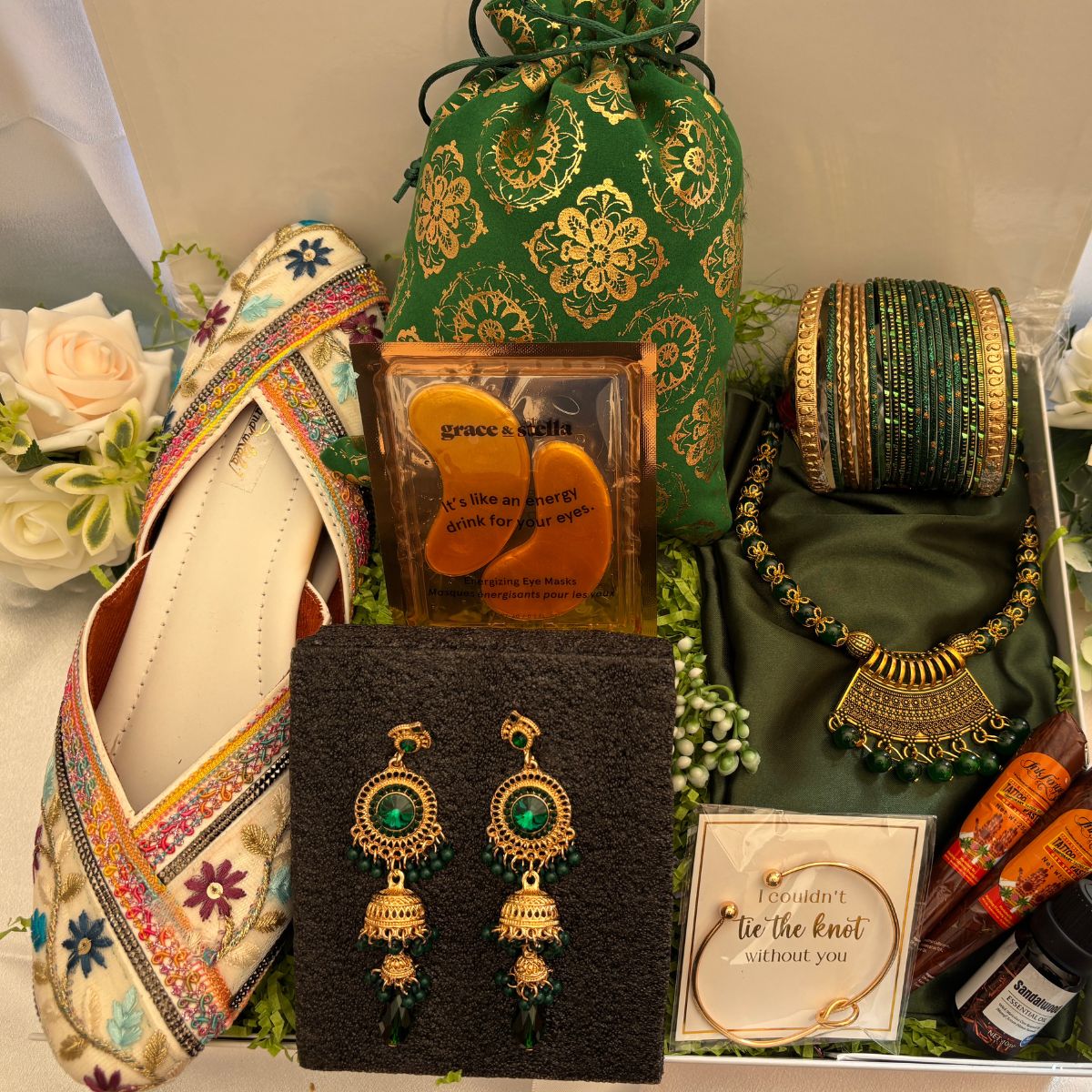
A detailed guide to Nikah, Mahr, Mayun, Mehndi, Baraat, Rukhsati, Walima, mosque etiquette, regional differences, bridesmaid responsibilities, and thoughtful gifts that support the wedding instead of merely decorating it.
What This Guide Helps You Do
Pakistani Muslim weddings often bring Islamic marriage requirements together with Pakistani family traditions, regional customs, several formal events, and modern U.S. venue logistics. This guide separates those layers before recommending gifts.
The Mehndi music has stopped, but the bridal room is not quiet yet.
One bridesmaid is holding the bride’s phone because her henna is still drying. Another is sorting bangles by outfit. Someone is checking whether the Nikahnama folder is with the right family member. A cousin is reminding everyone that the mosque requires shoes to be removed and that the prayer hall has a different dress expectation from the banquet hall booked for the evening.
The bridal party may have spent weeks practicing a dance, helping with Dholki evenings, coordinating floral jewelry, and learning which events belong to the bride’s family and which are hosted by the groom’s. Yet the central marriage may still be a relatively simple contract built around consent, offer and acceptance, witnesses, and Mahr.
That contrast defines many Pakistani Muslim weddings. The celebration may be elaborate and spread across several days. The Nikah itself remains a religious marriage contract. Mehndi, Mayun, Dholki, Baraat customs, outfit traditions, and many reception details come from Pakistani culture rather than being Islamic requirements.
A thoughtful bridesmaid gift should respect both realities. It should not treat Islam as an aesthetic, and it should not reduce Pakistani culture to green fabric, crescent moons, and gold foil. The strongest gifts help with henna, jewelry, modesty, prayer-time awareness, outfit changes, long events, emotional transitions, or moving between a mosque, home, and ballroom.
Pakistani Muslim weddings vary by region, language, family, mosque, school of Islamic law, and level of religious observance. Some families separate men and women at the Nikah; others do not. Some hold the Nikah months before the Rukhsati. Others combine the Nikah, Baraat, and Rukhsati on one day. Let the couple’s imam, mosque, and family define the final ceremony.
Start With the Wedding
A Pakistani Muslim wedding may include several events with completely different needs. Dholki is intimate and music-centered. Mayun or Ubtan can involve staining pastes and casual clothing. Mehndi requires hands-free convenience, dancing, and photography. The Nikah may take place in a mosque, home, or ballroom and requires respectful attention to religious and venue rules. Baraat and Rukhsati are formal, emotionally intense, and often long. Walima may require another complete outfit and a more refined evening presentation.
Nikah, consent, Mahr, offer and acceptance, and witnesses belong to the Islamic marriage framework. Mehndi, Dholki, Mayun, and many Baraat customs are cultural.
Jewelry, dupattas, shoes, bags, makeup, hijabs, room keys, chargers, and emergency items must move between events and venues.
A mosque may have specific expectations, while a banquet-hall Mehndi may be more flexible. Ask the bride and venue rather than treating one dress standard as universal.
The wedding can move quickly from celebration to farewell. Tissues, quiet support, and careful handling of the bride’s belongings matter.
At a Glance
The Nikah is the Islamic marriage contract and may be held separately from the larger celebrations.
Dholki, Mayun, Ubtan, Mehndi, Baraat customs, and many Rukhsati traditions are cultural practices rather than Islamic obligations.
Mahr is a marital gift or financial right owed by the groom to the bride. It belongs to her, not her family.
The Nikah may take place in a mosque, home, hotel, restaurant, community center, or banquet hall.
Celebrations often include Mehndi, Baraat or Shaadi, and Walima, but may be shorter or much longer.
Elegant, practical, modesty-aware, easy to travel with, and personalized to the recipient.
Faith and Culture
This distinction is essential. A culturally rich wedding can include many meaningful events, but those events should not be described as requirements of Islam unless they belong to the marriage contract or religious guidance.
| Islamic Marriage Framework | Pakistani Cultural Tradition | Editorial Guidance |
|---|---|---|
| Free consent of the bride and groom | Mangni or formal engagement | Engagement customs vary, but consent is central to the marriage. |
| Ijab and Qabul—offer and acceptance | Dholki evenings | Dholki is a family music tradition, not part of the Nikah contract. |
| Witnesses under the couple’s legal school and mosque policy | Mayun and Ubtan | These are cultural preparation ceremonies. |
| Mahr owed to the bride | Mehndi, floral jewelry, dances | Mahr is not dowry or a gift to the bride’s family. |
| Nikahnama or marriage contract | Baraat procession and entrances | The contract records the marriage; the Baraat is a social celebration. |
| Public recognition of marriage | Rukhsati customs | Rukhsati is a cultural farewell and may occur later than the Nikah. |
| Walima as a marriage feast | Specific décor, stage, menu, and clothing | Walima has a religious basis; its presentation is a cultural choice. |
Regional Identity
| Background | Details That May Stand Out | Planning Caution |
|---|---|---|
| Punjabi Pakistani | Dholki, lively Mehndi, folk songs, bright color, large family participation | Do not assume every family wants dances or mixed-gender events. |
| Sindhi | Regional embroidery, Ajrak-inspired details, family songs | Use Ajrak and Sindhi motifs accurately. |
| Pashtun | Regional dress, strong family identity, separate celebration patterns in some families | Ask about gender separation, photography, music, and family roles. |
| Balochi | Distinctive embroidery, regional dress, family-centered celebration | Do not treat Balochi textile work as interchangeable with Sindhi or Punjabi design. |
| Kashmiri Pakistani | Regional foods, shawls, embroidery, and family customs | Migration history may strongly shape the wedding. |
| Urdu-speaking Muhajir | Urban wedding formats, family Dholki, formal Nikah and receptions | Do not treat Muhajir identity as one homogeneous style. |
| Mixed U.S. families | Combined Pakistani, American, Arab, Indian, Afghan, or other traditions | Build the guide around the actual couple. |
The Wedding Journey
Not every wedding includes every event below. Some couples combine events or hold the Nikah months before the public celebration.
Some families begin with a formal proposal or meeting between households. Modern couples may already know one another while families use the occasion to discuss intentions, values, and compatibility.
Bridesmaids are usually not involved, though a close friend may support the bride privately.
Mangni is the cultural engagement celebration. Families may exchange rings, sweets, gifts, prayers, and photographs. It is not the marriage contract unless the Nikah is also performed.
This can be an appropriate time for a small bridesmaid proposal gift.
Dholki gatherings are smaller evenings of songs, drumming, teasing, and family celebration. Some weddings hold several; others skip them.
Bridesmaids may help with song lists, cushions, snacks, and personal items.
Mayun marks a period of bridal preparation in many families. Ubtan or turmeric-based paste may be applied by relatives.
Give clear instructions about clothing, staining, photography, and whether the event is women-only.
Mehndi is one of the most colorful and participatory events. The bride receives henna, families perform songs or dances, and décor often uses bright color and flowers.
Bridesmaids may manage the bride’s phone, food, water, floral jewelry, and emergency pouch.
The couple confirms the imam, Mahr, witnesses, Nikahnama, mosque rules, civil license, and any guardian or representative requirements.
One trusted person may hold the document folder, but bridesmaids should not manage the contract itself.
The Nikah is the Islamic marriage contract. It includes consent and an offer and acceptance witnessed according to the applicable legal and mosque requirements. A Khutbah may be given and the contract signed.
The couple may sit together, separately, or participate through representatives. Do not present one arrangement as universal.
Mahr is the gift or financial obligation from the groom to the bride. It may be immediate, deferred, or divided, and it belongs to her.
Mahr is not dowry from the bride’s family, reception cost, or family jewelry.
The Nikahnama records the marriage agreement. The couple, witnesses, guardian or representatives, and officiant may sign according to local requirements.
In the U.S., the couple should also complete civil requirements.
The Baraat is the groom’s arrival with family and friends for the main celebration traditionally hosted by the bride’s family.
Bridesmaids may organize the bridal entrance, dupatta, jewelry, guest guidance, and photographs.
Some families include Arsi Mushaf, Doodh Pilai, gift exchanges, or playful sibling customs after the Nikah.
These are cultural practices, not required parts of marriage.
Rukhsati is the bride’s departure with her husband. It may happen after Baraat or much later than the Nikah.
Offer tissues, collect the bride’s phone and bag, and give the family space.
Walima is the marriage feast associated with the groom and commonly hosted by the groom’s family. It may be simple or highly formal.
Bridesmaids may need another outfit, lighter jewelry, and comfortable evening shoes.
Some families host additional meals, introductions, or visits after the main events.
A thank-you gift should not create another obligation for the bridesmaid.
The Marriage Contract
The Nikah should be explained carefully because Islamic legal schools differ on some details. Across mainstream Sunni practice, the marriage is built around clear consent, offer and acceptance, witnesses, and the bride’s right to Mahr. Many U.S. mosques also require a Wali, specific witness arrangements, premarital counseling, identification, and a civil marriage license.
The bride and groom must freely accept the marriage. Family involvement and advice do not replace the couple’s consent. A forced marriage is not the same as an arranged marriage entered voluntarily.
Ijab and Qabul refer to the offer and acceptance that form the contract. The exact wording and who speaks may vary. The imam or officiant should guide the process.
Witness requirements and the legal role of the Wali differ across schools of Islamic law. Many U.S. mosques require a Wali and two Muslim male witnesses. Hanafi discussions may treat an adult woman’s guardian differently from Shafi’i or other schools. MarryCrate should not give religious rulings; the couple should follow its imam and mosque.
Mahr belongs to the bride. It can be money, gold, property, education, or another agreed item of value subject to religious guidance. If part is deferred, the written terms should be clear.
The Nikahnama documents the religious agreement. In the United States, the couple should also complete the civil requirements of the state and county where the marriage occurs.
The Work Behind the Outfits
Sacred Space, Clear Guidance
Some mosques request covered arms, legs, and hair; others do not require non-Muslim women to cover their hair. Ask directly.
Prayer halls usually require shoe removal. Carry a labeled shoe bag and choose footwear that is easy to remove.
Some Nikahs separate men and women; others seat families together.
Build photographs, entrances, and speeches around Salah rather than treating prayer as an interruption.
Some guests may not want photographs without hijab or in women-only spaces. Never post images without permission.
Food, drinks, loud conversation, and elaborate equipment may be restricted.
Pakistani Style With Context
Yellow, green, orange, hot pink, turquoise, and floral accents are common at Mehndi celebrations. Modern brides may choose ivory, pastel, or jewel-tone palettes. Follow the actual event design.
Pakistani bridal parties may wear ghararas, shararas, lehengas, Anarkalis, long shirts with trousers, sarees, or contemporary modest dresses. These are not interchangeable labels.
Some bridesmaids use a dupatta only as part of the outfit. Others wear hijab as a personal religious practice. A hijabi bridesmaid should never be asked to remove it for styling consistency.
Heavy bridal sets may be uncomfortable for bridesmaids attending several events. Lightweight jhumkas, pearls, or small stone pieces often work better.
| Event | Palette | Outfit Direction | Practical Note |
|---|---|---|---|
| Dholki | Bright prints and jewel tones | Kurta, shalwar, simple gharara | Choose clothing suitable for sitting and singing. |
| Mayun or Ubtan | Yellow, ivory, orange, green | Washable cotton or light festive fabric | Assume paste may stain. |
| Mehndi | Yellow, emerald, fuchsia, orange, turquoise | Sharara, gharara, lehenga, floral jewelry | Prioritize movement and secure draping. |
| Nikah | Ivory, blush, sage, emerald, gold | Modest formal attire | Confirm mosque requirements. |
| Baraat | Red, maroon, emerald, navy, gold | Formal Pakistani attire | Plan for long photographs and Rukhsati. |
| Walima | Pastels, silver, champagne, navy | Refined eveningwear and pearls | Coordinate with the bride’s Walima look. |
From Event to Solution
| Event | Bridesmaid Role | Common Problem | Useful Preparation |
|---|---|---|---|
| Dholki | Singing and home setup | Small items are misplaced | Personalized wristlet or potli |
| Mayun or Ubtan | Help with paste and photographs | Stains and wet hands | Washable robe, stain wipe, phone stand |
| Mehndi | Henna care, performances, hydration | Sore feet, no hands, loose dupatta | Flats, tumbler, pins, straw, secure pouch |
| Nikah | Quiet support and guest guidance | Unclear mosque rules | Nikah and mosque-etiquette card |
| Baraat | Entrance, photos, jewelry support | Heavy outfit and mixed accessories | Jewelry organizer and emergency kit |
| Rukhsati | Emotional support and item collection | Forgotten phone, bag, documents | Departure checklist and handkerchief |
| Walima | Outfit transition and reception support | Fatigue, foot pain, dead phone | Flats, charger, compact, mints |
The MarryCrate Framework
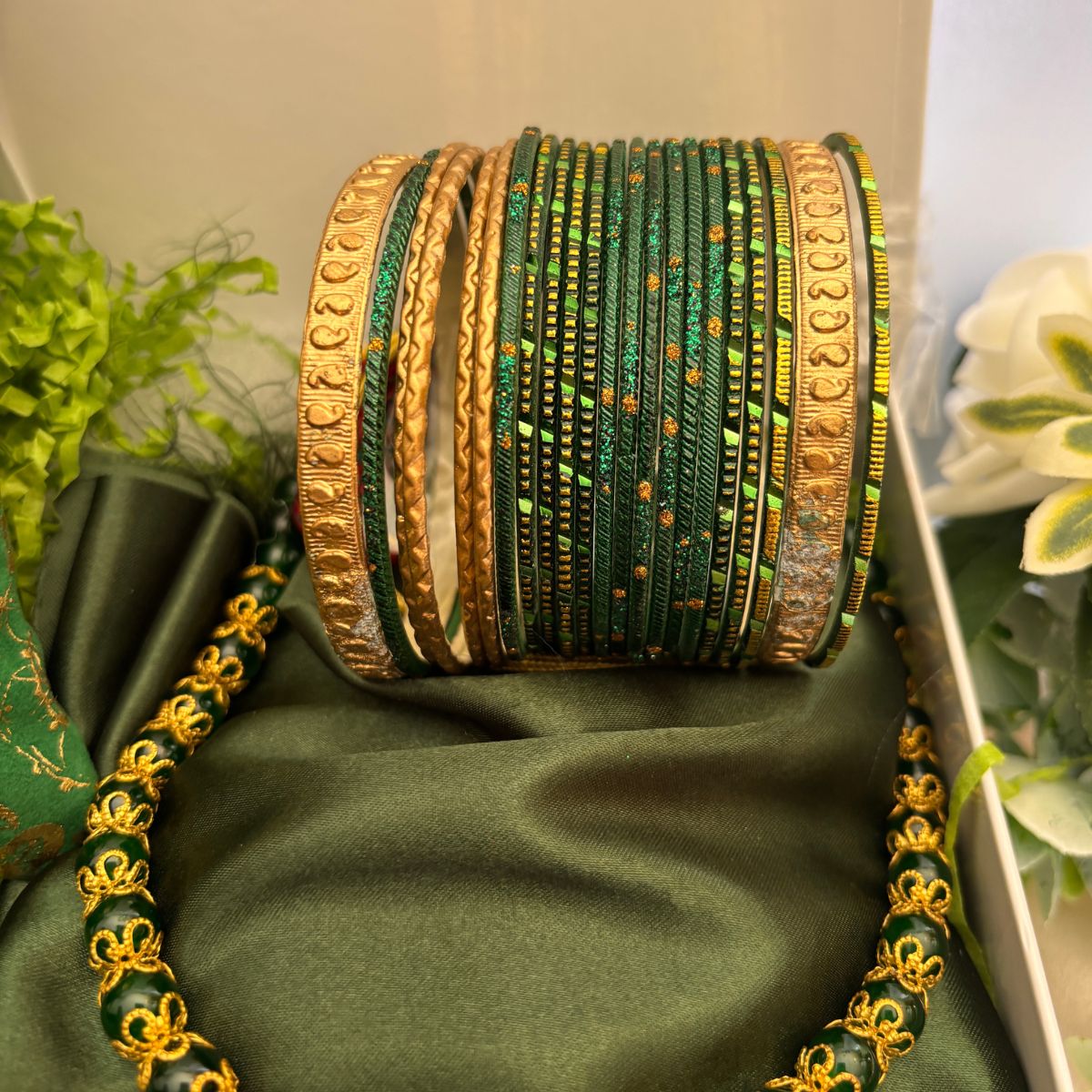
Fewer, Better Gifts
Several events create several jewelry sets, hair pieces, hijab pins, and dupatta accessories.
Choose a structured case with compartments for earrings, necklaces, rings, bangles, pins, and extra earring backs.
The bride’s hands are unavailable while her Mehndi dries.
A phone stand, straw, lip balm, snack pouch, tissues, and an easy-open wristlet can be more useful than decorative filler.
Formal shoes become painful during dances, photographs, and long receptions.
Gold, champagne, black, or jewel-tone flats work across Mehndi, Baraat, and Walima when fit is tested.
A phone, key, tissues, and lipstick need a secure place during performances.
Choose a secure closure, reinforced strap, and enough structure to protect a phone.
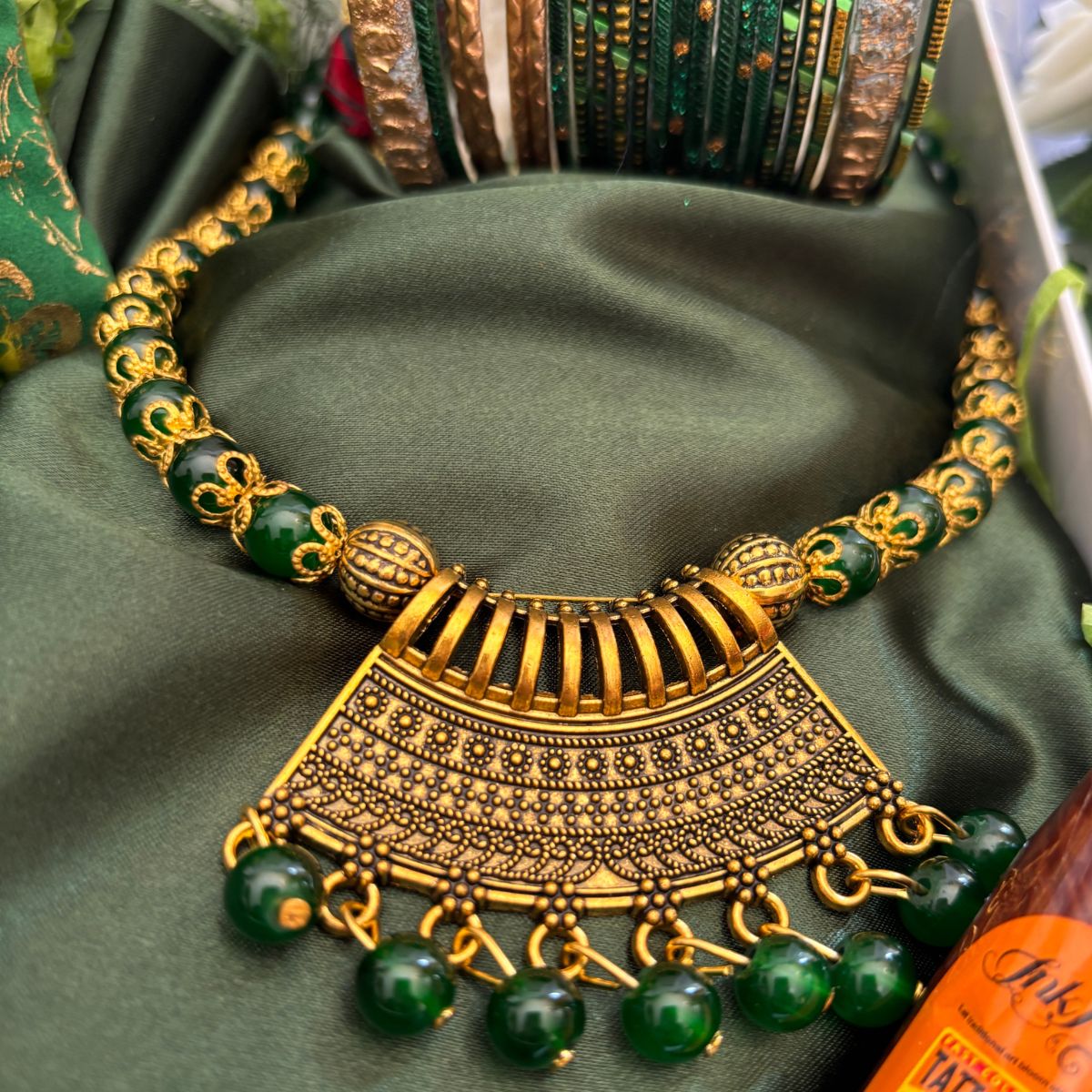
Heavy earrings become uncomfortable across several long events.
Choose pearl, jhumka, or Kundan-inspired pieces that coordinate without copying the bride.
Mosque expectations, prayer times, and seating arrangements are unclear.
Explain shoe removal, dress, seating, prayer times, Nikah, Rukhsati, and Walima in plain language.
Dupatta, hijab, jewelry, and formal clothing may need quick repairs.
Include safety pins, fashion tape, hijab pins, hair pins, stain wipe, tissues, mints, and bandages.
Hydration is forgotten during practice, henna, photography, and long events.
Choose a reusable design and confirm whether drinks are permitted in each venue.
Rukhsati can become emotionally overwhelming.
A linen or cotton handkerchief can feel elegant, practical, and respectful.
Matching products can still feel emotionally generic.
Tell her why you chose her, mention a shared memory, and recognize her specific support.
Signature Box Concepts
Plan Before the Wedding Week
Confirm the event list, mosque or Nikah venue, bridesmaid count, modesty expectations, and which events each person must attend.
Finalize outfits, collect sizes and preferences, order personalized products, and confirm hijab, scarf, or jewelry needs individually.
Share the schedule, prayer times, mosque rules, rehearsals, transportation, and assigned responsibilities.
Label jewelry, outfits, emergency kits, document folders, and Rukhsati belongings. Give practical gifts before travel begins.
Confirm call times, food, hydration, mosque arrival, shoe storage, photography privacy, prayer schedule, and document contact.
What to Avoid
Separate Nikah requirements from Mehndi, Mayun, Dholki, and Baraat customs.
Religious imagery should not become generic décor, especially when it does not solve a wedding need.
Mahr belongs to the bride and is distinct from gifts or costs carried by either family.
Confirm dress, shoes, photography, gender seating, and civil-document procedures directly.
A bridesmaid’s hijab practice belongs to her. Coordinate respectfully.
Multiple days, outfits, travel, and costs can create an unreasonable burden.
Mehndi tools, mosque cards, flats, organizers, and emergency kits should arrive beforehand.
Publish only genuine customer stories with permission.
Save and Share
Frequently Asked Questions
A Western-style bridal party is not an Islamic requirement, but many Pakistani-American couples include bridesmaids. Sisters and cousins may provide similar support without the title.
Nikah is the Islamic marriage contract. Shaadi is a general cultural term for the wedding celebration and may refer to the Baraat or main reception.
Mahr is a gift or financial right owed by the groom to the bride as part of the marriage. It belongs to her, not her family.
No. Mehndi is a widely practiced Pakistani and South Asian cultural celebration, not a requirement of the Nikah.
Rukhsati is the bride’s departure with her husband. It may occur immediately after the Baraat or at a later date.
Walima is the marriage feast associated with the groom. Its religious basis is distinct from the style or size of the reception.
Yes. She can support the bride and attend while following mosque etiquette. She is not expected to participate in worship.
It depends on the mosque. Confirm directly rather than assuming.
No. Some families and mosques use separate seating, while others seat guests together.
Follow the bride’s event palette and modesty guidance. Ghararas, shararas, lehengas, Anarkalis, sarees, and modest dresses can all work.
Yes. Green is popular but is not universally reserved for the bride.
The concept can match, but earrings, scarves, hijab-related items, shoe sizes, allergies, and personal notes may need to vary.
Give practical products before the wedding week so bridesmaids can test, pack, and use them.
There is no fixed amount. A thoughtful box can often be created between $40 and $85, while artisan textiles or premium jewelry may cost more.
A jewelry organizer, emergency pouch, secure potli, foldable flats, or mosque-etiquette card is likely to be used repeatedly.
Often it is the handwritten letter because it explains why the person was chosen and what her friendship means.
The Gift Is the Gratitude
A Pakistani Muslim wedding can be joyful, sacred, exhausting, colorful, formal, and emotional—sometimes within the same day. The women standing beside the bride may be practicing dances, protecting her Mehndi, organizing jewelry, watching prayer times, guiding guests at the mosque, securing a dupatta, holding documents, and quietly helping a family through Rukhsati.
Your gift does not need to compete with the scale of the wedding. It only needs to show that you noticed.
A secure potli can say, “I thought about what you will carry.” A mosque card can say, “I want you to feel welcomed into my family’s faith and traditions.” A pair of flats can say, “I want you to enjoy every event without being in pain.” A handwritten letter can say what the entire box is meant to express: “Your friendship mattered long before this wedding, and I am grateful you are here for this moment.”
Pakistani Muslim wedding practices differ by region, language, family, mosque, Islamic legal school, and level of religious observance. This guide separates commonly documented Islamic marriage concepts from Pakistani cultural traditions, but it does not provide a religious ruling or claim that every family observes every event in the same way. Confirm the Nikah, Mahr, witness, guardian, mosque, civil-license, modesty, photography, and seating requirements with the couple’s imam, mosque, and local civil authority.