
Gujarati weddings are participatory.
Bridesmaids may not simply attend. They may rehearse, dance, organize, welcome, carry, pin, guide, and emotionally support the bride across several days.
A detailed guide to Gujarati wedding traditions, Garba-night preparation, ceremony etiquette, thoughtful gifting, and the practical details your bridesmaids will genuinely appreciate.
What This Guide Helps You Do
Gujarati weddings are filled with family participation, sacred rituals, hospitality, craftsmanship, music, and movement. This guide helps you choose gifts only after understanding what your bridesmaids will actually experience.
This guide approaches Gujarati bridesmaid gifting from that perspective. It explains the wedding journey first, then helps you identify what your bridal party may need. Customs vary widely between Gujarati families, communities, religious traditions, and officiating priests, especially in the United States. Use this article as a planning framework, and let your family’s own traditions remain the final authority.
Start With the Wedding
A Gujarati wedding may include several events with completely different demands. The Mehndi asks for patience and hands-free convenience. Pithi can be messy. Garba and Dandiya Raas require stamina, comfortable footwear, and a way to carry essentials without restricting movement. The wedding ceremony may involve a long period near the Mandap, sacred fire, family rituals, and multiple transitions that bridesmaids unfamiliar with Hindu weddings may not understand.
A standard robe-and-candle box can still be lovely, but it does not automatically answer those needs. The goal is not to reject familiar bridesmaid gifts. It is to choose each one with greater intention.
Bridesmaids may not simply attend. They may rehearse, dance, organize, welcome, carry, pin, guide, and emotionally support the bride across several days.
Jewelry, footwear, hair accessories, makeup, phones, room keys, and emergency items have to move between homes, hotels, ballrooms, and ceremony spaces.
A gift intended for a Gujarati bridal party should account for hours of movement, heat, hydration, crowded dance floors, and the reality that uncomfortable shoes will eventually come off.
A brief ceremony guide or wedding-week schedule can create more confidence than another decorative filler.
The Wedding Journey
Not every bridesmaid will attend every event, but understanding the full journey helps you decide what guidance and products will actually serve her.
Chandlo Matli traditionally marks the families’ formal acceptance of the match. The bride’s family may visit the groom’s family with sweets, gifts, and a ceremonial container or matli. A red chandlo is applied to the groom’s forehead as blessings are exchanged.
In modern Gujarati-American families, this may be intimate, combined with another engagement event, or omitted entirely. Bridesmaids are usually guests rather than active participants, but a close friend may help the bride prepare, organize gifts, or document the gathering.
Gol Dhana is associated with the engagement and takes its name from jaggery and coriander seeds traditionally exchanged between the families. Many contemporary celebrations also include rings, family blessings, sweets, photographs, and a meal.
For the bridal party, this may be the first event requiring coordinated clothing, punctual arrival, and help managing cards, gifts, jewelry, or photographs. It is also a natural occasion for a smaller proposal gift if the bride wants to ask her closest friends in person.
The Mandvo or Mandap Mahurat seeks blessings before the wedding and is associated with formally beginning the wedding rituals and preparing the ceremonial space. A priest may guide prayers, and family members may install or bless a symbolic post connected with the Mandap.
This is usually family-led rather than bridesmaid-led. A close bridal party member may help with the schedule, welcome relatives, organize ceremonial trays, or keep the bride’s belongings together while she participates.
Grah Shanti is a prayer ceremony held to seek peace, blessings, and the removal of obstacles before the wedding. Depending on the family, it may be conducted separately at the bride’s and groom’s homes or incorporated into another pre-wedding gathering.
Bridesmaids who attend should understand that this is a religious ceremony rather than a decorative photo opportunity. Clothing should be respectful, phones should remain quiet, and assigned duties should be completed without unnecessary movement around the prayer area.
The bride may spend several hours having henna applied to her hands and feet. Bridesmaids often sit nearby, receive smaller designs, manage her phone, help her eat and drink, and keep her from smudging the work before it dries.
This is where a potli that opens easily, a phone stand, a straw, lip balm, small snacks, and comfortable seating matter. Heavy handbags and products requiring two hands quickly become inconvenient.
For many Gujarati weddings, the Garba or Raas evening becomes one of the most anticipated events of the week. Garba is danced in circles with rhythmic clapping and repeated steps, while Dandiya Raas uses decorated sticks in coordinated patterns. Modern wedding celebrations may also include choreographed family performances and popular music.
Bridesmaids may rehearse for weeks, help guests learn the steps, keep the bride hydrated, manage her jewelry and dupatta, and dance for several hours. This event should strongly influence footwear, accessory, pouch, and hydration choices inside the gift box.
Pithi is the Gujarati pre-wedding turmeric ceremony. A paste—often made with turmeric and other ingredients according to family custom—is applied to the bride and groom in their respective celebrations. It is associated with blessings, beauty, purification, and joyful family participation.
Bridesmaids need advance notice about whether they will apply the paste, whether their clothing may be stained, and whether the event will involve water or playful smearing. A stain-remover wipe is helpful, but clear outfit guidance is even more valuable.
Mameru is connected with the bride’s maternal family and traditionally highlights the affection, support, and blessings of her maternal uncle and relatives. Gifts may include clothing, jewelry, sweets, dry fruits, and items for the bride’s trousseau. Names and details vary between families, and some use Mosalu for the wider maternal-family gift ceremony.
Because gifts and family emotions can fill the room quickly, bridesmaids may help arrange trays, keep an inventory, move boxes, assist the bride with clothing, or protect jewelry and cards from being misplaced.
The groom arrives with a wedding procession often called the Jaan or Baraat. Music, dancing, and family celebration accompany his entrance. The bride’s family receives the groom and his relatives before the ceremony begins.
Bridesmaids may help coordinate the welcome, keep the bride updated, guide guests, distribute small items, or prepare for a formal entrance. The most useful tool at this point is usually not another accessory but a clear timeline and a charged phone.
Some Gujarati families welcome the groom with a playful ritual often called Ponkvu or Ponkhana. The bride’s mother may perform an aarti and symbolically test or welcome him before he enters. Details vary and are often accompanied by humor.
Bridesmaids should know whether they are expected near the entrance, in the bridal room, or already seated. Confusion about location can create unnecessary stress immediately before the ceremony.
The couple exchanges flower garlands, symbolizing mutual acceptance. The Jai Mala may take place before the Mandap ceremony or within its sequence, depending on the wedding.
Bridesmaids may carry the garlands, help position the bride’s dupatta, organize photographs, or keep the entrance moving. Garlands, hair accessories, and large earrings can compete for space, so secure pinning matters.
The Antarpat is a cloth held between the bride and groom at the beginning of the ceremony, temporarily separating them as prayers are recited. At the appointed moment, the cloth is lowered and the couple sees one another within the formal wedding ritual.
This is a sacred ceremonial object, not a bridesmaid prop. Unless the bridal party has been assigned a role, bridesmaids should remain in their designated places and allow the family and priest to lead.
Hasta Melap—often understood as the joining of hands—symbolizes the couple’s union. The priest may join their hands and tie their garments together while prayers and blessings are offered.
For bridesmaids, this is a moment to remain still and attentive. The couple’s garments, jewelry, and ceremonial items may already be layered and delicate, so only the assigned family member or coordinator should make adjustments.
Some Gujarati Hindu families include Kanyadaan, a ritual in which the bride’s parents or guardians formally participate in joining the couple. Modern families may interpret, adapt, rename, or omit the ritual based on their values and religious practice.
Because this can be an emotional family moment, bridesmaids should avoid treating it as a cue to move around for photographs unless they have been asked to assist.
In many Gujarati Hindu ceremonies, the couple completes four Mangal Pheras around Agni, the sacred fire. These rounds are commonly associated with the four aims of life: Dharma, Artha, Kama, and Moksha. Saptapadi, the seven sacred steps, may follow as the couple makes commitments for married life.
The exact ritual sequence and explanation should come from the officiating priest. Bridesmaids should keep phones silent, avoid crossing the ceremonial space, and remain aware that Agni is treated as a sacred witness rather than décor.
Some Gujarati ceremonies include Kansar, in which the newly married couple feeds one another a sweet preparation. It represents sharing, nourishment, and the sweetness of married life.
This may be brief, but it often becomes a warm photographic moment. Bridesmaids should remain nearby only if assigned and avoid crowding the couple or ceremonial area.
After the central rituals, the couple receives blessings from parents, elders, relatives, and guests. The order may be structured, particularly when the guest list is large.
Bridesmaids may help guide people, carry bouquets or personal items, manage the bride’s train or dupatta, and make sure elderly relatives have space to approach safely.
Vidaai marks the bride’s departure from her family and is often one of the most emotional parts of the wedding. The mood can change quickly from celebration to reflection.
A bridesmaid’s most useful role may be quiet presence: holding tissues, protecting the bride’s belongings, giving family members space, and helping the bride move comfortably into the departure vehicle.
The reception may take place later that day or on a separate evening. It can include formal entrances, speeches, dinner, entertainment, and a crowded dance floor. Some bridesmaids will change outfits yet again.
By this point, comfortable footwear, a small emergency pouch, hydration, a phone charger, and an organized jewelry case are no longer small luxuries. They are the products most likely to be used.

The Real Work Behind the Outfit
Bridesmaids are not required participants in the traditional Hindu ceremony, but many Gujarati-American couples include a formal bridal party. Their responsibilities often overlap with the work close cousins, sisters, and friends have always done: keeping the bride supported, organized, informed, and emotionally steady.
The Most Physical Night
Garba is often described as joyful and energetic, but those words do not fully explain what the evening feels like to someone participating for the first time. The room becomes warm. The circles move faster. The steps repeat until they become instinctive. Jewelry shifts. Dupattas loosen. Water bottles end up across the ballroom. A shoe that felt comfortable during photographs begins to hurt after the fourth song.
That does not make Garba difficult. It makes preparation important.
The Problem
New juttis may rub. High heels limit movement. Thin flats may offer almost no support on a hard ballroom floor.
The Better Plan
Break in the chosen shoes before the event and pack a second dance-friendly option. Foldable flats are useful when they fit properly, but a supportive low-profile shoe may be better for someone with foot or ankle concerns.
The Problem
Heavy borders, smooth fabric, and energetic movement can pull the drape out of place.
The Better Plan
Test the full drape during a rehearsal. Use secure pins in discreet locations and avoid placing too much weight on one shoulder. Include spare pins and fashion tape in the emergency pouch.
The Problem
A fast circle can feel intimidating when everyone else appears to know exactly where to move.
The Better Plan
Share a simple practice video before the wedding and identify one patient friend who can guide beginners. Inclusion should feel warm, not like an audition.
The Problem
Large handbags restrict movement, while holding a phone during Garba becomes unsafe and inconvenient.
The Better Plan
Use a small secure wristlet, crossbody potli, or designated bridal-party storage basket. A drawstring potli is beautiful, but it must close securely enough for a crowded dance floor.
The Problem
Hours of dancing, heavy clothing, bright lighting, and a warm ballroom can leave people tired quickly.
The Better Plan
Plan water access before the event. Give each bridesmaid a tumbler or labeled bottle and schedule a short reset before formal performances.
The Problem
Large earrings and layered necklaces may look striking but can pull, catch, or shift during repeated movement.
The Better Plan
Choose lightweight statement pieces, use supportive earring backs, and pack a simple backup pair. Jewelry should complement Garba, not shorten the evening.
Sacred Space, Clear Guidance
A Gujarati Hindu wedding ceremony is not simply a sequence of beautiful visual moments. The Mandap is a sacred ceremonial space, and Agni—the sacred fire—is treated as a witness to the couple’s vows. Bridesmaids do not need to understand every mantra, but they should know how to move respectfully through the ceremony.
Some couples seat the bridal party near the front. Others reserve the Mandap area for immediate family. Confirm the arrangement before the processional.
Do not cross the ceremonial space, place bags near the fire, or enter the Mandap for a photograph unless the priest or coordinator has directed you.
Vibration can still be distracting in a quiet prayer. Designate one bridesmaid or coordinator to keep an accessible phone for emergencies.
The ceremony may be longer than an American wedding ceremony. Clothing should allow comfortable movement without constant adjustment.
Antarpat, Hasta Melap, offerings, blessings, and the Pheras have assigned participants. Bridesmaids should assist only when asked.
The sequence, language, number of rounds, and explanations may differ between priests and families. The wedding program and officiant are the authority for that ceremony.
Color With Context
Gujarati wedding style is often recognized through color, pattern, mirror work, Bandhani, Patola-inspired geometry, embroidery, gold accents, and joyful contrast. Yet a bridesmaid outfit should not become a collection of every Gujarati visual reference at once. The strongest styling chooses one or two meaningful elements and gives them room to breathe.
Bandhani is a resist-dye tradition created by tying small sections of fabric before dyeing, producing dotted patterns that can range from delicate to highly intricate. A Bandhani dupatta, stole, pouch lining, or ribbon can bring Gujarati textile identity into the bridesmaid experience without requiring every outfit to be fully traditional.
Mirror work—often called shisha work—creates movement and light, making it especially suited to Garba. Because heavy embroidery can add weight and catch on neighboring outfits, it works best when used intentionally on a blouse, border, potli, or accessory rather than covering every surface.
Patola is associated with Gujarat’s celebrated double-ikat weaving tradition. Authentic Patola is highly skilled and valuable; “Patola-inspired” printed products should not be presented as handwoven Patola. For bridesmaid gifting, a geometric pouch lining, scarf, card design, or box pattern can respectfully echo the visual language when accurately described.
Traditional brightness can be balanced with terracotta, sand, muted coral, deep teal, warm cream, and antique gold. This creates an editorial look without stripping away the joyful character of the celebration.
| Wedding Moment | Palette Direction | Textile or Detail | Practical Consideration |
|---|---|---|---|
| Gol Dhana | Rose, peach, mint, gold, soft jewel tones | Light Bandhani or refined embroidery | Choose polished clothing that remains comfortable for greetings and photographs. |
| Mehndi | Fuchsia, orange, lime, turquoise, yellow | Colorful prints, light mirror accents | Avoid sleeves or fabrics that interfere with henna placement. |
| Garba and Raas | Jewel tones, bright contrasts, metallic accents | Mirror work, embroidered borders, Bandhani | Prioritize movement, breathable lining, secure draping, and light jewelry. |
| Pithi | Yellow, ivory, green, coral | Simple washable cotton or lightweight fabric | Assume turmeric may stain anything near the ceremony. |
| Wedding Ceremony | Red, maroon, green, ivory, pastel, antique gold | Bandhani, silk, brocade, restrained embroidery | Coordinate with the bride’s Panetar, Gharchola, lehenga, or chosen modern look. |
| Reception | Emerald, navy, wine, black, champagne, silver | Contemporary embroidery or clean metallic detail | Consider stage lighting and the bride’s reception outfit. |

From Ceremony to Solution
| Wedding Event | What Bridesmaids May Be Doing | Common Problem | Useful Gift or Preparation |
|---|---|---|---|
| Gol Dhana | Greeting family, organizing gifts, posing for photographs | Small personal items get misplaced | Personalized pouch or jewelry case |
| Grah Shanti | Attending prayer, helping family quietly | Unclear ceremony expectations | Brief ceremony note and respectful clothing guidance |
| Mehndi | Helping the bride while her hands are unavailable | Phone, food, and essentials are difficult to manage | Phone stand, straw, easy-open potli, lip balm |
| Garba and Raas | Dancing, performing, guiding guests | Sore feet, loose draping, dehydration | Dance flats, blister pads, pins, tumbler, hair ties |
| Pithi | Applying paste, participating in photographs | Turmeric stains | Advance outfit note, stain wipe, washable clothing |
| Mameru or Mosalu | Organizing gifts and helping the bride | Jewelry, cards, and trays become disorganized | Labeled jewelry organizer and inventory list |
| Wedding Morning | Preparing, dressing, managing the timeline | Multiple accessories and early call times | Travel case, breakfast, timeline card, emergency pouch |
| Mandap Ceremony | Sitting nearby, entering formally, assisting when assigned | Long ceremony and unfamiliar rituals | Comfortable clothing, ceremony card, compact kit |
| Vidaai | Supporting the bride and family | Emotional overwhelm and misplaced belongings | Tissues, quiet support, assigned item collection |
| Reception | Dancing, speeches, entrances, outfit support | Foot pain, clothing emergencies, dead phones | Flats, fashion tape, charger, mints, deodorant |
The MarryCrate Framework
A balanced bridesmaid box contains something for the wedding, something that makes the weekend easier, and something personal enough to keep.
Something she can use during the celebration.
Something that helps her prepare or recover.
Something connected to the relationship.
The formula also prevents overfilling. If five products already cover Wear, Ready, and Keep, the box does not need ten additional fillers.
Fewer, Better Gifts
Each recommendation begins with the problem it solves, because usefulness should come before decoration.
After several rounds of Garba, no one is thinking about how beautiful her shoes looked during the entrance.
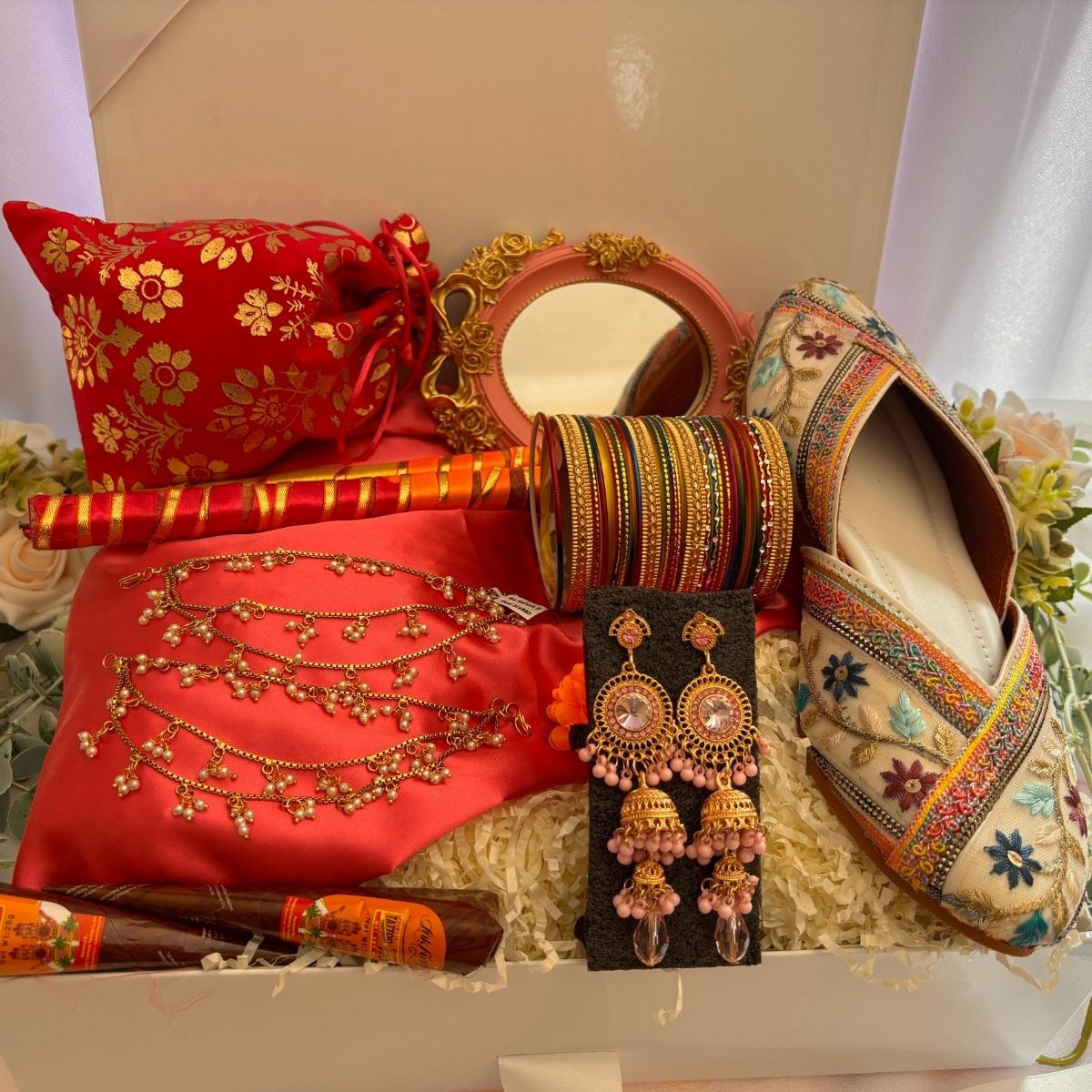
A comfortable second pair allows the bridesmaid to continue dancing without going barefoot on a crowded ballroom floor. Gold, champagne, or jewel-tone options coordinate easily with Gujarati attire.
A phone, lipstick, room key, and tissues need somewhere secure to go while both hands are moving.
A well-made potli brings Gujarati craft into the gift while solving a practical problem. Choose one with a dependable closure and enough structure to protect a phone.
Several outfits mean several sets of earrings, bangles, pins, and hair accessories.
A structured travel case prevents jewelry from tangling and gives every small item a designated place. It is one of the few bridesmaid gifts likely to be used during the entire wedding and on future trips.
Beautiful statement jewelry can become painful during repeated turns and hours of movement.
Choose earrings that create visual impact without pulling on the ear. Small jhumkas, lightweight chandbalis, hoops, or modern gold-tone pieces may work better than oversized sets.
Pins, blister pads, and fashion tape are only remembered after something has already gone wrong.
Pack safety pins, fashion tape, blister bandages, a stain-remover wipe, hair pins, tissues, mints, and a small sewing kit inside a personalized pouch.
Hydration is easy to forget when rehearsals, makeup, travel, and dancing happen back to back.
A quality tumbler supports dance practice, getting-ready mornings, and travel between venues. Choose a design the recipient will use beyond the wedding.
A fully traditional textile item may be beautiful but difficult to coordinate with every bridesmaid’s wardrobe.
A lightweight Bandhani accessory brings Gujarati heritage into the gift without requiring a complete outfit. It can be worn, packed, or kept as a meaningful textile piece.
Makeup, bindis, earrings, and hair details need checking between venues, but the nearest mirror is usually occupied.
A compact mirror is small, practical, and easy to personalize. It works especially well when paired with a potli or emergency pouch.
Wedding weeks often involve early mornings, late nights, and little quiet time.
A small masala chai blend, herbal tea, cooling eye patches, or gentle hand-care item can create a brief recovery moment. Choose according to the recipient rather than assuming everyone wants caffeine, fragrance, or skincare.
A beautifully packed box can still feel impersonal when every message is identical.
The letter should explain why she was chosen, what you remember about the friendship, and what her presence means during the wedding. It does not need to be long. It needs to be specific.
Signature Box Concepts
Each box is organized around a real wedding moment rather than a random product assortment.
For movement, music, and celebration
Designed for the most energetic night of the wedding.
Why it works: Every item addresses movement, comfort, hydration, organization, or friendship. Nothing is included only to make the box appear fuller.
For heritage, travel, and keepsake value
A quieter, more textile-led expression of Gujarati identity.
Why it works: The box feels culturally grounded without turning Gujarati craft into a costume theme. It balances textile heritage with products that travel well.
For calm, organization, and the sacred ceremony
Created for an early, detailed, emotionally full wedding day.
Why it works: The box reduces wedding-morning anxiety and helps the bridal party arrive organized, informed, and ready to support the bride.
Make the Gift Hers
A name or initials can work beautifully on a jewelry organizer, travel pouch, compact mirror, or tumbler. Avoid placing “Bridesmaid” across every product. The role lasts for the wedding; the friendship is meant to last much longer.
If you want to use Gujarati script, have the exact spelling verified by someone fluent. Do not rely on automatic transliteration for a product that will be permanently personalized.
Matching boxes are visually satisfying, but every wearable item does not need to be identical. A bridesmaid in teal may appreciate a different potli or earring color than someone wearing coral.
Collect shoe size, pierced-ear status, allergies, dietary restrictions, fragrance sensitivity, caffeine preference, and personalization spelling before ordering. A short form can preserve the surprise while preventing waste.
Complete the sentence, “I chose you because…” for each bridesmaid. The answer may reveal whether the right keepsake is a photograph, a travel case, a piece of jewelry, or something connected to a shared memory.
Spend With Intention
There is no cultural rule establishing a bridesmaid-gift budget. The appropriate amount depends on the number of bridesmaids, whether the couple is paying for outfits, jewelry, travel, hair, or makeup, and whether the bride is giving both a proposal gift and a wedding-week thank-you.
| Approximate Budget | What a Thoughtful Box Could Include | Best Strategy |
|---|---|---|
| Under $40 | Personalized pouch or compact + emergency items + handwritten letter | Choose one strong reusable product rather than several low-value fillers. |
| $40–$85 | Potli or jewelry case + practical wedding item + keepsake note | Use the Wear + Ready + Keep formula. |
| $85–$150 | Higher-quality textile, footwear, jewelry case, accessory, and personal letter | Invest in material quality and fit rather than adding more products. |
| $150+ | Premium artisan textile or jewelry plus a complete practical set | Use only when it fits the broader wedding budget and the recipient’s preferences. |
A larger Gujarati wedding does not require a larger gift budget. A carefully chosen $55 box can feel more meaningful than an expensive collection of products selected without understanding the recipient.
Choose the Right Moment
Give this when asking her to join the bridal party. At this stage, outfits, colors, shoe sizes, and ceremony details may not be final.
Better choices: a letter, small personalized pouch, compact mirror, photograph, or simple keepsake.
Give this after the schedule and wardrobes are confirmed. You can now select products for Garba, outfit changes, travel, and the Mandap ceremony.
Better choices: flats, potli, jewelry organizer, coordinated earrings, emergency kit, tumbler, and ceremony card.
If you plan to give only one gift, the wedding-week gift often creates more practical value because it can be tailored to the events the bridesmaid will actually attend.
What to Avoid
Beautiful shoes can cause blisters before Garba is halfway over. Confirm sizing and encourage the recipient to break them in.
Garba involves repeated movement. Lightweight pieces often provide more comfort and are more likely to be worn again.
Mirror work, Bandhani, Patola, religious symbols, and Gujarati script should be used with accuracy and context—not because they make the product look “ethnic.”
Patola refers to a highly skilled weaving tradition. Describe printed or machine-made products accurately as Patola-inspired when appropriate.
Many Gujarati families serve vegetarian food, and some guests may follow Jain, Swaminarayan, vegan, allergy-sensitive, or other dietary practices. Never assume one rule applies to everyone; label edible gifts clearly.
Skin sensitivity, allergies, and scent preference vary. A beautiful product is not thoughtful when the recipient cannot use it.
Share practice videos and ceremony notes warmly. Cultural inclusion should not depend on how quickly someone learns Garba.
Flats, pouches, jewelry cases, and ceremony guides should arrive before the event where they are needed—not at the final reception.
Always obtain written approval for English or Gujarati personalization before production.
Use only genuine testimonials with permission. Founder observations and honest practical examples are more trustworthy than fictional quotations.
Save and Share
This section can also be turned into a downloadable PDF or printable card.
Future MarryCrate Resources
These downloadable resources can support readers, wedding planners, and bridal parties while also building MarryCrate’s email list and topical authority.
A fillable schedule with venue, outfit, transportation, and call-time fields.
A printable version of the checklist above.
A compact list for shoes, pins, hydration, jewelry, and touch-up items.
A plain-language guide to major wedding moments for non-Hindu bridesmaids.
Source With Care
Gujarati-inspired gifts can be sourced through Indian boutiques, Gujarati-owned businesses, independent textile and jewelry makers, personalization studios, wedding accessory suppliers, and local community markets. The most important question is not whether the item looks cultural. It is whether it is accurately described, well made, and genuinely useful.
Ask whether the textile is hand-tied, machine-made, printed, or Bandhani-inspired. Material and production method should be represented honestly.
Check that mirrors and embroidery are secure and that the interior lining protects phones, skin, and delicate clothing.
Confirm weight, materials, metal sensitivity, fastening, and return policy. Appearance alone does not determine comfort.
Request a digital proof and have the spelling reviewed by someone fluent before production begins.
Frequently Asked Questions
A formal Western-style bridal party is not required for the Hindu ceremony. Many Gujarati-American couples include bridesmaids, while sisters, cousins, and close friends have long supported the bride even when they were not given that title.
Yes. Give her a clear schedule, outfit guidance, Garba practice support, and a brief explanation of the Mandap ceremony. Inclusion works best when expectations are explained rather than assumed.
No, but a practice video or beginner rehearsal can help them participate more comfortably. Avoid making anyone feel judged for learning slowly.
Choose shoes that have been tested during movement. Broken-in juttis, supportive flats, or low-profile dance-friendly footwear may work. Pack a second pair and blister protection.
Yes. A Bandhani dupatta, scarf, blouse detail, or accessory can be a beautiful Gujarati element. Coordinate it with the bride’s palette and describe the production method accurately.
Yes, especially for Garba. Make sure the work is secure, not excessively heavy, and unlikely to catch on neighboring outfits during dancing.
There is no universal rule. Some brides reserve red or maroon for themselves; others choose those colors for the bridal party. Follow the bride’s actual wardrobe plan.
The length varies according to the family, priest, venue, and rituals included. Share the planned duration with bridesmaids so they can choose comfortable clothing and understand when they will be needed.
Many Gujarati ceremonies include four Mangal Pheras associated with Dharma, Artha, Kama, and Moksha, followed by Saptapadi, the seven sacred steps. Practice and terminology vary, so use the officiating priest’s explanation for the specific wedding.
Mameru is a maternal-family ceremony traditionally associated with the bride’s maternal uncle and relatives bringing blessings and gifts. The form, timing, participants, and use of the term Mosalu vary between families.
Wear something comfortable and washable if participating near the turmeric paste. Avoid delicate light-colored clothing unless the family has confirmed the event will be controlled and contact-free.
A bindi may be worn as part of coordinated wedding attire when the bride and family are comfortable with it. It should be approached respectfully rather than treated as a costume accessory.
This depends on whether the wedding is held in a temple, home prayer space, hotel, or other venue and on family practice. Tell the bridal party in advance rather than assuming.
The box design and core concept can match, but shoe size, jewelry preference, color, allergies, and personal notes should be adjusted for each recipient.
Proposal gifts can be given when asking the bridal party. Products intended for Garba or the wedding weekend should be given early enough for bridesmaids to test, pack, and use them.
There is no fixed amount. Many thoughtful boxes can be built between $40 and $85, while premium artisan or jewelry-based gifts may cost more. Spend according to the overall wedding budget and the usefulness of the products.
They can be, but label ingredients and confirm dietary restrictions. Gujarati families may include guests following vegetarian, Jain, Swaminarayan, vegan, allergy-sensitive, or other dietary practices.
Avoid unverified script, inaccurately labeled craft, sacred imagery used casually, strong fragrance without preference information, uncomfortable footwear, heavy jewelry, and products included only as filler.
For a multi-day wedding, a travel jewelry organizer, secure potli, comfortable second pair of shoes, or compact emergency kit is likely to be used repeatedly.
Often it is the handwritten letter, because it explains why the person was chosen and what the friendship means beyond the wedding.
The Gift Is the Gratitude
A Gujarati wedding can be joyful, sacred, physically demanding, emotionally overwhelming, and beautifully generous—sometimes within the same day. The women standing beside the bride are not simply wearing coordinated outfits. They are practicing dances, carrying details, learning traditions, calming nerves, guiding guests, protecting belongings, and giving their full attention to someone they love.
Your gift does not need to compete with the scale of the wedding. It only needs to show that you noticed.
A pair of comfortable flats can say, “I want you to stay on the Garba floor with me.” A jewelry organizer can say, “I thought about everything you are carrying this weekend.” A ceremony card can say, “I want you to feel welcomed into my family’s traditions.” A handwritten letter can say what the entire box is meant to express: “You have been part of my life long before this wedding, and I am grateful you are here for this moment.”
That is what makes a MarryCrate gift meaningful. It is not the number of products inside. It is the care behind every choice.
Gujarati wedding customs differ between regions, communities, religious traditions, families, and officiating priests. This guide reflects commonly documented practices and diaspora adaptations, but it does not claim that every family observes every ritual in the same way. Confirm the final ceremony sequence, dress expectations, food practices, and participant roles with your family and officiant.