
The tea ceremony is about family relationship.
The couple serves tea to parents and elders as an expression of respect, gratitude, and recognition of the new family relationship.
Chinese-American Wedding Guide
A detailed guide to the Chinese wedding tea ceremony, Guo Da Li where practiced, door games, red envelopes, Qun Kua and Qipao, regional differences, banquet etiquette, bridesmaid responsibilities, and thoughtful gifts that support the wedding rather than turning culture into decoration.
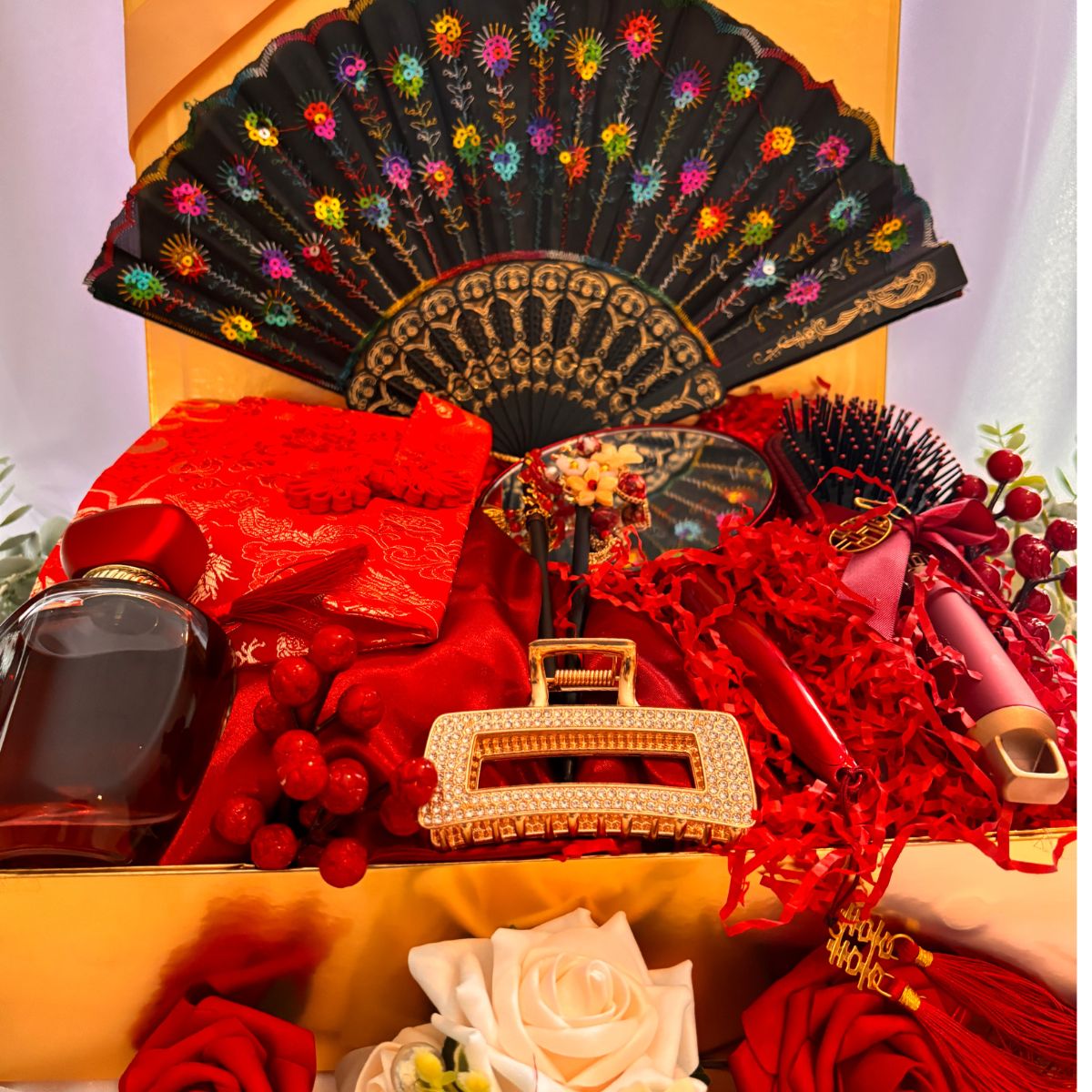
What This Guide Helps You Do
Chinese-American weddings may combine a family tea ceremony, regional traditions, door games, a Western ceremony, red envelopes, gold jewelry, several bridal looks, and a long banquet. The strongest bridesmaid gifts make those moments easier.
The bride is kneeling in front of her grandmother with a cup of tea held carefully in both hands.
Behind her, a bridesmaid is watching a handwritten list of names because no one wants to call the wrong auntie next. Another friend is collecting red envelopes and jewelry gifts into a secure bag. The tea is still hot, the next pair of elders is waiting, and the white wedding gown hanging across the room has not even been worn yet.
Earlier that morning, the same bridal party may have been blocking the groom from entering the room until he completed a series of ridiculous door games. One bridesmaid held the red envelopes. Another timed the challenges. Someone else was protecting the bride’s Qun Kua or red dress from coffee, makeup, and the chaos of ten people getting ready at once.
By afternoon, they may be standing beside her at a Western-style ceremony. By evening, the bride may have changed again—perhaps into a Qipao or Cheongsam for the banquet—and the bridesmaids are trying to remember where the gold jewelry, comfortable shoes, phone charger, and red-envelope bag went.
This is why “Chinese wedding” is too broad to be treated as one fixed ceremony. A Cantonese family from Hong Kong, a Fujianese or Hokkien family, a Teochew family from Chaoshan, a Taiwanese family, a contemporary Mainland Chinese family, and a second- or third-generation Chinese-American family may all keep different traditions.
A thoughtful bridesmaid gift should reflect that complexity. It should not simply be red, gold, and covered in dragons. The strongest gifts help the bridesmaid carry red packets securely, organize jewelry, move comfortably between several outfits, support the tea ceremony, survive door games, or understand a family tradition she may be experiencing for the first time.
This guide focuses on commonly documented traditions and modern U.S. adaptations. It repeatedly uses language such as “where practiced,” “many families,” and “confirm with your elders” because there is no single ceremony sequence shared by every Chinese family.
Start With the Wedding
A Chinese-American wedding can ask the bridal party to move through several completely different roles. Bridesmaids may run door games in the morning, assist with a family tea ceremony, stand in a Western processional, help the bride change from a white gown into red Chinese dress, carry gifts and red packets, and then remain present through a long banquet.
The couple serves tea to parents and elders as an expression of respect, gratitude, and recognition of the new family relationship.
Guo Da Li, Qun Kua, tea order, betrothal gifts, wedding foods, and red-envelope terminology vary between Cantonese, Hokkien, Teochew, Mainland, Taiwanese, and diaspora families.
They may brew tea, call elders, manage gifts, run door games, help with several outfit changes, and keep the banquet schedule moving.
Color and symbols matter, but a sophisticated gift should still be useful, personal, and appropriate to the family’s actual traditions.
At a Glance
The tea ceremony is one of the most widely recognized family-centered traditions in Chinese weddings.
Guo Da Li is especially prominent in Cantonese and Hong Kong traditions but should not be assumed for every family.
Door games are a playful modern custom in many Chinese weddings, especially Cantonese and contemporary urban celebrations.
Red envelopes and jewelry may be exchanged during the tea ceremony or banquet and need secure handling.
A bride may wear a Qun Kua, white gown, Qipao or Cheongsam, and a reception dress in one wedding day.
Practical, elegant, lightweight, culturally informed, and useful beyond the wedding.
Specificity Creates Accuracy
The comparisons below are broad planning cues, not rules. Migration has mixed traditions for generations, and many Chinese-American families combine customs intentionally.
| Family Background | Traditions That May Stand Out | Bridesmaid Planning Note |
|---|---|---|
| Cantonese / Hong Kong | Guo Da Li, Qun Kua, door games, tea ceremony, lai see, gold dragon-and-phoenix jewelry, return-home customs | This is one of the most detailed ritual structures. Confirm the family’s exact sequence rather than copying a checklist. |
| Hokkien / Fujianese | Family-specific betrothal exchanges, red packets, tea, auspicious foods, regional taboos and gifts | Hokkien customs vary significantly between Fujian, Taiwan, Southeast Asia, and diaspora families. |
| Teochew / Chaoshan | Strong tea culture, family etiquette, betrothal traditions, food-centered hospitality | Gongfu tea is culturally significant in Chaoshan, but do not assume the wedding tea ceremony itself follows one universal gongfu-tea format. |
| Contemporary Mainland Chinese | Door games, hotel ceremonies, white gown, red dress, tea ceremony, banquet, coordinated bridesmaids | Modern urban weddings can be highly customized and may omit older betrothal customs completely. |
| Taiwanese Chinese | Tea, engagement gifts, banquet traditions, family introductions, outfit changes | Local Taiwanese, Hokkien, Hakka, and Mainland-influenced customs may overlap. |
| Chinese-American / Mixed-Culture | Morning tea ceremony plus Western ceremony, bilingual programs, registry and red envelopes, multiple dress traditions | Do not treat adaptations as less authentic. Diaspora weddings naturally evolve. |
The Wedding Journey
Not every wedding includes every stage below. Confirm the actual family sequence before creating a bridesmaid timeline.
The couple and families decide which traditions will be kept, simplified, combined, or omitted. This may include date selection, betrothal gifts, tea ceremony, door games, civil or religious ceremony, banquet, and multiple outfits.
Bridesmaids should not order culturally themed gifts until the bride knows which traditions actually belong to her family.
In Cantonese and Hong Kong tradition, Guo Da Li is a formal pre-wedding exchange in which the groom’s family presents betrothal gifts to the bride’s family, who may return part of the gifts.
Modern families often simplify the items or use red packets in place of elaborate physical gifts.
The bride may prepare a Qun Kua, Qipao or Cheongsam, white gown, banquet dress, gold jewelry, hair accessories, and several pairs of shoes.
Photograph each complete look and pack it in the order it will be worn.
The groom and his friends arrive to “win” access to the bride by completing playful challenges designed by the bridesmaids or jie mei group. Red packets may be negotiated before the door opens.
The games should be funny without becoming humiliating, dangerous, excessively expensive, or discriminatory.
Depending on family tradition, the couple may greet parents, bow to ancestors, complete symbolic departure customs, or move directly to the tea ceremony or ceremony venue.
Regional customs differ enough that bridesmaids should follow the family rather than an internet checklist.
The couple serves tea to parents and elders, receives blessings, and may receive red envelopes, jewelry, or other gifts in return.
Family order, kneeling or standing, whether both sides are combined, and which relatives participate should be written down before the ceremony.
Chinese-American couples may hold a civil, Christian, Buddhist, secular, interfaith, or Western-style ceremony before or after the tea ceremony.
The bridesmaid role may shift from family helper to familiar Western bridal-party duties.
The bride may move from Qun Kua or red dress into a white gown, or from the ceremony gown into a Qipao for the banquet.
Assign only two or three people to the changing room so jewelry, red envelopes, and garments stay organized.
The reception may be a multi-course Chinese banquet with formal family tables, speeches, toasts, cake, games, and table visits.
Meal structure and symbolism vary by region and restaurant. Confirm the actual menu rather than assigning fixed meanings to every dish.
The couple may visit tables to toast guests. Some families use tea, soft drinks, or alcohol depending on preference.
Bridesmaids can help the bride manage shoes, dress movement, water, and personal items during the rounds.
Guests may present red envelopes at the tea ceremony, banquet, or gift table. Digital transfers or checks may appear as Chinese-American adaptations.
Assign one or two trusted people to secure gifts immediately rather than leaving cash envelopes visible.
The evening may continue with dancing, games, desserts, photographs, and another bridal look.
Bridesmaids should have a departure checklist so chargers, jewelry, red packets, and garment bags do not remain at the venue.
The Family Moment at the Center
Tea has long played a social and ceremonial role in Chinese life. Chinese cultural and UNESCO material describes tea as part of family relationship-building and ceremonies including weddings. In a modern wedding tea ceremony, the couple serves tea to parents and elders, expresses gratitude and respect, and receives blessings in return.
Write the names before writing the schedule. Parents, grandparents, great-grandparents, aunts, uncles, elder siblings, or other relatives may be included depending on the family. Do not let the bridesmaid team decide who “counts” as an elder.
Hong Kong family guidance notes that many families serve parents first and then elders by seniority, while others begin with the most senior relatives such as grandparents. Chinese-American couples also frequently combine both families into one ceremony. The correct order is the order both families agree to.
Kneeling remains meaningful in many families, but some couples stand, bow, or adapt the posture for mobility, age, clothing, or venue reasons. If kneeling is planned, test the full outfit and provide cushions.
Traditional family practice varies. Hong Kong guidance notes that red tea is common and that lotus seeds and red dates may be added in some Cantonese ceremonies. Other families use different teas. Ask the parents rather than choosing a tea solely for color or photography.
A bridesmaid, sibling, wedding chaperone, or trusted relative can brew the tea, refill cups, carry the tray, call the next elders, wash or replace cups, and keep the ceremony moving.
Elders may give red envelopes, gold jewelry, or other gifts after receiving tea. Designate a secure basket or bag and one responsible person. Do not ask the bride to hold envelopes while she is kneeling, greeting family, or receiving jewelry.
A one-minute introduction can be enough: the couple is serving tea to thank and honor their elders and receive family blessings. This prevents non-Chinese guests from treating the ceremony as a photo opportunity they do not understand.
Ask both families for the names and order at least two weeks before the wedding. Print one copy for the MC and one for the tea helper.
Test the brewing and serving temperature beforehand. The ceremony should not become a burn risk.
Assign a gift collector with a secure, labeled bag and move valuable items to locked storage as soon as possible.
Estimate time based on the number of elders. Family recognition is the purpose; photography is secondary.
Where Practiced
Guo Da Li (过大礼) is especially associated with Cantonese and Hong Kong wedding tradition. Hong Kong government family guidance describes it as one of the most formal pre-wedding rites, commonly held before the wedding when the groom’s family brings betrothal gifts to the bride’s family as an expression of sincerity and respect.
Traditional gift lists may include wedding cakes, tea, dried foods, fruit, candles, wine, money, and other auspicious items. The bride’s family returns selected gifts. Modern couples often simplify the exchange, replace some physical items with red packets, or hold a symbolic version in the United States.
The important editorial point is not to publish one online shopping list as “what every Chinese groom must bring.” The exact items depend on family origin, tradition, diet, and generation.
The Bridesmaids Take Control
Door games are a playful pre-wedding custom in many Cantonese, Hong Kong, Mainland, and diaspora celebrations. The bridesmaids or “sisters” block the groom and his groomsmen from reaching the bride until they complete challenges, answer questions, or negotiate a red packet.
The Chinese terms used vary. 伴娘 (bànniáng) is the standard term for bridesmaid, while 姐妹 (jiěmèi, “sisters”) can describe the bride’s close female support group in Cantonese and diaspora wedding usage.
They create laughter, test how well the groom knows the bride, involve both wedding parties, and add a playful transition before the more formal family ceremonies.
They should not humiliate the groom, require dangerous food, create allergy risks, force sexualized behavior, discriminate against anyone, damage clothing, or consume so much time that the tea ceremony begins late.
Choose three to five games, set a hard end time, and appoint one bridesmaid as timekeeper.
Agree privately on a playful range beforehand. The point is celebration, not extracting money.
Avoid allergy-sensitive or high-risk foods entirely unless every participant has confirmed safety.
Small Envelope, Serious Logistics
Red envelopes—Hongbao (红包) in Mandarin, Lai See (利是) in Cantonese, and Ang Pow in some Southern Chinese and Southeast Asian communities—are widely used for monetary gifts. They may appear during door games, the tea ceremony, banquet gifting, or family exchanges.
During a tea ceremony, elders may present red packets after receiving tea. Some families also give gold necklaces, bracelets, rings, or other jewelry. The bride may wear some pieces immediately, while other families store them for safekeeping.
For bridesmaids, the most important issue is security. Cash envelopes and jewelry should never sit unattended on a decorative table. Use a dedicated collector, locked bag, hotel safe, or other secure plan.
Clothing With History
Qun Kua is especially associated with Cantonese and Hong Kong bridal tradition. The two-piece outfit includes an embroidered jacket and skirt, often decorated with dragons, phoenixes, peonies, pomegranates, butterflies, clouds, and other auspicious imagery. Hong Kong family guidance notes that modern versions may also use crystals and sequins.
Qipao and Cheongsam refer to the same broad dress tradition through different linguistic usage: Qipao is Mandarin, while Cheongsam comes through Cantonese. Shanghai cultural-heritage material documents the modern fitted Qipao as a style that developed strongly in 1920s and 1930s Shanghai, incorporating Western tailoring into an older garment tradition.
That history matters. A Qipao is not simply an ancient costume frozen in time; it is itself a product of cultural evolution and modernity.
Many Chinese-American brides wear a Western white gown for a civil, church, or secular ceremony and change into red Chinese dress for the tea ceremony, banquet, or table toasts.
Gold may be given by parents and elders, especially in Cantonese families. Dragon-and-phoenix bangles are particularly recognizable, but they should not be treated as a universal Chinese bridal requirement.
| Look | Where It May Appear | Bridesmaid Planning Note |
|---|---|---|
| Qun Kua | Cantonese tea ceremony, departure, family ceremony | Protect embroidery and test sitting or kneeling. |
| Qipao / Cheongsam | Banquet, tea ceremony, engagement, second look | Check slit height, movement, fit, and sitting comfort. |
| White Wedding Gown | Western, church, civil, or secular ceremony | Keep veil and gown accessories separate from tea-ceremony items. |
| Red Evening Dress | Banquet or reception | Label jewelry and shoes for quick changing. |
| Gold Jewelry | Tea ceremony and family gifting | Assign a secure jewelry collector. |
Use Culture With Restraint
Red has long carried auspicious associations in Chinese wedding culture and is strongly connected with happiness and celebration. Gold is often paired with it to create warmth, prosperity, and ceremony. The Double Happiness character, 囍, is one of the most recognizable wedding motifs and is traditionally associated with marriage, happiness, and good fortune.
But that does not mean every bridesmaid box needs a red background, gold dragon, phoenix, lantern, peony, and Double Happiness symbol at once.
| Palette | Feeling | Best Use |
|---|---|---|
| Deep red + champagne | Traditional but refined | Tea ceremony and formal gifting |
| Burgundy + antique gold | Evening and luxurious | Banquet and winter weddings |
| Jade green + ivory | Quiet, fresh, heritage-adjacent | Modern Chinese-American weddings |
| Blush + red accents | Soft and contemporary | Bridesmaid proposal and getting-ready gifts |
| Porcelain blue + champagne | Elegant and less expected | Fusion weddings and keepsake products |
| Plum + pearl | Romantic and understated | Fall and winter receptions |
| Tea brown + ivory | Natural and editorial | Tea-centered gift boxes |
The Work Behind the Wedding
Welcoming Friends Into the Family Traditions
Usually bridesmaids help rather than receive tea unless they are also relatives or the family has created a specific role for them.
If you are also a wedding guest, ask the bride or family what gifting format they prefer. Do not assume the bridesmaid gift obligation and guest gift are identical.
Ask the bride. Red is auspicious, but she may reserve it for her own Chinese look or encourage the bridal party to wear it.
White has traditional mourning associations in Chinese culture, but modern Chinese-American weddings often include Western white bridal fashion. Follow the bride’s dress code rather than a blanket rule.
It is the Double Happiness character strongly associated with marriage and wedding celebration.
They create a playful challenge before the groom reaches the bride and give the bridal party an active role in the morning.
From Ceremony to Solution
| Wedding Moment | What Bridesmaids May Do | Common Problem | Useful Gift or Preparation |
|---|---|---|---|
| Guo Da Li | Usually limited role; help with photos or organization | Gift items become confused | Family-approved checklist and labeled boxes |
| Door Games | Run challenges and manage timing | Props, cash, phones, and schedule become chaotic | Secure pouch, timer, printed game plan |
| Tea Ceremony | Tea service, elder order, gift collection | Red packets and jewelry become mixed | Tea timeline, secure gift bag, jewelry organizer |
| Western Ceremony | Processional, bouquet, veil, emotional support | Tea-ceremony items follow the bride accidentally | Separate ceremony-day tote and emergency kit |
| Outfit Change | Qun Kua, gown, Qipao, jewelry, shoes | Accessories become mixed | Labeled garment bags and photo checklist |
| Banquet | Toasts, table visits, photos | Foot pain, missed meal, dead phone | Flats, held plate, charger, compact mirror |
| Red-Envelope Collection | Secure monetary gifts if assigned | Cash envelopes left unattended | Locked bag or immediate safe transfer |
The MarryCrate Framework
Fewer, Better Gifts
Tea-ceremony gold, banquet jewelry, and Western-ceremony accessories can become mixed.
Choose a structured case with necklace hooks, earring panels, ring rolls, and a compartment for hair pins and jewelry gifts.
Red packets, phone, room key, and tissues need a secure place during a long day.
Use a secure closure and reinforced strap. A subtle 囍 clasp or frog-knot detail can create cultural connection without overwhelming the design.
Formal shoes become uncomfortable during banquet table rounds and late dancing.
Champagne, red, black, or gold-tone flats can work across several looks when fit and grip are tested beforehand.
A hot bridal room and multi-course banquet can make the day uncomfortable.
Choose a durable fan in peony, plum, porcelain-blue, or minimalist styling rather than treating every Chinese design as red-and-gold.
Heavy statement jewelry becomes tiring through several outfit changes.
Pearls work with Qipao, Western gowns, and modern bridesmaid dresses without competing with ceremonial gold.
The tea ceremony requires names, order, cups, gifts, and several helpers.
Create one elegant card for the bridesmaid lead showing the family-approved order and helper responsibilities.
Door games create small emergencies before the formal wedding even begins.
Include tape, tissues, safety pins, hair ties, stain wipe, bandages, phone charger, mints, and a small timer or printed schedule.
Green-stone jewelry is often marketed casually as “jade.”
If the material is not verified jade or jadeite, describe it honestly as green stone or jade-inspired. Transparency is more premium than pretending.
A cultural gift can become souvenir-like when symbols are repeated everywhere.
A small porcelain piece can feel elegant, functional, and heritage-adjacent without turning the box into a theme set.
Matching products can still feel emotionally generic.
Tell her why you chose her, name a shared memory, and recognize the specific way she has supported you.
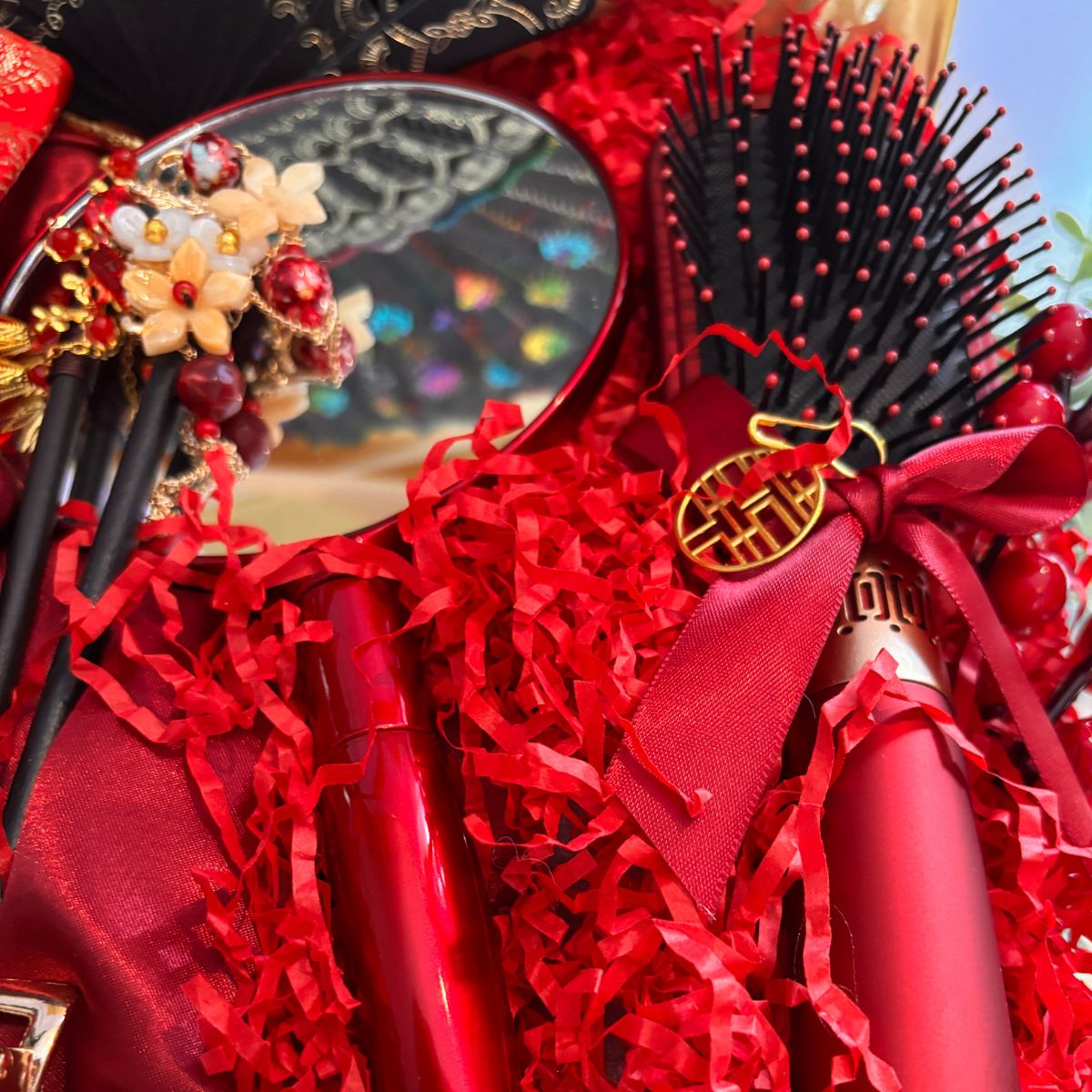
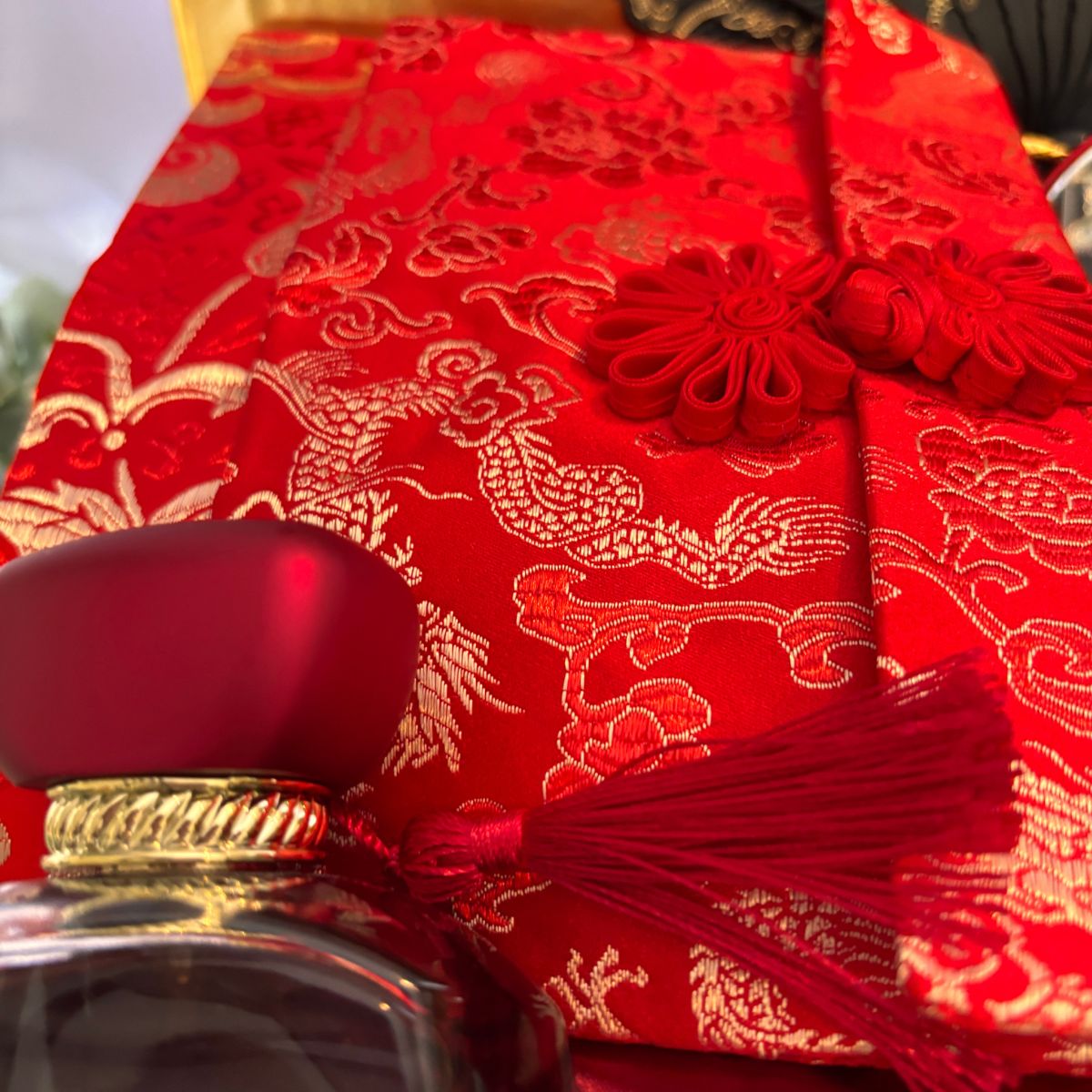
Signature Box Concepts
Plan Before the Wedding Week
Confirm which Chinese traditions the family will keep, whether Guo Da Li is included, tea-ceremony timing, banquet venue, and any Western or religious ceremony.
Finalize bridesmaid attire, bridal Chinese outfits, tailoring, door-game team, and tea-ceremony location.
Confirm jewelry, red-envelope plan, Qun Kua or Qipao logistics, personalized gift contents, and banquet schedule.
Ask both families for the tea-ceremony participant list and order. Finalize door games and outfit-change helpers.
Print the elder order, label garments and jewelry, prepare the tea set, secure gift bag, charge power banks, and give bridesmaid boxes.
Confirm tea brewing, cushions, cups, door-game timing, red packets, transport, banquet access, and the person responsible for valuables.
What to Avoid
Identify the family background before using Guo Da Li, Qun Kua, or specific gift lists.
Use auspicious colors deliberately rather than turning the gift into themed merchandise.
State the actual material or use “jade-inspired.”
Use only confirmed characters provided by the bride or recipient.
Family seniority and regional practice differ.
Set a hard end time and prioritize the family ceremonies.
Assign one trusted collector and secure storage.
It is a living dress tradition with a modern history, not a generic Chinese-themed prop.
Save and Share
Frequently Asked Questions
Modern Chinese and Chinese-American weddings commonly include bridesmaids. 伴娘 is the standard Mandarin term, while 姐妹 or “sisters” may describe the bride’s female support group in Cantonese and diaspora contexts.
It is a family respect ceremony in which the couple serves tea to parents and elders and receives blessings, often along with red envelopes or jewelry.
There is no universal order. Some families serve parents first and then relatives by seniority; others begin with the most senior elders. Ask both families.
No universal rule applies. Many families kneel, while others stand, bow, or adapt the posture for mobility and venue needs.
Guo Da Li is a formal betrothal gift exchange especially associated with Cantonese and Hong Kong wedding tradition.
They are playful challenges run by the bride’s friends before the groom is allowed to see or collect the bride.
They refer to the same broad dress tradition through different linguistic usage: Qipao is Mandarin and Cheongsam is Cantonese.
Qun Kua is a red embroidered two-piece bridal outfit especially associated with Cantonese and Hong Kong wedding tradition.
Sometimes yes. Ask the bride because she may reserve red for her own Chinese look or intentionally dress the bridal party in red.
Do not rely on a universal taboo rule. White has traditional mourning associations, but Chinese-American weddings also use Western white bridal fashion. Follow the couple’s dress code.
囍 is a traditional wedding character associated with marriage, happiness, and good fortune.
If she is also attending as a wedding guest, she should ask the couple what gifting format they prefer. Bridesmaid expenses and guest gifting should be considered together.
It can be, but verify the material. If it is not genuine jade or jadeite, describe it honestly as jade-inspired or green stone.
Absolutely. A concise explanation of the tea ceremony, door games, red envelopes, and outfit schedule can help her participate respectfully.
Give practical items before the wedding day so bridesmaids can use the pouch, jewelry case, flats, fan, or timeline during the actual celebration.
There is no fixed amount. Consider what bridesmaids are already spending on travel, clothing, beauty services, and multiple wedding events.
A jewelry organizer, secure wristlet, flats, tea-ceremony guide, emergency kit, or compact mirror is likely to be used during the wedding.
Often it is the handwritten letter because it explains why the person was chosen and what her friendship means beyond the wedding.
The Gift Is the Gratitude
A Chinese-American wedding can move from door-game chaos to the quiet formality of serving tea, then into a Western ceremony, another dress, a banquet, table toasts, and a late reception—all within the same day.
The women standing beside the bride may be brewing tea, calling elders, protecting red envelopes, changing jewelry, carrying garment bags, finding comfortable shoes, and helping two families move through traditions that are deeply familiar to some people in the room and completely new to others.
Your gift does not need to reproduce every Chinese wedding symbol. It only needs to show that you noticed what she will actually do.
A jewelry organizer can say, “I thought about everything you are carrying.” A secure wristlet can say, “I thought about the red packets and your phone.” A tea-ceremony guide can say, “I want you to understand why this moment matters.” A handwritten letter can say what the whole box is meant to express: “Your friendship mattered long before this wedding, and I am grateful you are here for this moment.”
Chinese wedding traditions differ by province, dialect group, religion, migration history, family, and generation. This guide reflects commonly documented practices and Chinese-American adaptations, but it does not claim that every family uses Guo Da Li, door games, the same tea-ceremony order, Qun Kua, red envelopes, or the same banquet structure. Confirm the final sequence and terminology with the couple’s parents and elders.